
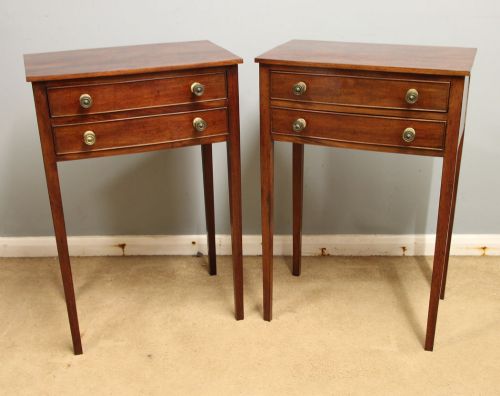
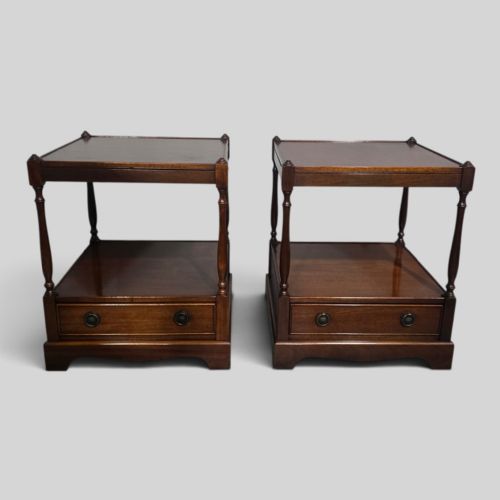
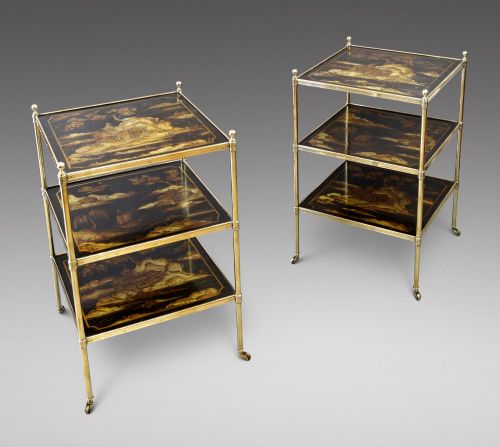
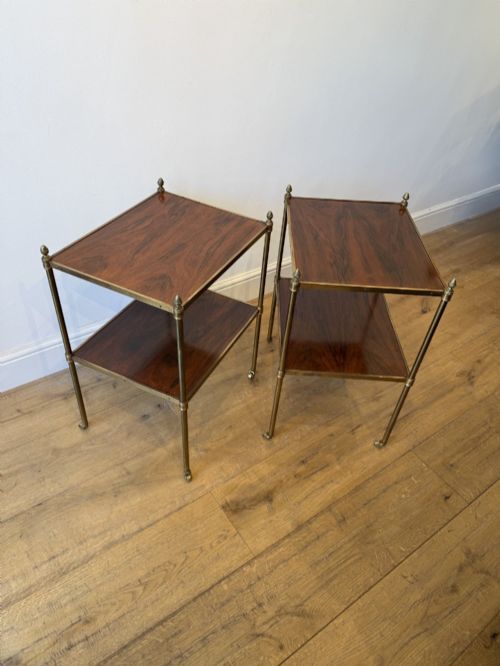




Pair Regency End Tables
Pair regency end tables bring symmetry and refined classical lines to a room, functioning equally well beside a sofa or in a hall.
Pair Regency End Tables
Pair regency end tables encompass matching sets designed for domestic use, spanning genuine period pieces from the nineteenth century alongside later revivals from the twentieth century. These furnishings typically function as side tables, lamp tables, bedside tables, or console tables, offering dual surfaces for lamps and display.
How they were made
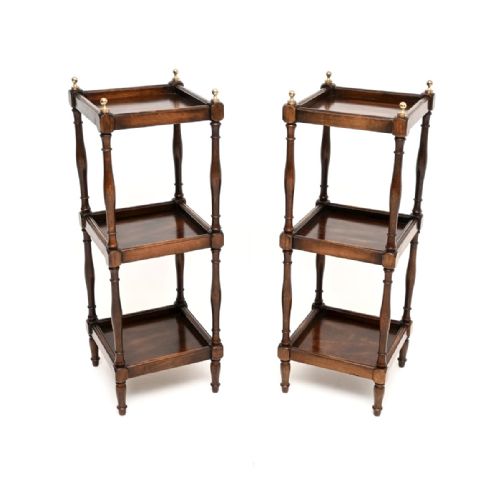
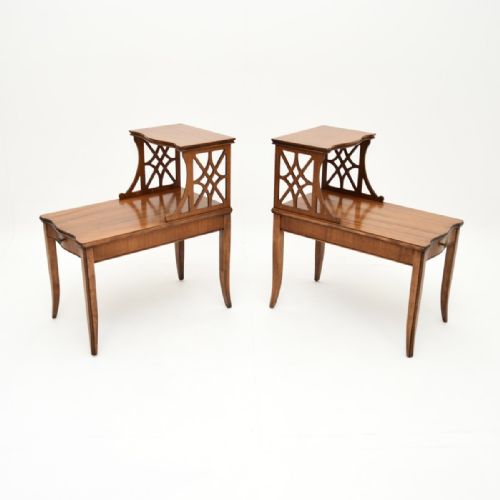
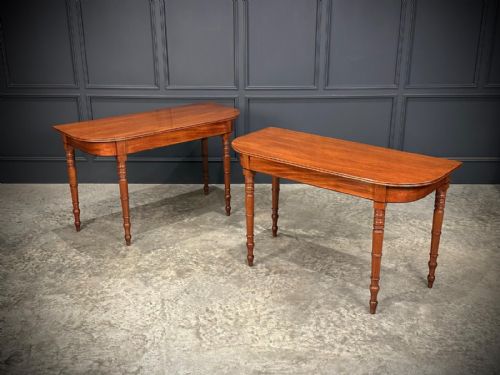
Cabinetmakers utilised mahogany, birds-eye maple, and ebonised wood to build the foundational structures of these tables, frequently incorporating contrasting ebony details. Leather inserts appear on writing surfaces, while brass and gilt metal provide structural supports, gallery rails, and decorative accents.
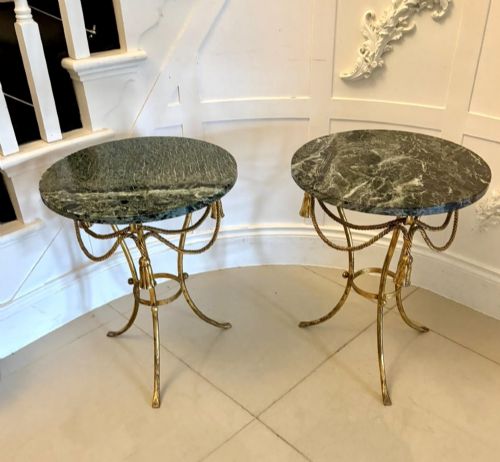
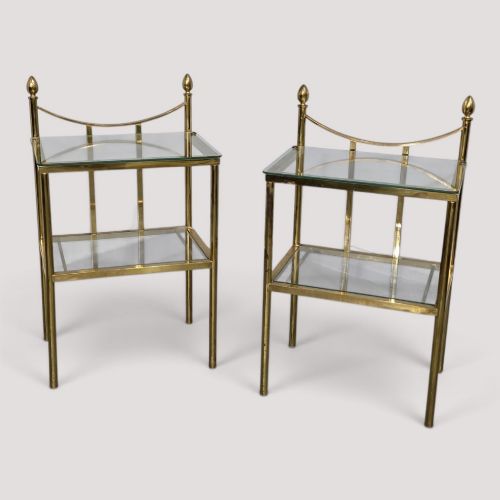
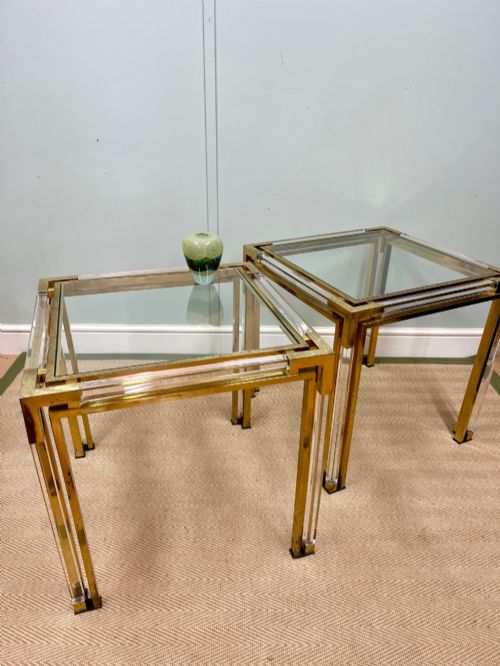
Surface treatments include traditional lacquer and polished wood finishes, complemented by insetverde marble tops on specific Italian-inspired variants. Glass panels serve as upper tiers on metal-framed etageres, combining transparency with metallic rigidity.
Listings span nineteen-hundred to the nineteenth century, uniting mahogany, brass, glass, leather, ebonised wood, gilt metal, verde marble, and lacquer.
What varies in quality
Quality rests upon the selection of timber figures, such as figured mahogany and birds-eye maple, and the crispness of brass or gilt metal mounts. Finer examples display meticulous joinery and balanced proportions that maintain visual harmony across both pieces in the set.
Later revivals and works attributed to prominent makers demonstrate differing degrees of adherence to classical proportions and material authenticity. The integration of specialised components like verde marble tops or tooled leather inserts further distinguishes standard production from exceptional pieces.
Gillows·Mallett
The Pair Regency End Tables Glossary
- Regency
- A stylistic period spanning the early nineteenth century characterised by classical restraint, archaeological motifs, and symmetry. It draws inspiration from ancient Greek, Roman, and Egyptian designs.
- Demilune
- A half-moon shape used for console and side tables designed to sit flush against a wall. This profile maximises floor space in narrow hallways and reception rooms.
- Etagere
- A set of open shelves or tiers used for displaying small objects or lamps. These tiered stands combine metal frames with glass or wooden surfaces.
- D End
- A table form featuring a semicircular end resembling the letter D, often used in pairs to form larger dining or console arrangements. They provide curved profiles suited to classical interiors.
- Verde Marble
- A dark green ornamental stone with pale veining, utilised for tabletops to introduce colour and a smooth classical surface.
Pair Regency End Tables: Frequently Asked Questions
Where should I place pair regency end tables?
These tables find a natural home flanking a sofa, serving as bedside stands, or positioned in a grand reception hall. Their matched nature creates visual balance on either side of a fireplace or architectural feature.
Because they often come as D end or demilune shapes, they also sit flat against walls in narrow corridors where depth is at a premium.
How do I distinguish genuine period pieces from revivals?
Authentic pieces from the early nineteenth century display construction methods, timber ageing, and wear consistent with age. Twentieth-century revivals often adopt the same neoclassical styling but utilise manufacturing techniques typical of the nineteen-teens and twenties.
Examining the underside, drawer linings, and hardware helps clarify whether a set dates to the Regency era or a later revival period.
What materials are typical for these tables?
Mahogany remains the dominant wood across the selection, often accompanied by birds-eye maple and ebonised timber. Metal elements in brass and gilt metal frequently appear alongside glass tiers and leather top inserts.
Certain Italian-influenced designs incorporate verde marble tops, adding weight and colour variation to the wooden frames.
Can I use these tables for daily functional storage?
Many variants function effectively as bedside tables or side lamp tables, offering surface space for lighting and books. Library or writing tables within the group include integrated top surfaces designed for daily use.
Their primary historic role as display and reception furniture translates well to modern living spaces requiring surface area.