
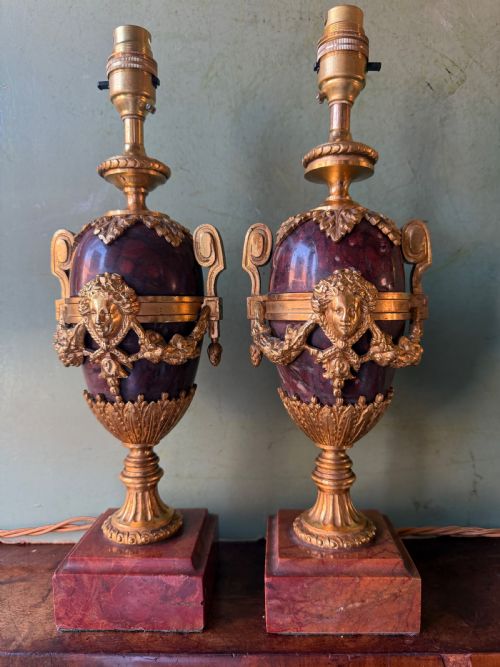
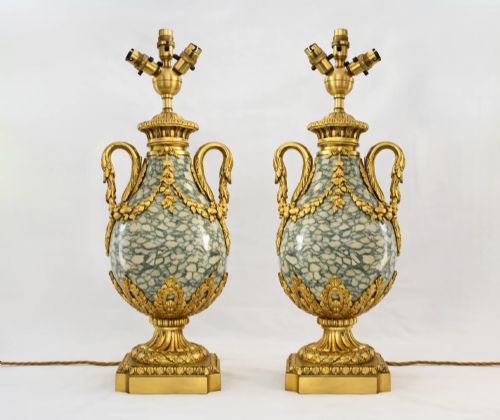


Pair Ormolu Urn Lamps
Pair ormolu urn lamps bring heavy classical presence to a room, combining cast gilt metal with stone or porcelain bodies.
Pair Ormolu Urn Lamps
These pair ormolu urn lamps take the form of classical vases or urns mounted with gilded metal, functioning as table lamps. They draw heavily on French Neoclassical, Louis XVI, and Rococo Revival styles from the nineteenth century into the mid-twentieth century.
The bodies utilise marble, porcelain, glass, or crystal, shaped into table lamps and decorative urns or cassolettes. Most examples originate from French workshops, translating architectural ornament into domestic lighting.
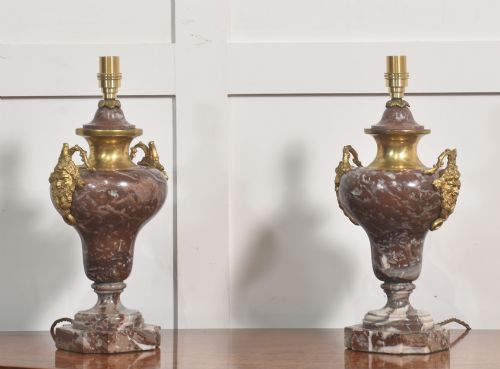
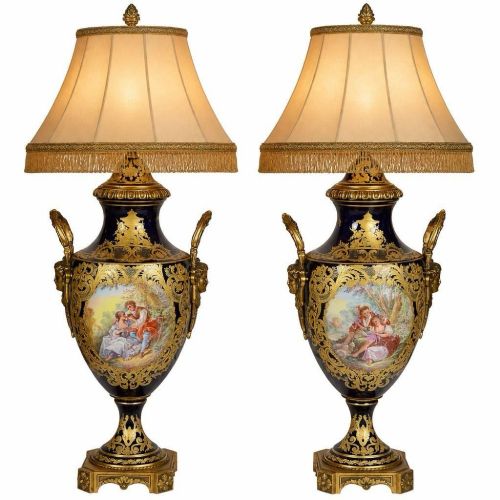
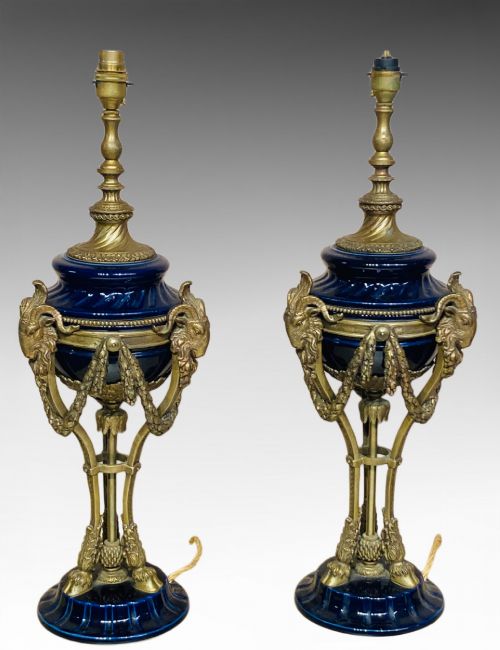
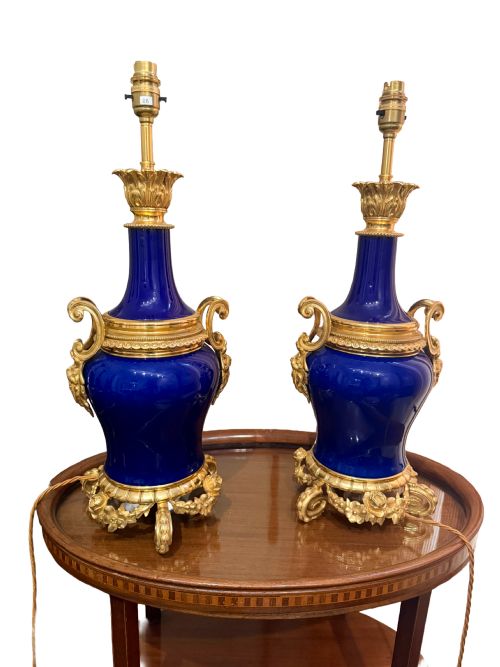
The selection ranges from porcelain and blue glazed vessels to rich rouge and siena marble bases held in gilt bronze mounts.
How they were made
The manufacture relies on heavy cast bronze finished with ormolu gilding, paired with turned and polished marble or hand-painted porcelain. Metal mounts are chased by hand to sharpen the leaf scrolls, beadings, and classical drapery.
Vessels of marble or glass are fitted with cast collars, handles, and bases secured through central rods. Porcelain bodies often feature hand-painted scenes set against cobalt or powder blue glazes before receiving their bronze mountings.
Some urns hide dual personalities as cassolettes, possessing reversible lids once meant to hold sweet-smelling perfumes.
What varies in quality
Quality rests primarily on the crispness of the bronze chasing and the weight of the materials used. Superior examples display deep, sharp toolwork in the ormolu and dense, richly figured marble or unblemished porcelain.
The integration of the electrical fittings and the harmony between the urn body and the cast mounts separate ordinary decorative pieces from finely balanced specimens.
The Pair Ormolu Urn Lamps Glossary
- Ormolu
- Gilded bronze, where a layer of finely powdered gold is applied to a base metal using mercury amalgamation or modern electroplating. This finish gives the metal its characteristic warm, bright yellow sheen.
- Cassolette
- A decorative vase or urn featuring a reversible lid that functions as a small bowl or incense burner. In lamp form, these retain the characteristic double-sided lid design.
- Louis XVI Style
- A neoclassical design vocabulary marked by straight lines, symmetry, and classical motifs such as urns, swags, and acanthus leaves. It reflects an eighteenth-century aesthetic revived strongly during the nineteenth century.
- Rouge Marble
- A rich red ornamental stone with white and grey veining, frequently quarried in France. It provides a heavy, colourful base for gilt bronze mounts.
Pair Ormolu Urn Lamps: Frequently Asked Questions
Are these lamps originally electrified?
Nineteenth-century lamps were generally converted from oil burners, vases, or cassolettes at a later date to accommodate modern electrical wiring. This conversion is standard for period lighting.
Rewiring is often updated to meet current safety standards while preserving the original metal and stone components.
How do I clean ormolu mounts?
Dust gently with a soft brush, avoiding chemical cleaners or abrasive cloths that can strip the thin gold layer from the bronze underneath. Moisture should be kept away from both the metal and the marble.
Professional care is recommended if the gilding requires stabilisation or deep cleaning.
What styles do these lamps follow?
The pieces follow French Neoclassical, Louis XVI, and Rococo Revival designs. These styles draw on classical Greek and Roman ornamentation.
Common decorative motifs include handles formed as serpents, floral swags, and leaf-cast bases.
How do I match shades to urn lamps?
Fabric shades in neutral silks or pleated linens complement the heavy gilding and coloured marble bodies without competing for attention. The scale of the shade should balance the substantial weight of the urn base.
Proportion is key to ensuring the lamp remains visually stable on a side table or console.