
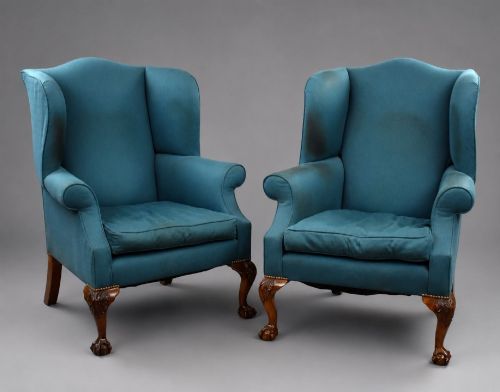


Pair of Wing Armchairs
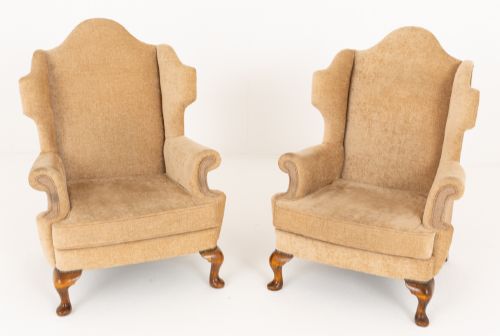
These pair of wing armchairs provide deep seated comfort alongside high protective backs, bringing traditional presence to a room.
Pair of Wing Armchairs
When searching for a pair of wing armchairs, you encounter upholstered seating designed to shelter the sitter from draughts around a hearth. The versions on this page span from the nineteenth century through the Edwardian period and the 1920s and 1930s, reflecting diverse revivals.
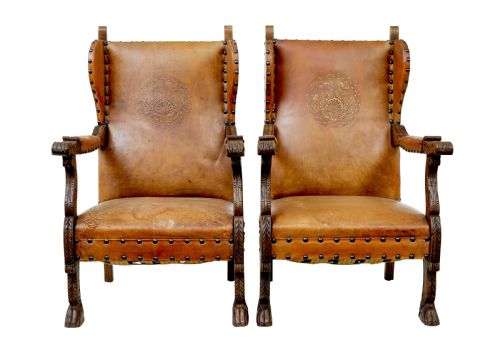
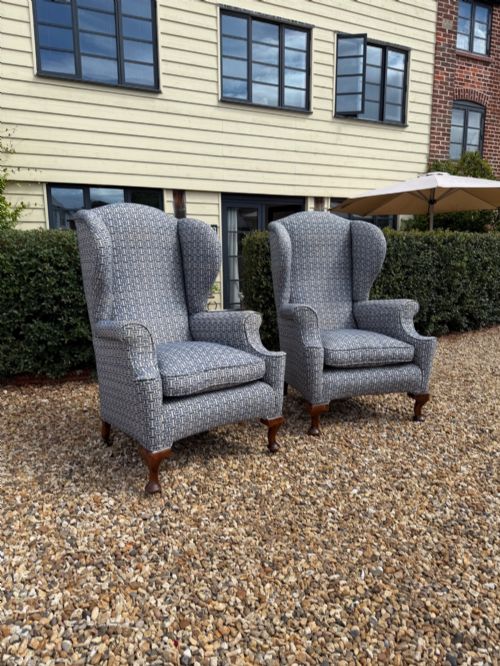
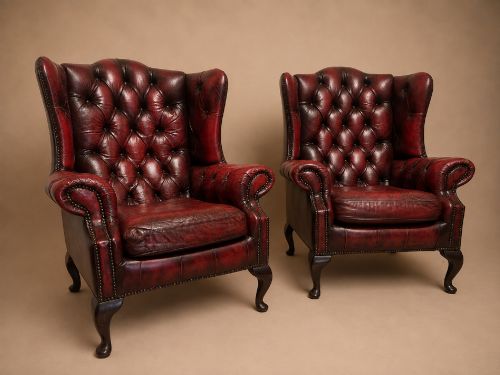
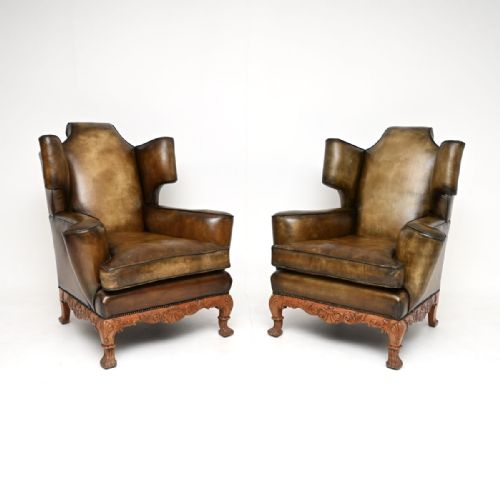
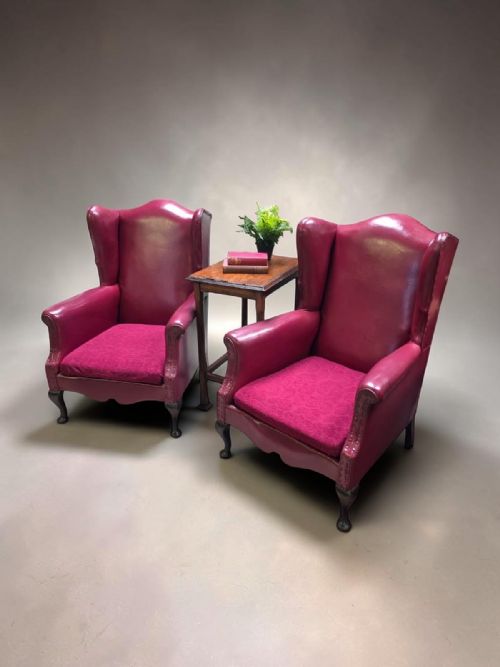
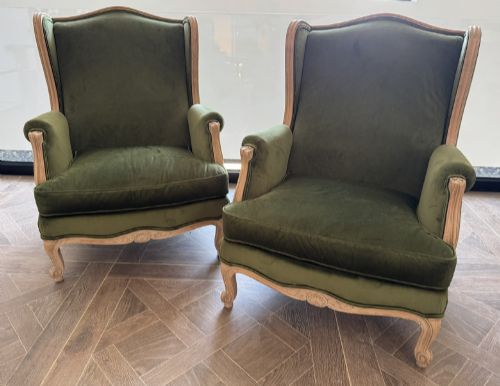
You find heavy wooden frames supporting substantial padded bodies, with walnut and oak appearing frequently alongside mahogany. Many examples showcase leather upholstery, while others employ woven fabric, velvet, or printed textiles.
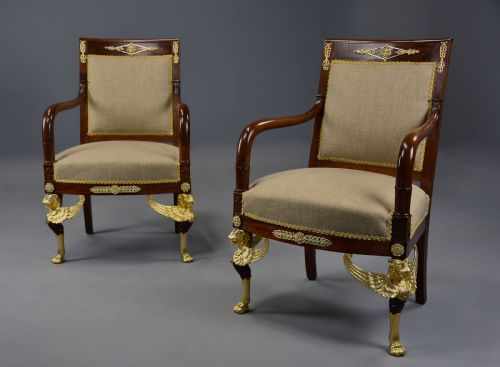
Styles range from restrained Georgian and Queen Anne revivals to ornate French Empire and Victorian Gothic forms. These seating pairs often serve as matched fireside companions in libraries, drawing rooms, and studies.
Materials and construction
Makers built the structural skeletons from sturdy hardwoods, primarily walnut, oak, and mahogany, utilising mortise and tenon joints for stability. Carved wooden elements appear on legs and arms, with specific examples displaying claw and ball feet or ornate gilding.
Upholstery involved stuffing voluminous interiors with traditional materials before securing the outer cover with brass tacks or piping. Leather upholstery predominates in many selections, complemented by softer surfaces of velvet and patterned fabric.
Several armchairs incorporate dedicated wings specifically engineered to block sneaky drafts from reaching your ears.
Evaluating the craftsmanship
The distinction between tiers rests upon the precision of the frame's carving and the integrity of the underlying woodwork. Walnut or mahogany frames with hand-carved details or substantial proportions represent higher degrees of artisan effort.
The quality of the material finish also dictates standing, particularly in the suppleness of the leather and the execution of embossed or buttoned details. Well-preserved upholstery techniques and balanced proportions between the wings and the seat base separate standard pieces from exceptional ones.
Hille
The Pair of Wing Armchairs Glossary
- Wingback
- An armchair featuring projecting side panels designed to trap heat and block drafts from a fireplace. These protective flaps extend from the upholstered arms up to the backrest.
- Chesterfield
- A style of upholstered seating characterised by deep button tufting and rolled arms of equal height to the back. Leather versions remain particularly prominent in this grouping.
- Claw and ball
- A furniture foot carved to resemble an animal's talon gripping a spherical object. This decorative terminal frequently appears on Georgian revival chair legs.
- Os De Mouton
- A French term describing scroll-shaped carved furniture legs resembling sheep bones. This distinctive leg profile appears on early twentieth-century examples.
- Fauteuil
- An open-framed armchair with upholstered armrests originating in France. These pieces typically display exposed wooden frames in mahogany or walnut.
Pair of Wing Armchairs: Frequently Asked Questions
What is the history of wing armchairs?
These chairs emerged in domestic interiors to protect sitters from cold drafts in unheated rooms. The side panels effectively trapped heat from a fireplace around the upper body.
Over subsequent centuries, cabinetmakers adapted the basic protective silhouette into various revival styles. Victorian and Edwardian makers later refined the proportions for formal drawing rooms and libraries.
How do I care for leather wing chairs?
Leather upholstery requires regular dusting and occasional treatment with appropriate conditioners to prevent the hide from drying. Keeping the material away from direct heat sources preserves the natural flexibility of the surface.
Avoid using harsh chemical cleaners that might strip the original finish. Professional conservation helps maintain the integrity of antique hides and buttoning.
Where should I place these armchairs?
Their substantial proportions suit large living spaces, studies, or libraries where they can serve as primary seating. Pairing them near a fireplace echoes their original historical placement.
Ensure adequate clearance around the pieces to display the carved wooden legs and winged profiles properly.
How do I identify different periods?
Cabinetmakers stamped distinct stylistic markers onto each era, such as the heavy proportions of Victorian pieces or the lighter outlines of Edwardian designs. Wood choices like walnut and oak often align with specific revival movements.
Examining the construction methods beneath the upholstery reveals assembly techniques characteristic of nineteenth or early twentieth-century workshops.