




Pair of Walnut Commodes
A pair of walnut commodes brings balanced proportion and rich timber tone to a room, offering matching storage that anchors an interior.
Pair of Walnut Commodes
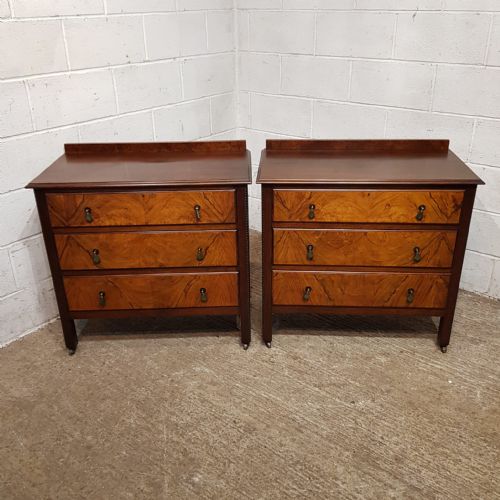
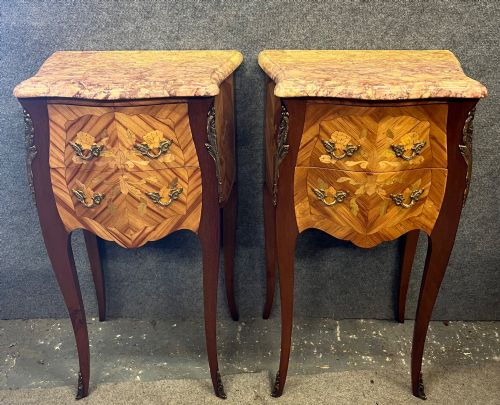
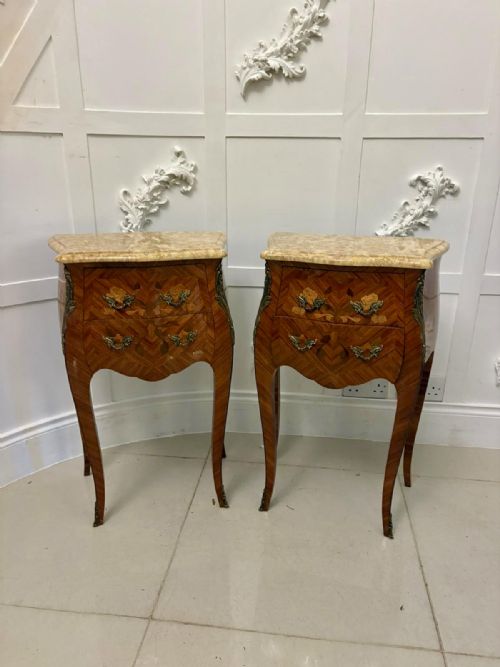
A pair of walnut commodes encompasses low chests of drawers, bedside cabinets, and side tables created primarily in French and Italian workshops across the eighteenth, nineteenth, and early twentieth centuries. These matching sets serve functional storage roles while providing symmetrical design points within a bedroom or drawing room.
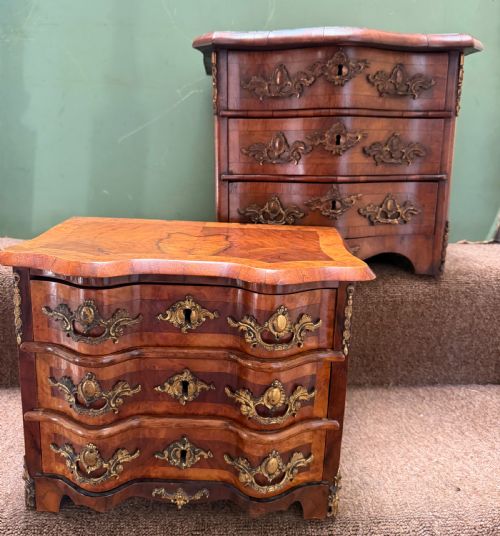
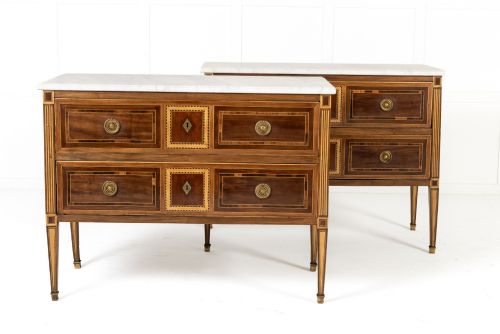
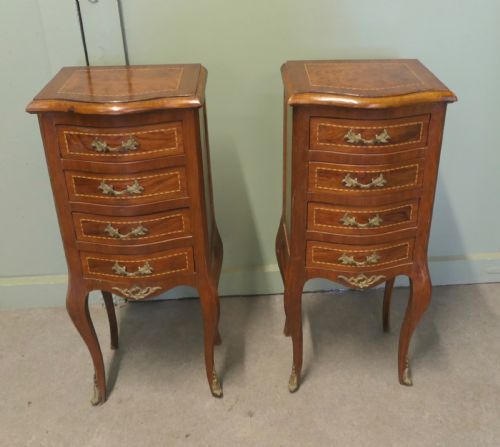
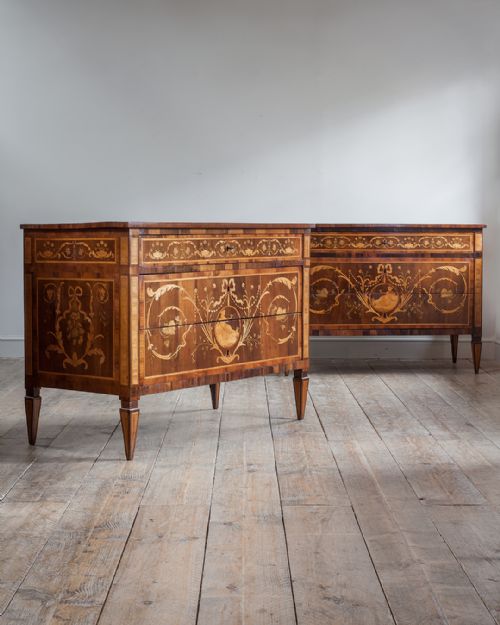
The versions most frequently met on this page are French Louis XV style bedside cabinets and Italian serpentine or bombe chests dating from the nineteenth and early twentieth centuries. Walnut and burr walnut dominate the forms, often paired with marble tops and contrasting stringing.
Cabinet makers also utilised related forms such as demi-lune side cabinets and tall side lockers, drawing on Neoclassical and Rococo design vocabularies. Such pieces reflect regional European tastes spanning from eighteenth-century craftsmanship to later revival periods.
How they were made
Cabinet makers constructed these pieces using solid walnut and burr walnut frameworks, frequently applying kingwood, rosewood, and fruitwood veneers to create geometric parquetry or floral marquetry panels. Ormolu mounts, brass handles, and giltwood details were cast and chased to accentuate the curves of bombe and serpentine bodies.
Marble tops in various shades provide durable surfaces on many examples, fitted precisely to the contours of the timber carcases. Inlaid stringing and meticulous cabinet joinery unite structural rigidity with decorative refinement.
Pair of Walnut Commodes Retail Price Guide 2026
Typical asking prices for pair of walnut commodes among the pieces listed under this phrase on Sellingantiques today, from the lower quarter to the upper quarter. They describe what is for sale here now, not the wider market.
Cabinet makers sometimes hid secret side lockers within tall French commodes, ensuring midnight valuables remained undisturbed.
What varies in quality
The distinction between standard examples and top-tier workshop production lies in the selection of timber figures and the precision of the marquetry cut. Finely figured burr walnut and balanced grain matching across both halves of a pair indicate superior material choice.
The execution of cast ormolu mounts and the smoothness of drawer movement further separate workshop grades. Well-made pieces demonstrate seamless veneer application around complex curves without lifting or visible shrinkage.
Pietro Ferrario
The Pair of Walnut Commodes Glossary
- Bombe
- A bulging, outward-curving chest profile characteristic of mid-eighteenth-century French and Italian case furniture. This swelling shape requires advanced veneer work to follow the compound curves.
- Marquetry
- Decorative patterns formed by fitting contrasting veneers into a wooden panel to create pictorial designs. Cabinet makers use various tinted woods to achieve naturalistic floral or geometric motifs.
- Ormolu
- Gilt bronze mounts applied to furniture edges, corners, and handles for decorative effect. The metal is cast and then finished with gold leaf or mercury gilding.
- Parquetry
- Geometric wood mosaic patterns constructed from small veneer tiles arranged in grids or repeating shapes. It differs from marquetry by relying on angular, repeating motifs rather than pictorial scenes.
- Serpentine
- A front profile that curves inward centrally and swells outward toward the ends. This undulating contour appears frequently on eighteenth- and nineteenth-century commodes.
Pair of Walnut Commodes: Frequently Asked Questions
Where should I place a pair?
These matching cabinets function effectively as bedside tables flanking a bed, where their symmetry balances the sleeping area. They also suit placement on either side of a fireplace or beneath a large mirror in a reception room.
Because they arrive as a matched pair, placing them apart in separate rooms disrupts their intended visual harmony. Keeping them together preserves their decorative impact as a coordinated suite.
How do I clean walnut surfaces?
Dust the timber regularly with a soft, dry cloth to prevent particulate buildup on the polished grain. Avoid silicone-based polishes and excessive moisture, which can degrade historic French polish finishes.
Apply a microcrystalline wax periodically to nourish the walnut and protect the veneer from drying out. Marble tops require gentle wiping with a damp cloth and mild soap to avoid staining.
Are these pieces structurally sturdy?
Eighteenth- and nineteenth-century cabinet furniture relies on traditional joinery methods that remain robust under normal domestic use. The dense nature of walnut provides a stable structural core for daily storage.
Care should be taken not to overload drawers with excessive weight, particularly on pieces with curved bombe sides. Environmental stability, avoiding extreme temperature shifts, protects the underlying veneers.
How do I identify French versus Italian styles?
French Louis XV style commodes often feature pronounced cabriole legs, asymmetrical ormolu mounts, and subtle floral marquetry. Italian pieces, particularly Venetian and North Italian examples, frequently emphasise bolder serpentine contours and striking burr walnut grain.
Regional cabinet-making traditions also appear in the choice of secondary woods hidden inside the carcase. Examining internal drawer construction helps clarify the geographic origin of workshop pieces.