



Neoclassical Walnut Chest
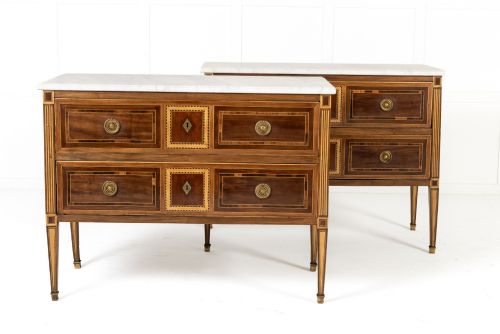
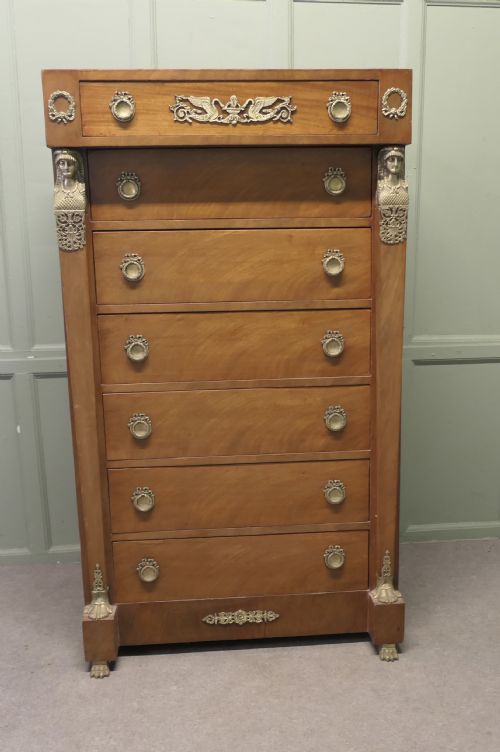
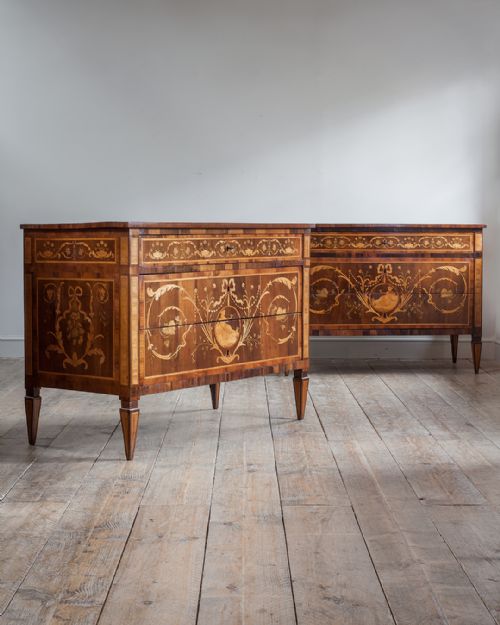
A neoclassical walnut chest brings architectural balance and rich timber grain to an interior, most frequently appearing as a Continental commode with fine marquetry.
Neoclassical Walnut Chest
A neoclassical walnut chest primarily takes the form of a commode or chest of drawers, rooted predominantly in 18th century and 19th century European craftsmanship. These pieces span Italian, French, Austrian, and Dutch workshops, frequently displaying the restrained symmetry characteristic of the period.
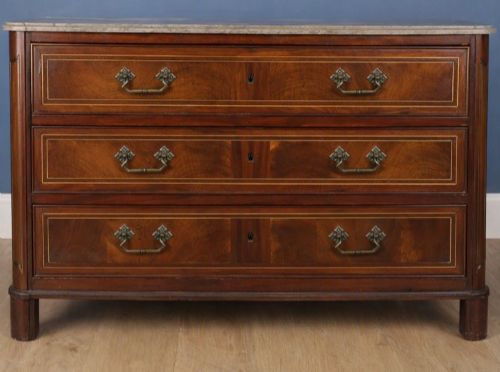
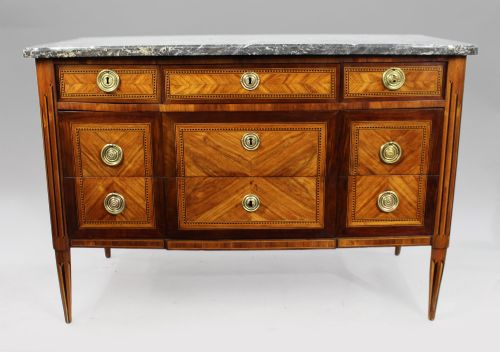
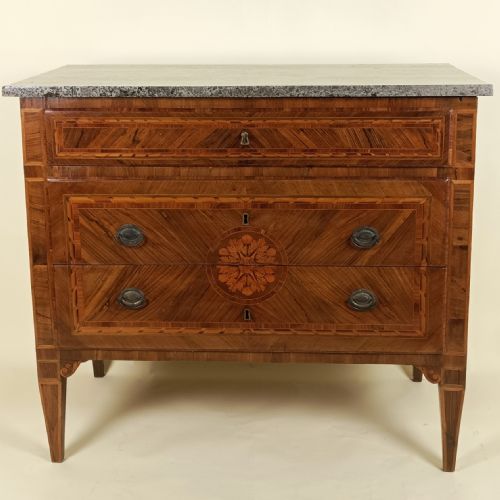
Buyers encountering this search phrase will most often find commodes finished with marble tops and detailed wood inlay. The selection ranges from late 18th century North Italian examples to later revival interpretations from the early 20th century.
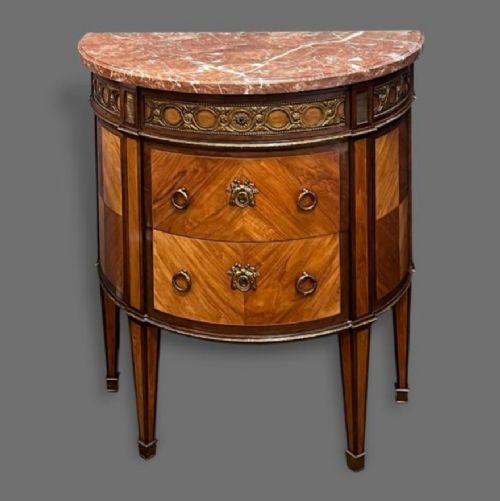
Beyond standard drawer configurations, variations include demi-lune shapes, breakfront profiles, and occasional decorative boxes. Walnut serves as the primary structural canvas, often enhanced by contrasting fruitwood or tulipwood details.
How they were made
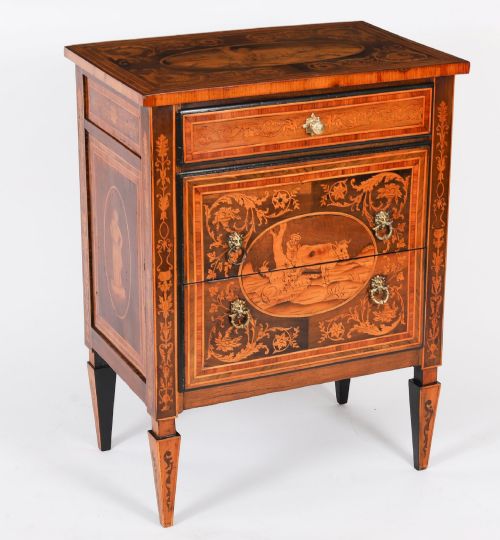
Cabinet makers utilised solid walnut and fruitwood timbers as the foundational structure, applying intricate parquetry and marquetry veneer patterns across the drawer fronts and sides. Wood inlay techniques created geometric or pictorial designs using contrasting timber tones.
Many commodes incorporate heavy marble tops, particularly white or grey varieties cut to follow the exact contour of the cabinet carcase. Metal elements such as brass, gilt bronze, and ormolu mounts provide handles, key escutcheons, and structural accents.
Neoclassical Walnut Chest Retail Price Guide 2026
Typical asking prices for neoclassical walnut chest among the pieces listed under this phrase on Sellingantiques today, from the lower quarter to the upper quarter. They describe what is for sale here now, not the wider market.
Among the grand architectural commodes, a solitary antique box sneaks into the lineup just to prove that good things come in small parcels.
What varies in quality
The sophistication of the marquetry and parquetry work dictates the visual distinction of the piece, where precise, complex timber inlay elevates the craftsmanship far above simple veneering. The selection of the walnut grain itself plays a major role, alongside the crispness of any applied bronze or ormolu mounts.
The integration and quality of the marble top separate regional standards, with profiled edges and dense stone slabs marking superior examples. Structural integrity in the drawer construction and the preservation of original timber patination complete the measure of quality.
The Neoclassical Walnut Chest Glossary
- Commode
- A low chest of drawers or cabinet introduced in the 18th century, typically featuring multiple drawer tiers. These form the majority of case pieces found within neoclassical furniture.
- Marquetry
- The art of applying pieces of veneer to a structure to form decorative patterns and pictures. Makers use various coloured woods to achieve pictorial depth.
- Parquetry
- A geometric mosaic of wood pieces used for surface decoration on furniture. It creates repeating patterns across drawer fronts and top surfaces.
- Ormolu
- Gilded bronze mounts used for decorative and protective hardware on fine furniture. These metallic elements highlight the architectural lines of the piece.
- Demi-lune
- A half-moon shape characteristic of certain commode designs. This curved profile allows the cabinet to sit flush against a wall while offering a softer visual footprint.
Neoclassical Walnut Chest: Frequently Asked Questions
Where were most of these chests made?
The listings show production originating primarily from continental European centres, with notable pieces coming from Italy, France, Austria, and the Netherlands.
Italian and French workshops dominate the selection, often reflecting regional interpretations of Louis XVI and broader neoclassical design principles.
What is the difference between a commode and a standard chest of drawers?
A commode is a specific Continental form of low chest of drawers, generally standing at waist height and frequently fitted with a marble top.
While functionally similar to standard storage chests, commodes from this era are typically more decorative and designed as formal reception room furniture.
How do I identify a neoclassical style piece?
Neoclassical pieces rely on straight lines, symmetry, and classical architectural motifs rather than the exuberant curves of earlier baroque styles.
Look for restrained geometric parquetry, tapered legs, and subtle ormolu mounts rather than heavy ornamentation.
Are these chests suitable for everyday modern use?
These chests offer practical drawer storage that adapts well to contemporary bedrooms, hallways, or living spaces.
Their sturdy timber construction and durable marble tops make them robust enough for daily placement of lamps, books, and household items.
How should I care for the marble top?
Marble tops require gentle cleaning with mild, non-acidic soap and water to preserve the polished stone surface.
Avoid placing acidic liquids directly on the marble to prevent staining the natural porous material.