

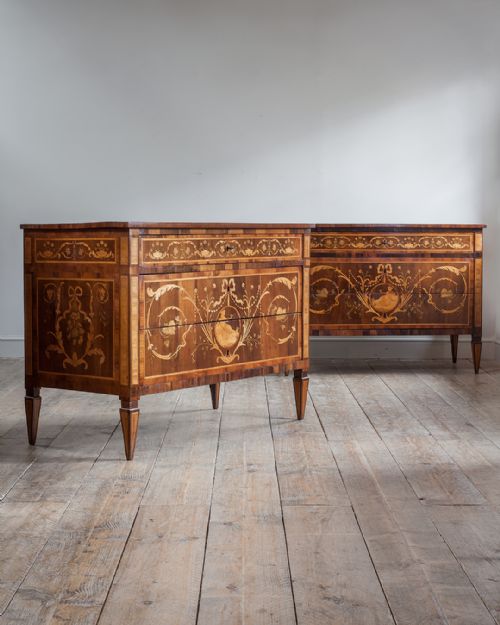
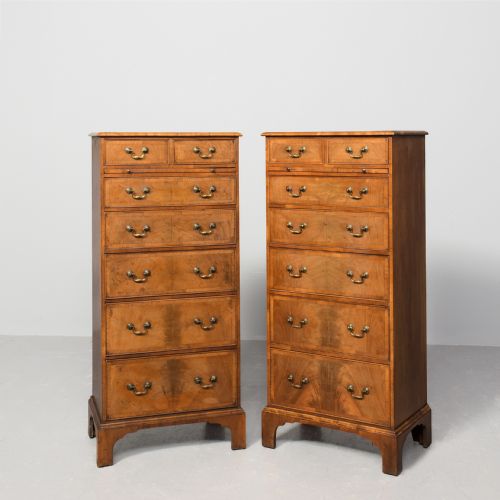
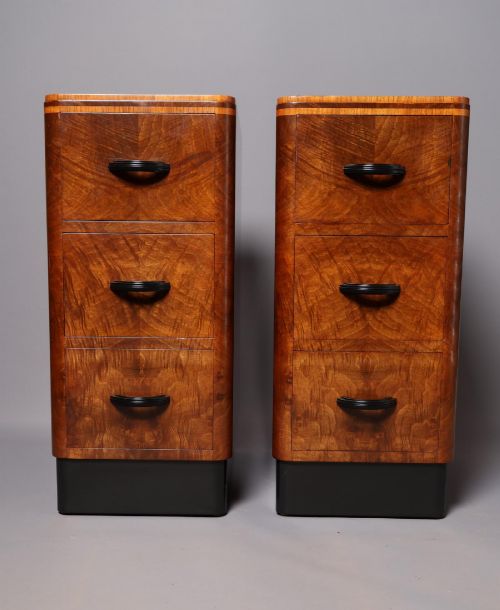


Pair of Walnut Chests
When you select a pair of walnut chests, you choose matched bedside companions and small drawer units rooted in Victorian and Art Deco design.
Pair of Walnut Chests
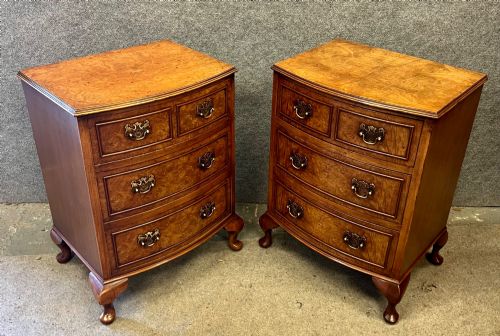
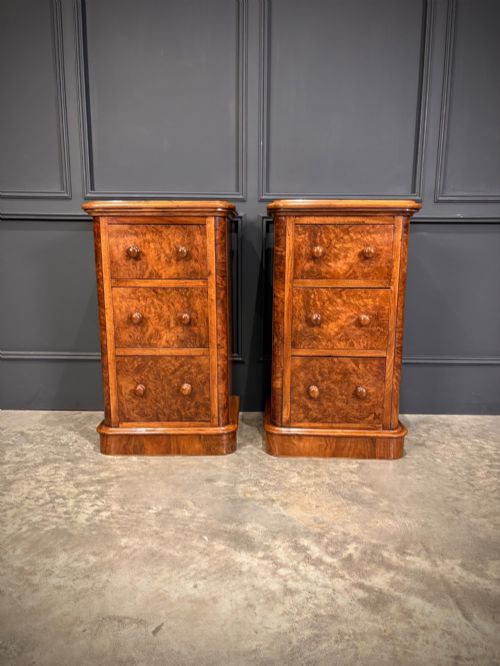
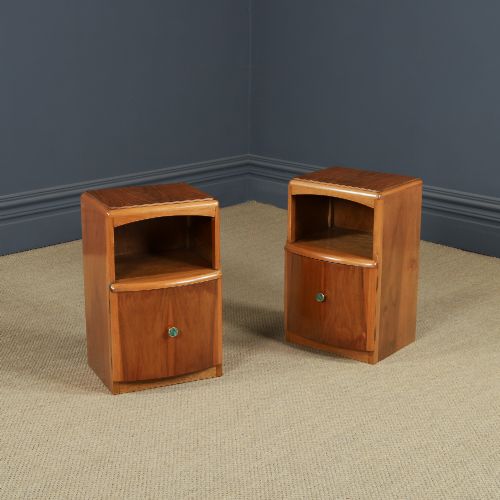
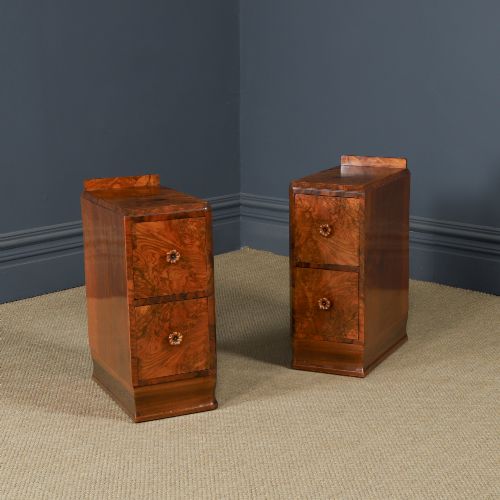
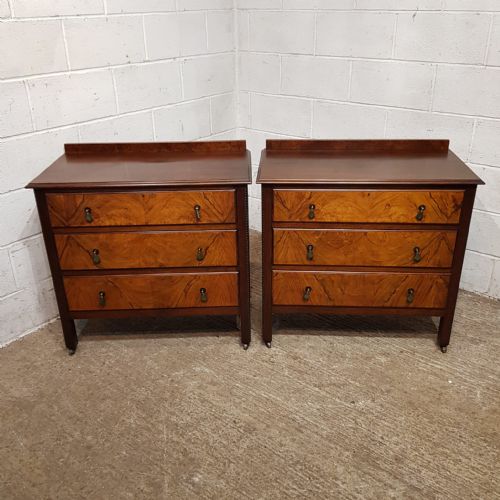
A pair of walnut chests primarily comprises matched bedside cabinets, nightstands, and small chests of drawers intended to balance a bedroom scheme. These forms span from Victorian iterations with brass-bound edges and locker doors to streamlined Art Deco pieces featuring open areas or dual drawers.
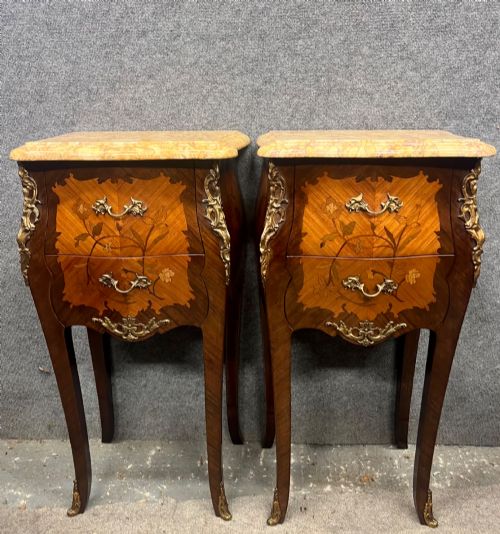
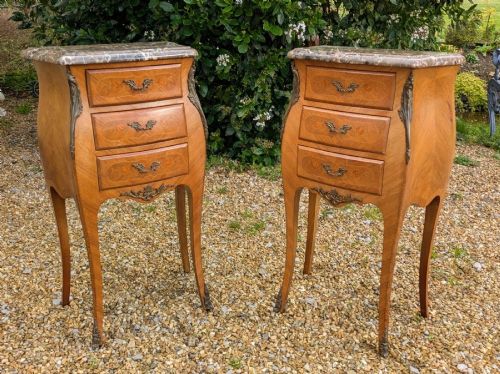
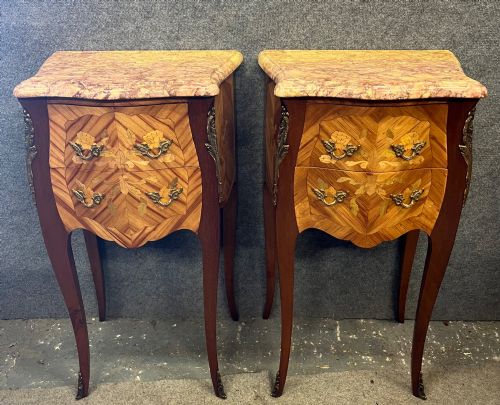
Beyond standard bedside heights, the selection encompasses French commodes, bombe cabinets, and tall lamp tables originating across the nineteenth and early twentieth centuries. Many examples incorporate period revival aesthetics, including Georgian style proportions and Louis XV parquetry work.
Buyers encounter substantial variation in scale, from neat proportions suited to compact spaces to substantial multi-drawer chests. The overarching utility remains consistent: providing paired storage and display surfaces that flank a bed or accent a living space.
Materials and construction
Makers utilised solid walnut alongside decorative burr walnut veneers to achieve rich, figured grain patterns across the primary surfaces of these chests. This timber was frequently selected for its warm tone and responsiveness to detailed cabinet work.
Surfaces often incorporate intricate marquetry, parquetry, and contrasting stringing using secondary woods like satinwood and kingwood. Many French and Italian examples are completed with fitted marble tops, while others feature brass mounts, handles, and binding.
Structural joinery aligns with traditional period techniques, supporting multi-drawer configurations, cupboard doors, and serpentine or bombe profiles. The combination of dense timber framing and delicate veneer work underpins the durability of these paired items.
Listings feature walnut, burr walnut, marble, and brass across Victorian, Edwardian, and Art Deco periods.
Distinctions in craftsmanship
Quality rests significantly on the selection and matching of the walnut veneers, where symmetrical burr patterns create a balanced visual reflection across both chests in a pair. Superior examples display continuous grain flow and meticulous marquetry without misalignment.
The integration of auxiliary materials defines the upper tier of production, such as heavy marble slabs correctly fitted to serpentine edges, or substantial brass hardware securely anchored to the drawer frames. Drawer construction, including precise dovetailing and smooth internal running, separates standard utility pieces from finer cabinetwork.
Proportion and stylistic cohesion between the two pieces determine overall success, ensuring that paired cabinets maintain identical height, depth, and decorative detailing from origin.
The Pair of Walnut Chests Glossary
- Burr walnut
- A figured wood grain obtained from the wart-like growths on walnut trees, prized for its swirling, organic patterns. It was frequently applied as a veneer on Victorian and Art Deco furniture.
- Bombe
- A bulging, convex furniture shape characteristic of certain continental commodes and bedside cabinets. This swelling profile requires advanced woodworking skill to veneer accurately.
- Marquetry
- The art of applying pieces of veneer to a structure to form decorative patterns and pictures. Craftsmen used various tinted woods to achieve pictorial depth.
- Parquetry
- A geometric mosaic of wood pieces used for surface decoration on tabletops and cabinet fronts. It creates repeating angular patterns across the piece.
- Ormolu
- Gilded bronze furniture mounts and decorative hardware used extensively on French-influenced chests. This material adds metallic contrast to the timber surfaces.
Pair of Walnut Chests: Frequently Asked Questions
How do I match bedside chests?
Selecting a matched pair involves checking that both pieces share identical dimensions, timber grain orientation, and hardware styles. Variations in height or drawer count usually indicate mismatched origins rather than an intentional pair.
Examining the internal drawer construction and veneer patterns side by side helps confirm whether the two pieces were manufactured together as a suite.
What is burr walnut?
Burr walnut is taken from the knot or burl growth of the walnut tree, yielding dense, highly figured grain patterns. Cabinetmakers sliced this wood into thin veneers to display symmetrical designs across drawer fronts and tops.
This material is particularly characteristic of Victorian and Art Deco pieces, where visual impact was prioritized.
Are marble tops original?
Many continental European bedside cabinets feature fitted marble slabs designed to provide a durable, heat-resistant surface for lamps and washing equipment. These tops were integrated into the initial design, particularly on French and Italian commodes.
Inspecting the rebate where the marble rests helps verify whether the stone fits the period parameters of the base cabinet.
How do I date these chests?
Dating relies on architectural proportions, secondary woods, construction methods, and characteristic decorative styles like Art Deco geometric lines or Victorian brass binding. Drawer linings and backboards also offer clues regarding the manufacturing era.
Comparing the specific hardware and veneer choices against documented periods narrows down the decade of production.