


Aesthetic Movement Chest
These aesthetic movement chests bring clean lines and considered detail into a room, offering practical storage grounded in nineteenth-century design.
Aesthetic Movement Chest
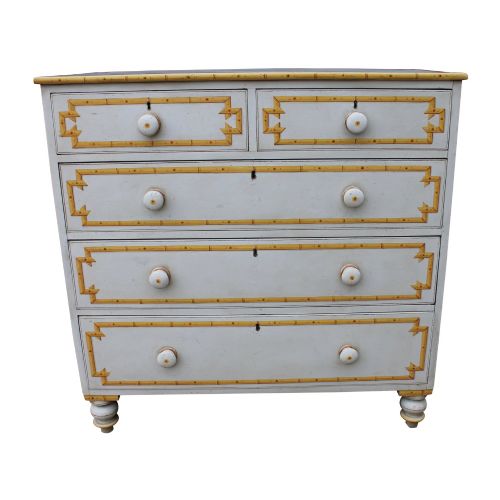
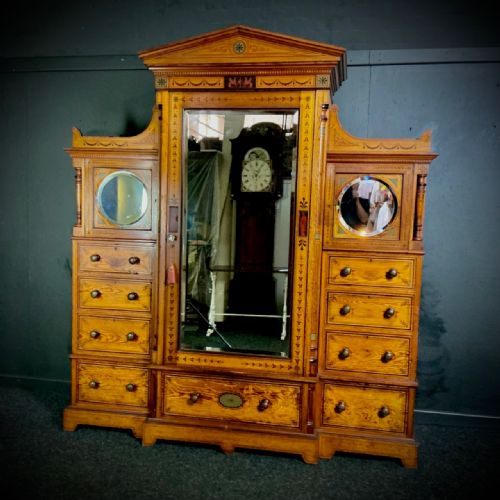
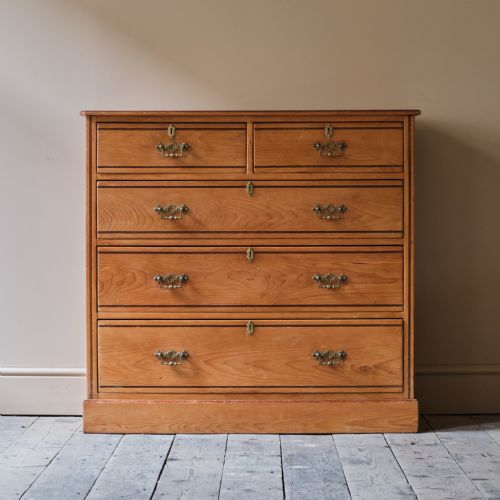
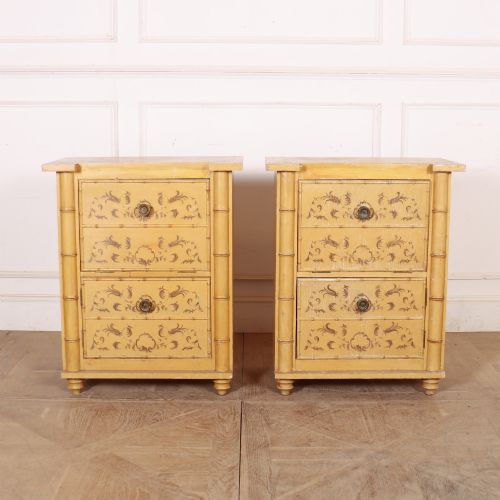
An aesthetic movement chest represents a deliberate shift away from heavy Victorian ornamentation towards simpler, structural forms often influenced by Japanese design. When searching this phrase, buyers encounter various storage pieces, with chests of drawers appearing alongside wardrobes, bedside cabinets, and dressing tables.
The pieces seen here span the nineteenth century, largely drawing on Victorian sensibilities while incorporating styles such as arts and crafts and nineteenth-century chinoiserie. Pine, pitch pine, walnut, and painted wood form the primary bodies of these storage items.
Beyond standard drawer units, the selection extends to collectors' cabinets, desks, and coal bins, demonstrating how the movement permeated diverse domestic furniture. Each item retains the distinct decorative ethos of the period, balancing utility with artistic finish.
Assessing Quality
The distinction between standard utility pieces and finer examples rests on the selection of timber and the execution of decorative details. Dense woods like walnut and coromandel, or carefully selected pitch pine, generally denote higher ambition in the workshop.
Makers' marks and stamps elevate certain items, attributing work to known firms such as Lamb of Manchester or Gregory and Co. The precision of the joinery and the integrity of painted or faux bamboo elements further separate ordinary production from superior work.
Harris Lebus·Gregory and Co·Lamb of Manchester·Ogden and Son·Horton and Alldays
The Aesthetic Movement Chest Glossary
- Faux bamboo
- Turned and painted wood shaped to resemble natural bamboo stems. This technique reflects the nineteenth-century fascination with Japanese aesthetic principles.
- Pitch pine
- A resinous pine timber valued for its distinct grain pattern and durability. Cabinet makers utilised it extensively for nineteenth-century storage furniture.
- Inlay
- Pieces of contrasting material fitted into a recess to form a decorative design on the wood surface. This technique appears on dressing tables and cabinets of the period.
- Escritoire
- A small writing desk with a drop-front or drawer enclosing a fitted interior. These pieces combine workspace with compact storage.
- Coromandel
- A dense, heavily figured timber from Asia used for fine Victorian furniture. Its dark grain provides a striking appearance on tables and cabinets.
Aesthetic Movement Chest: Frequently Asked Questions
What is an aesthetic movement chest?
An aesthetic movement chest is a nineteenth-century storage piece that prioritises artistic design and simple lines over heavy Victorian ornamentation.
These items often feature thoughtful details like painted finishes, brass hardware, or faux bamboo turnings, reflecting Japanese influences popular at the time.
How do I identify this style?
Look for clean structural lines paired with artistic surface decoration, such as painted panels, inlaid wood, or ebonised finishes.
Materials commonly include pine, pitch pine, walnut, and ash, often associated with the later nineteenth century and arts and crafts sensibilities.
Where were these chests used?
Original owners placed these chests in bedrooms, dressing rooms, and hallways as practical storage solutions that doubled as decorative focal points.
Today, they function similarly in modern homes, providing enclosed drawer space while adding nineteenth-century character to an interior.
Are these pieces solid wood?
Most examples use solid timbers such as pine, pitch pine, walnut, or ash for their primary construction and drawer carcases.
Selected pieces incorporate decorative veneers or painted surfaces over wood bases, matching the manufacturing standards of the period.