


Aesthetic Period Furniture
Aesthetic period furniture brings rich Victorian craftsmanship and Japonisme influence into the home through striking ebonised wood, bamboo and brass details.
Aesthetic Period Furniture
Aesthetic period furniture covers diverse functional items created during the late nineteenth century, including desks, hall stands, cabinets and salon suites. Pieces on this page span the 1870s, 1880s and 1890s, capturing the distinct design ethos of the era.
Buyers encounter forms ranging from occasional side tables and magazine racks to comprehensive salon suites and chests of drawers. English and French origins appear frequently alongside Japanese artistic influences.
The style merges traditional Victorian utility with lighter, art-focused forms that embrace bamboo, ebonised wood and exotic woods like birds-eye maple. Each piece reflects the broader Victorian and Aesthetic Movement design vocabulary.
Materials and construction
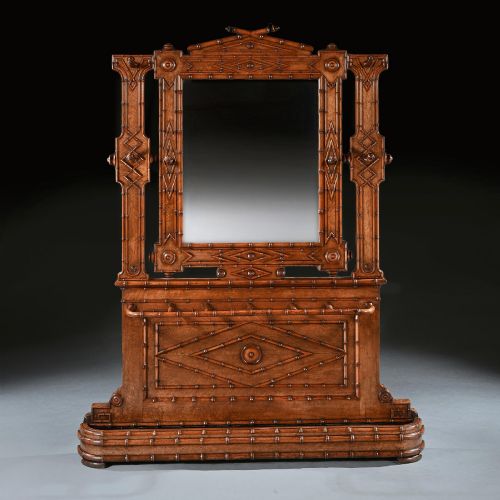
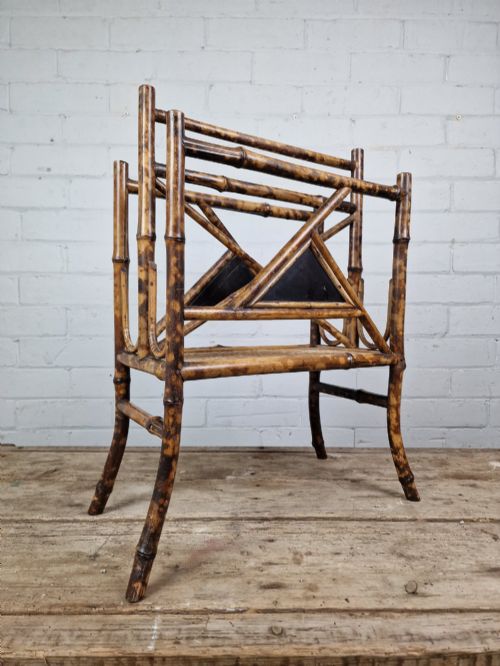
Construction relies heavily on ebonised wood, mahogany, pitch pine and bamboo, often paired with brass hardware and glass elements. Many items utilise faux bamboo techniques alongside genuine bamboo framing to achieve the desired Japanese-inspired aesthetic.
Surface treatments include fine lacquer, gilding and crisp carving, which highlight the geometric and naturalistic motifs characteristic of the movement. Fabric upholstery appears on seating such as salon chairs and stools.
Listings feature 19th-century works utilising ebonised wood, bamboo, mahogany, pitch pine and brass across desks, hall stands and salon suites.
Distinguishing quality in the pieces
Quality reveals itself in the precision of the joinery, the selection of timber such as birds-eye maple or mahogany, and the crispness of ebonising and gilding. Exhibition pieces demonstrate superior hand-craftsmanship and sophisticated decorative schemes.
The integration of materials like brass and lacquer distinguishes finer examples, alongside documented attribution to notable designers of the nineteenth century.
George Faulkner Armitage·Jas James Shoolbred·EW Godwin
The Aesthetic Period Furniture Glossary
- Ebonised wood
- Timber treated with a finish to imitate expensive ebony, commonly used to create high-contrast surfaces in Victorian design. This treatment became a hallmark of the Aesthetic Movement.
- Japonisme
- The influence of Japanese art and design on Western decorative arts during the late nineteenth century. It manifests through asymmetry, natural motifs and the use of bamboo.
- Bonheur du jour
- A small, light lady's writing desk featuring a tiered superstructure with shelves, drawers or a cabinet. These desks were popular in nineteenth-century drawing rooms and morning rooms.
- Canterbury
- A small piece of furniture designed for holding sheet music, magazines or folios, typically featuring slatted wooden dividers. They frequently appear in bamboo during the aesthetic period.
- Salon suite
- A matched set of seating furniture, such as a sofa and matching chairs, designed for formal reception rooms. These suites showcase unified stylistic elements across multiple pieces.
Aesthetic Period Furniture: Frequently Asked Questions
What defines aesthetic period furniture?
Aesthetic period furniture is defined by its late nineteenth-century origins and its focus on art for art's sake, moving away from heavy Victorian historicism. Pieces often incorporate ebonised surfaces, bamboo structures and Japanese-inspired motifs.
The style emerged during the 1870s and continued through the 1890s, encompassing everything from side tables to complete salon suites.
How do I date these pieces?
Dating relies on stylistic markers, construction methods and recorded periods spanning the 1870s to the 1890s. Many items carry specific Victorian period traits combined with the lighter forms of the Aesthetic Movement.
Material choices like ebonised wood and bamboo also help anchor items within this specific nineteenth-century timeframe.
How do I care for ebonised wood?
Ebonised wood requires gentle dusting with a soft cloth to protect the dark surface finish. Avoid placing pieces in direct sunlight to prevent fading of the ebonised or gilt details.
Maintaining stable room humidity preserves the underlying timber and prevents stress on delicate joinery.
What is faux bamboo furniture?
Faux bamboo involves shaping hardwood, such as maple or beech, to replicate the segmented appearance of real bamboo. Artisans carved and painted the timber to achieve an exotic Japanese-inspired look.
This technique provided the decorative effect of bamboo while ensuring greater structural stability for larger furniture forms.