

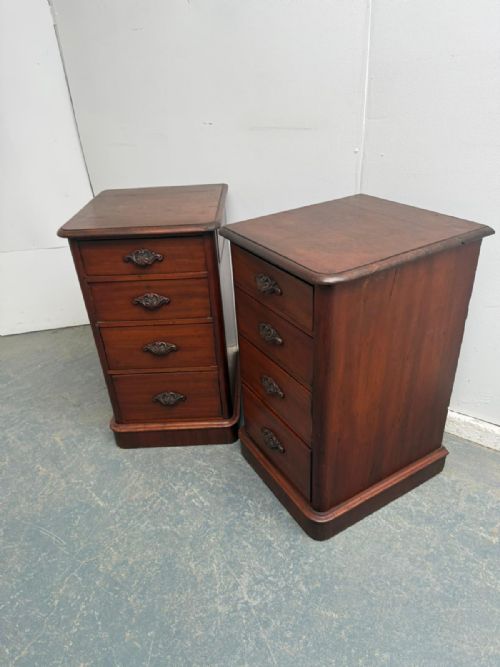
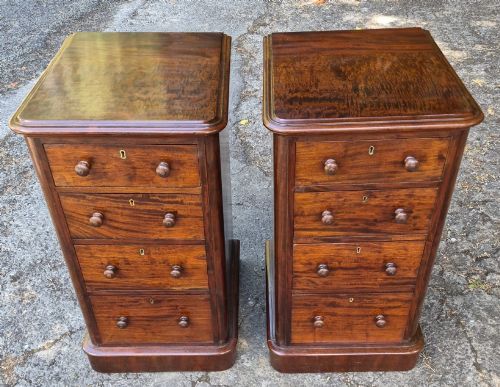
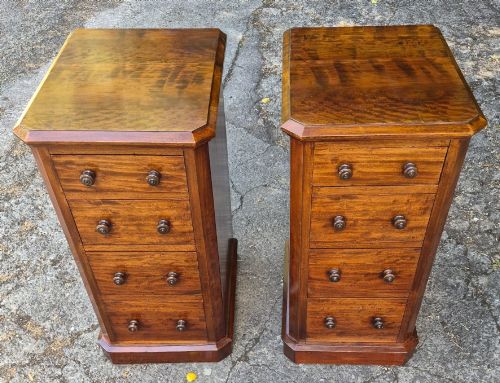
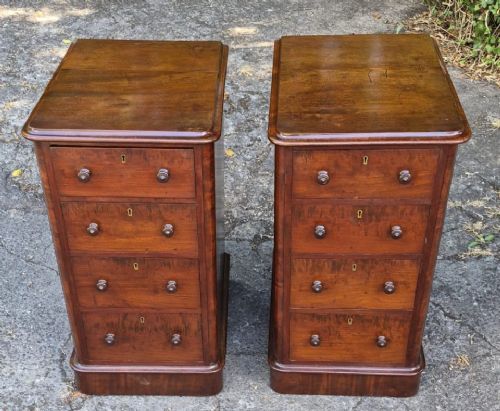


Pair of Narrow Chests
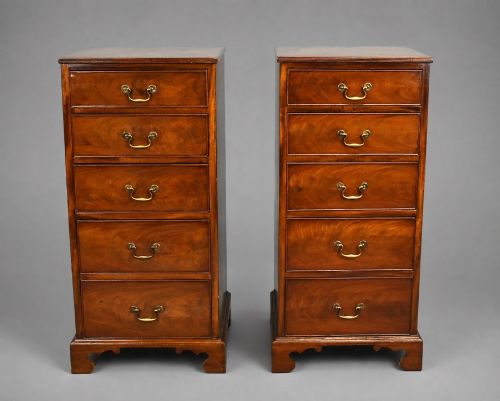
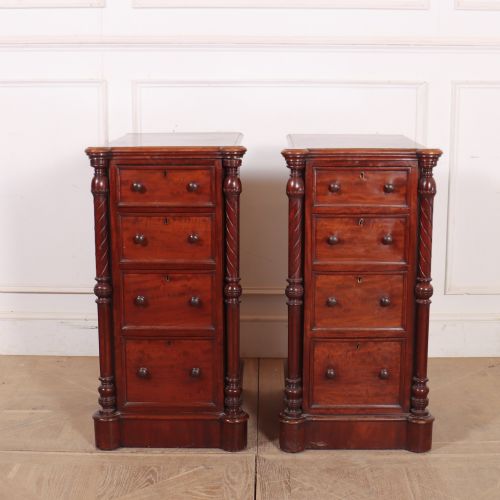
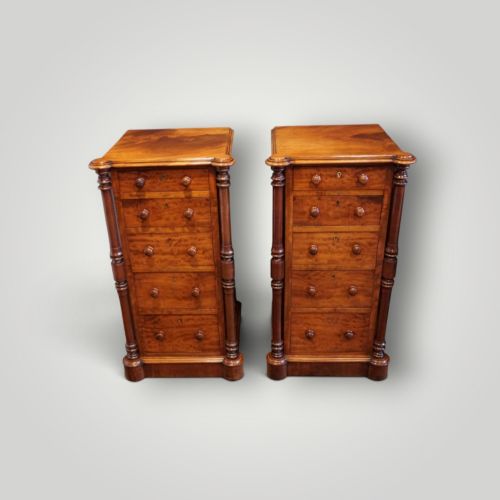
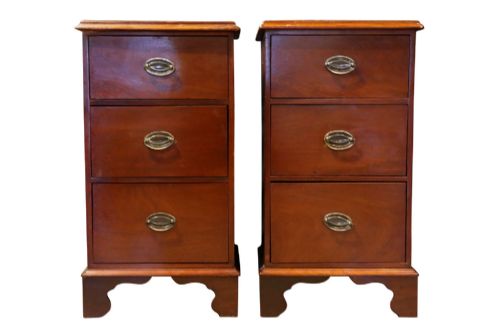
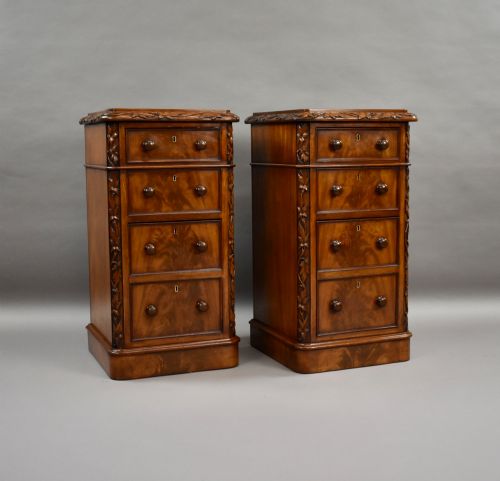
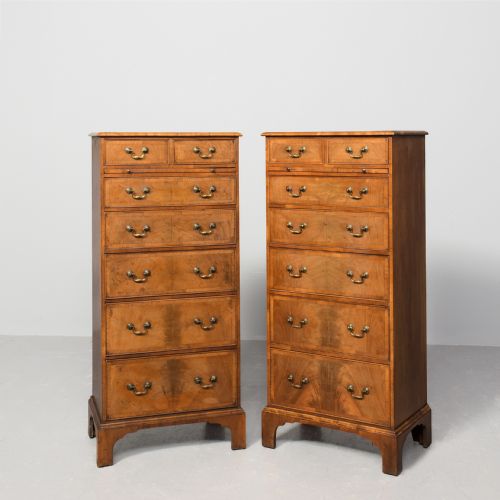
These pair of narrow chests offer compact proportions and vertical storage, delivering practical bedside or small-room utility without dominating the floor space.
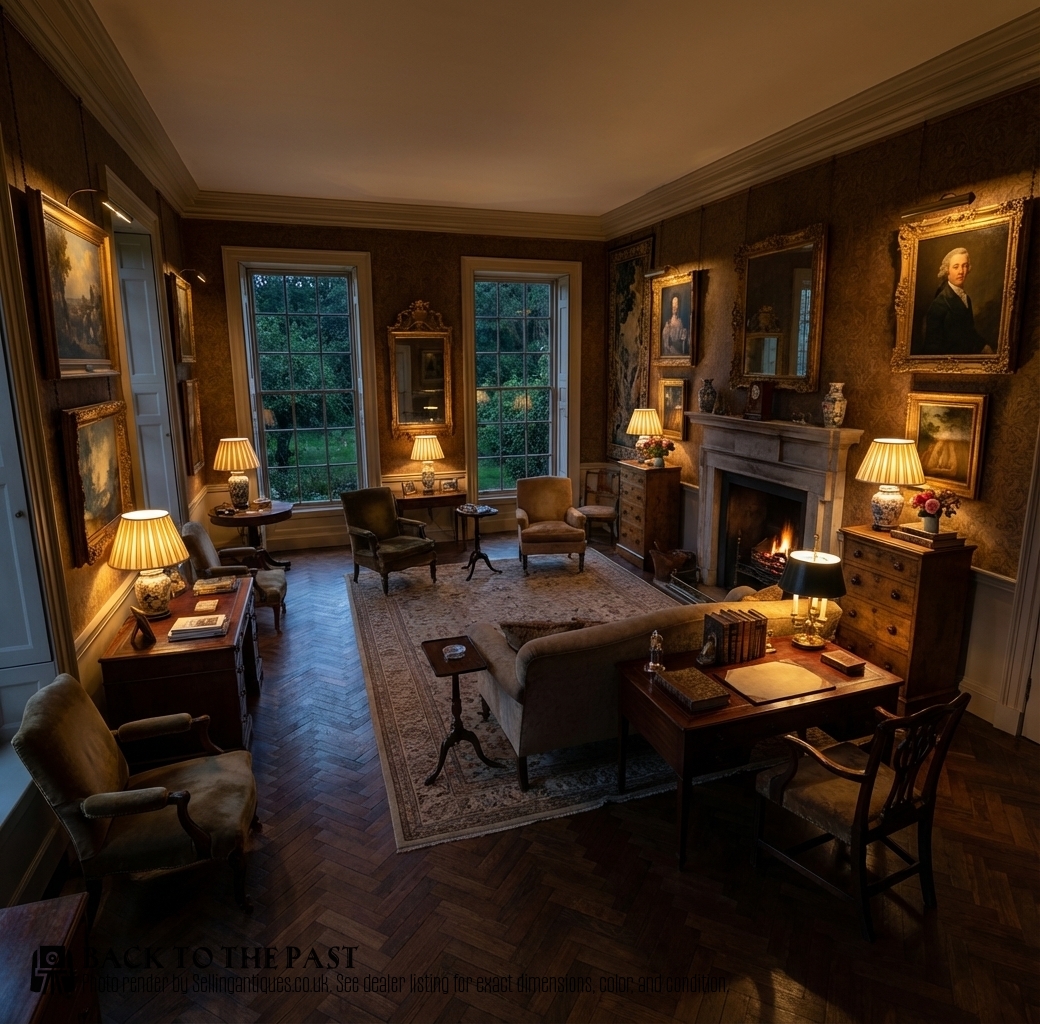
Pair of Narrow Chests
A search for a pair of narrow chests typically leads to bedside storage, including bedside tables, cabinets, lockers, and small chests of drawers dating from the Georgian and Victorian periods up to the Art Deco era. These pieces serve as functional bedroom or hallway furniture where floor area is restricted.
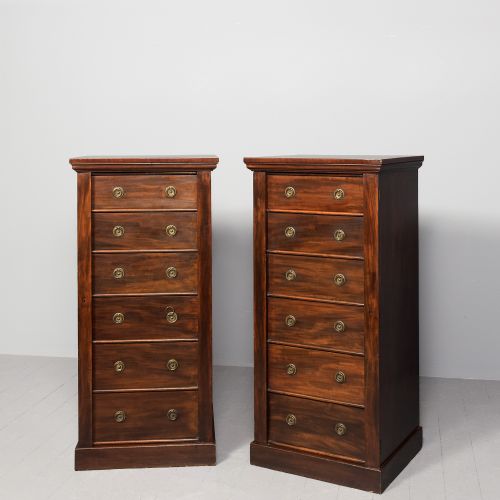
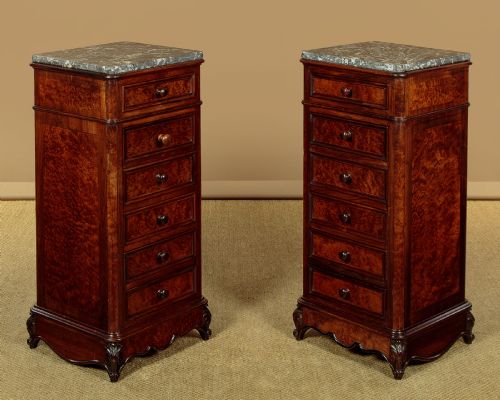
The prevailing form on this page is the Victorian mahogany bedside chest, though variations include walnut, burr walnut, rosewood, pine, satin birch, and amboyna. Alongside standard bedside formats, the selection contains Wellington chests, cutlery boxes, and tall nightstands sharing similarly slender footprints.
Materials and construction methods
Cabinet makers relied heavily on timber species such as mahogany, walnut, and pine, often utilising veneers like burr walnut, amboyna, or parquetry patterns to create patterned surfaces on drawer fronts and tops. Solid timbers formed the structural carcases, supplemented by brass handles, locks, and occasionally silver mounts.
Construction techniques involve traditional jointing for drawer boxes and carcases, with variations ranging from waxed finishes to marquetry inlay and Gothic or French Louis XV stylistic detailing. Some examples exhibit adaptations from earlier furniture forms to create matched pairs of narrow proportions.
Periods represented span from the 18th century and George III through Victorian, Edwardian, and Art Deco eras up to 1930.
Distinctions in craftsmanship and condition
Quality separates through the selection of timber figures, such as highly grained burr walnut or rich mahogany, and the precision of decorative elements like marquetry inlay, parquetry veneer, and brass hardware. Finer pieces demonstrate crisp carving, balanced proportions, and well-fitted drawer construction.
The integrity of the original surfaces, whether waxed, polished, or decorated, dictates distinction alongside the matching consistency between the two pieces. Examples carrying maker stamps or attributed to documented workshops hold greater documentary interest than unbranded carcases.
Warings Liverpool·James Shoolbred·S & H Jewells of London
The Pair of Narrow Chests Glossary
- Wellington chest
- A tall, narrow chest of drawers secured by a locking hinged side pilaster bar. This form originates from the nineteenth century and maximises vertical storage.
- Bedside locker
- An enclosed bedside cabinet featuring a door or drawers designed to conceal chamber pots or personal items. They appear frequently in Victorian bedroom suites.
- Marquetry
- The art of forming decorative patterns using fitted veneer pieces of different woods and materials. It is seen on Victorian and continental cabinet work.
- Parquetry
- A geometric mosaic of wood pieces used for decorative floors and cabinet surfaces. It creates a tessellated pattern across the top or front of tables.
- Cutlery box
- A specialised storage container for silverware, occasionally adapted or found in narrow proportions. Eighteenth-century versions often feature bow fronts and solid silver mounts.
Pair of Narrow Chests: Frequently Asked Questions
What rooms suit narrow chests?
These compact pieces fit easily beside beds, in small hallways, or as supplementary drawer space in tighter corners.
Their restricted footprint allows them to provide surface area and storage where standard furniture proves too bulky.
How do I spot a Victorian chest?
Victorian examples typically feature dark timber such as mahogany or walnut, heavy brass hardware, and traditional drawer dovetailing.
They span several decades, ranging from early mid-century designs to late Victorian aesthetic movement or Gothic revivals.
Are these pieces always sold together?
The listings focus entirely on matched pairs designed to sit symmetrically on either side of a bed or fireplace.
Cabinet makers and retailers grouped these items to ensure consistent height, timber grain, and style across the pair.
What is a Wellington chest?
A Wellington chest is a tall, exceptionally narrow drawer stack secured down one side by a locking wooden flap.
This locking mechanism protected the contents of every drawer simultaneously with a single key turn.