


Pair of Wall Lights
A pair of wall lights brings balanced illumination and period character to a room, drawing the eye directly to the architectural details of the walls.

Pair of Wall Lights
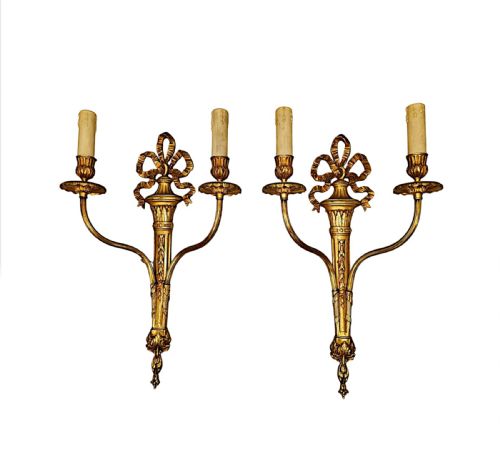
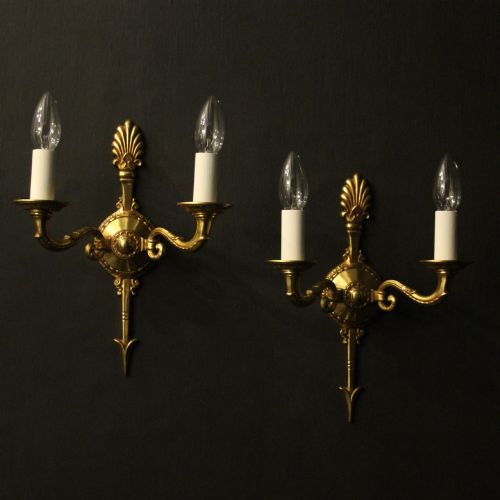
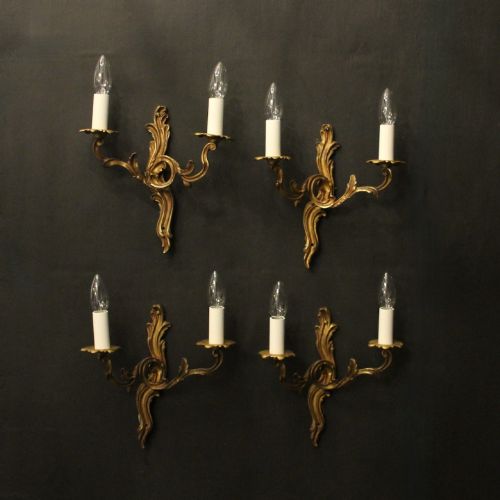
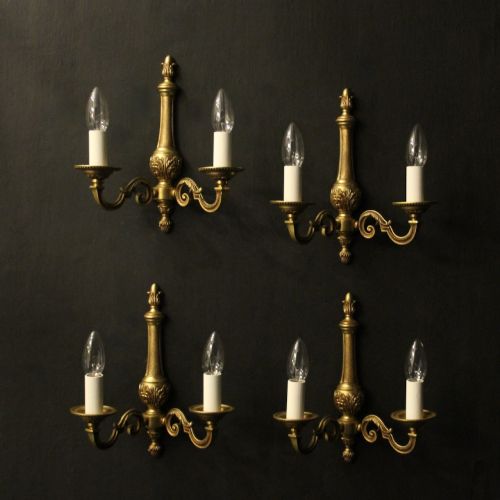
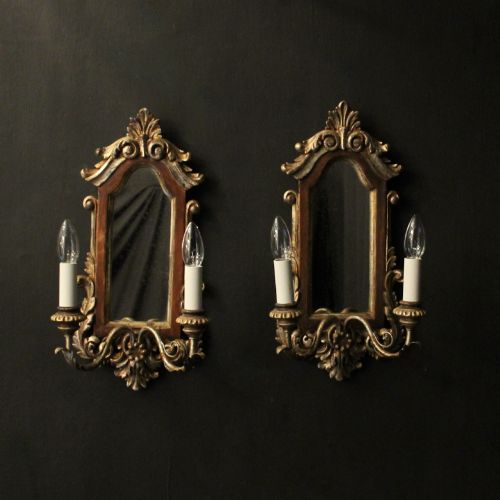
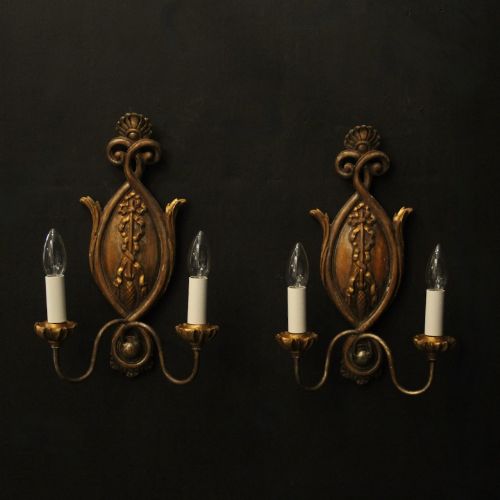
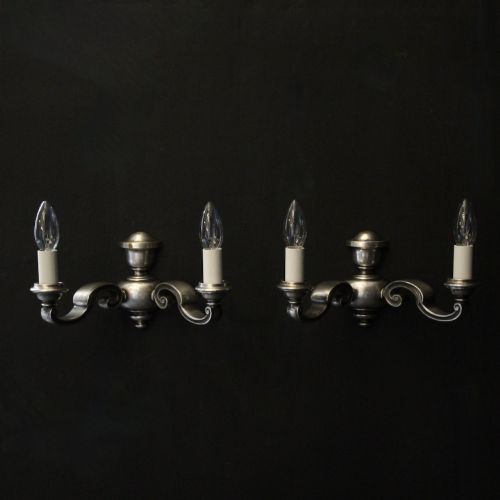
When searching for a pair of wall lights, buyers encounter fixtures designed to flank mirrors, fireplaces, or doorways with symmetrical lighting. The selection spans single-arm sconces, multi-branched candelabra fittings, and enclosed lanterns spanning several centuries of interior design.
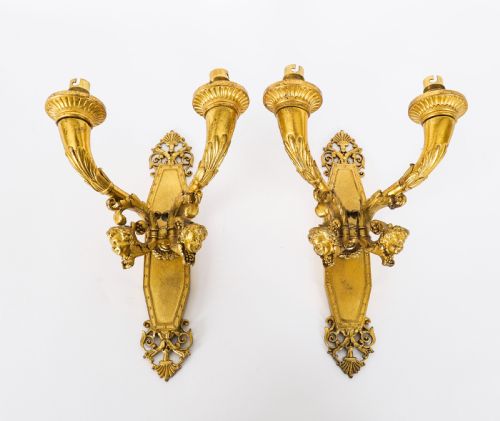
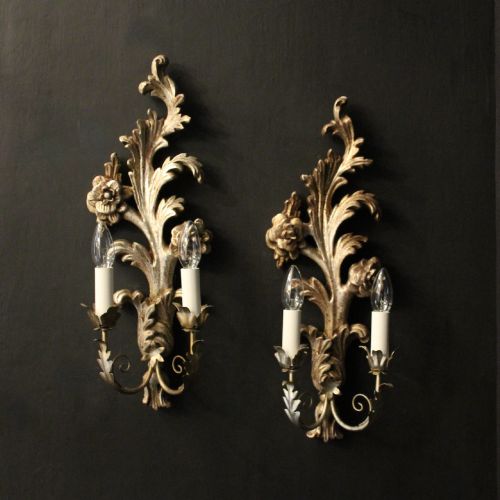
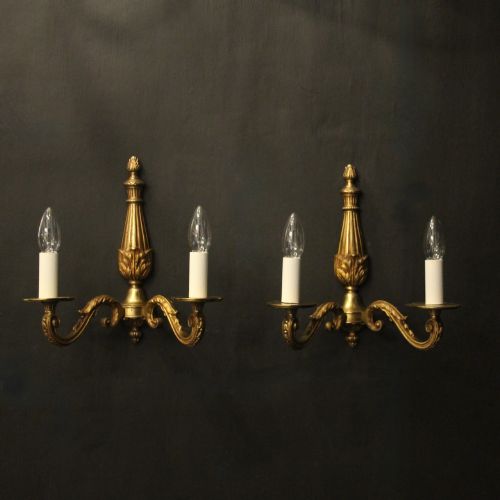
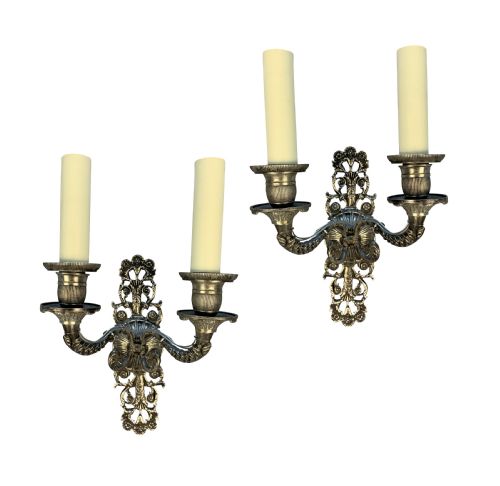
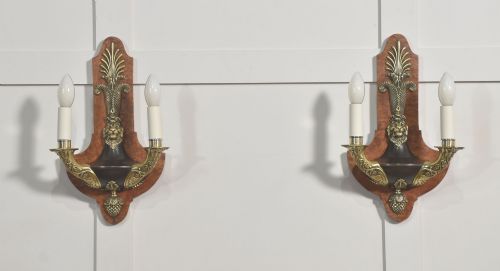
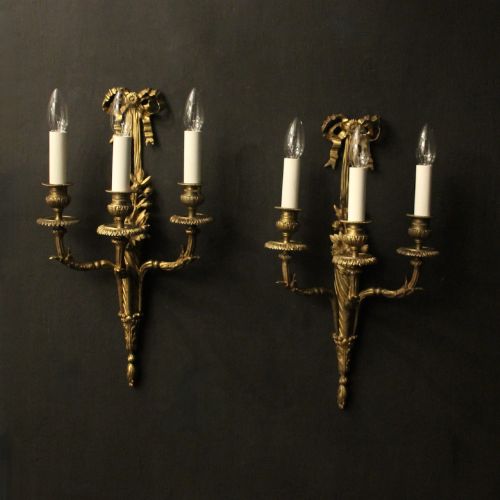
French origins dominate the selection, particularly pieces displaying neoclassical, empire, and rococo revival styles rendered in gilded bronze or brass. Alongside these formal continental designs appear Arts and Crafts copper fixtures, Florentine carved giltwood girandoles, and clean-lined Art Deco chrome pieces.
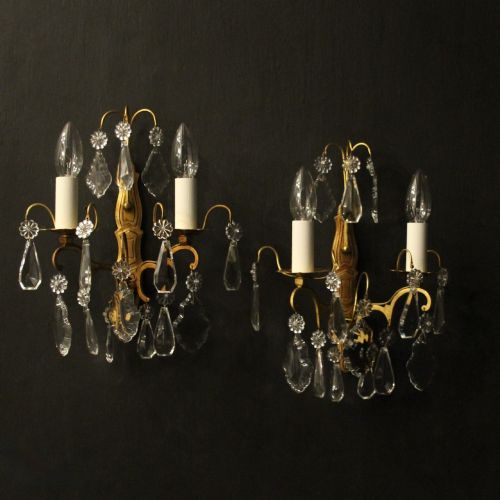
Forms range from compact single-light brackets to substantial twin and triple-arm arrangements, occasionally featuring cut crystal drops or hand-painted tole peinte foliage. These functional objects bridge the gap between illumination and decorative wall art.
How they were made
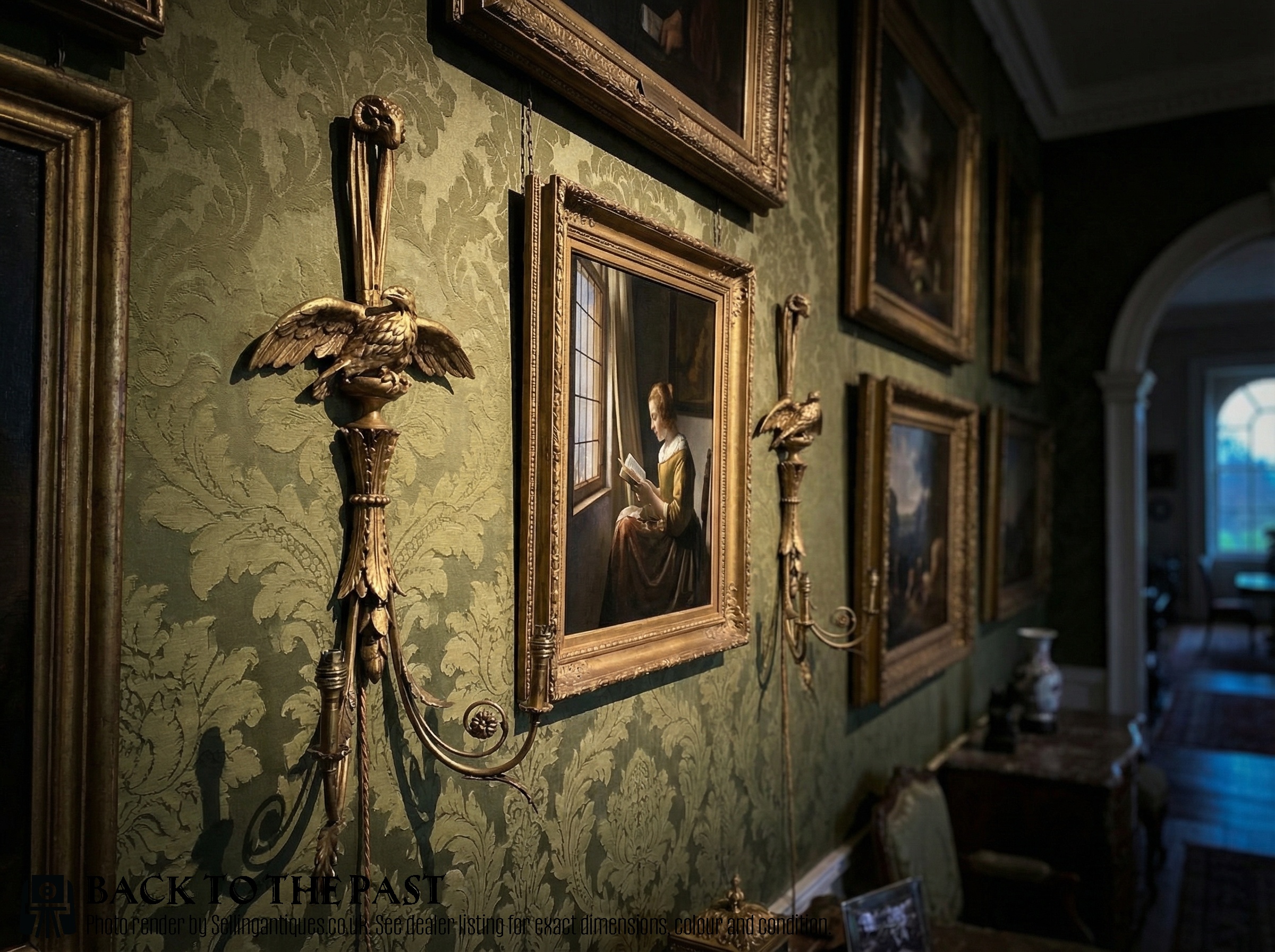
Metalworking forms the basis of most pieces, utilising cast brass, bronze, and copper shaped through founding, hammering, and chasing. Gilt bronze and ormolu examples achieve their surface finish through the application of gold leaf or mercury gilding onto a bronze base.
Wooden variants rely on hand-carved giltwood or burr walnut, frequently seen in Florentine girandoles and English revival sconces. Glass components, including cut crystal drops and blown shades, complement the metal and wooden frames to diffuse the light output.
Pair of Wall Lights Retail Price Guide 2026
Typical asking prices for pair of wall lights among the pieces listed under this phrase on Sellingantiques today, from the lower quarter to the upper quarter. They describe what is for sale here now, not the wider market.
Certain early twentieth-century designs abandon formal symmetry entirely, featuring sculpted nude figures holding the illumination sources aloft.
What varies in quality
The crispness of the casting and hand-chasing on bronze and brass elements distinguishes workshop output, where sharper relief and deeper detailing signal superior craftsmanship. Surface treatments also differ significantly, ranging from deeply patinated original gilding to simpler plated finishes.
Structural integrity depends on the assembly of the arms and backplates, with higher-tier pieces employing robust mechanical joints rather than simple soldered connections. The integration of high-grade cut crystal or hand-carved wooden elements further separates standard production from exceptional examples.
W.A.S. Benson·Maison Baguès·Bruce Talbert·Casier
The Pair of Wall Lights Glossary
- Ormolu
- Gilded bronze, where finely ground gold is applied to a bronze object using a mercury amalgam technique. This finish yields a deep, warm metallic lustre characteristic of fine French pieces.
- Girandole
- A decorative wall-mounted light fixture featuring a mirror attached to the backplate. The reflective glass serves to amplify the illumination from the candle branches.
- Tole Peinte
- Painted sheet metal, frequently shaped into floral or foliage motifs. This technique introduces vibrant colour and organic texture to light fittings.
- Sconce
- A wall-mounted lighting fixture designed to hold candles or electric bulbs. The form attaches directly to the wall surface via a decorative backplate.
- Backplate
- The structural plate that fastens a wall light to the vertical surface. It often carries the decorative design motif of the piece.
Pair of Wall Lights: Frequently Asked Questions
How do I install antique wall lights?
Most period wall lights require mounting to a standard electrical junction box recessed into the wall. Professional installation ensures that the weight of heavy bronze or cast brass frames is properly supported.
Rewiring may be necessary for older pieces to meet modern safety standards. Consult an electrician to handle the internal wiring configuration safely.
How do I clean brass and bronze?
Dust metal surfaces regularly with a soft, dry cloth to prevent the accumulation of grime. Avoid harsh chemical cleaners that can strip original patinas or damage historic gilding.
For crystal drops and glass shades, remove them carefully and wash them in lukewarm soapy water. Dry them thoroughly before reattaching them to the metal frame.
Are these lights wired for electricity?
Many surviving pieces originate from the candle or gas era and have undergone conversion to electricity at various points in their history. Listings frequently note whether the wiring has been updated or tested.
Some fixtures retain dual functionality or original candle sockets for decorative display. Review individual item descriptions for specific wiring details before purchase.