





Pair of Table Lustres
A pair of table lustres brings unmistakable sparkle to a mantelpiece, catching the candlelight through rows of suspended glass drops.
Pair of Table Lustres
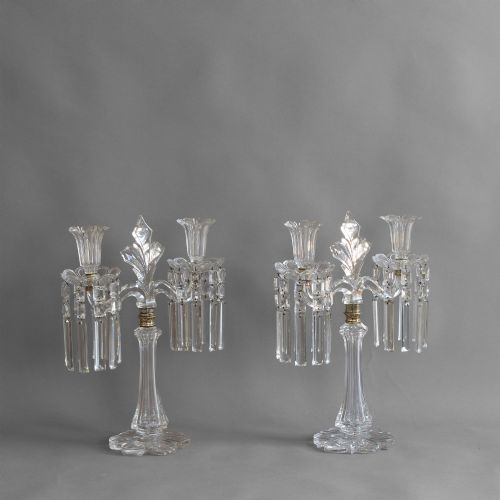
A pair of table lustres combines the function of a candlestick with the ornamental brilliance of hanging crystal or glass drops, designed to sit on tables and mantelpieces. These decorative lighting pieces appear across various periods including the Regency, Victorian, and Edwardian eras, reflecting changing interior tastes.
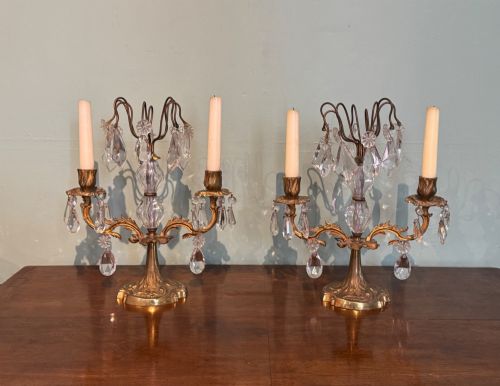
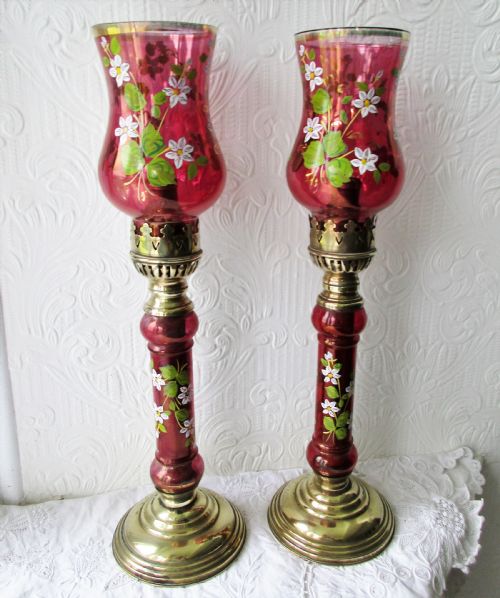
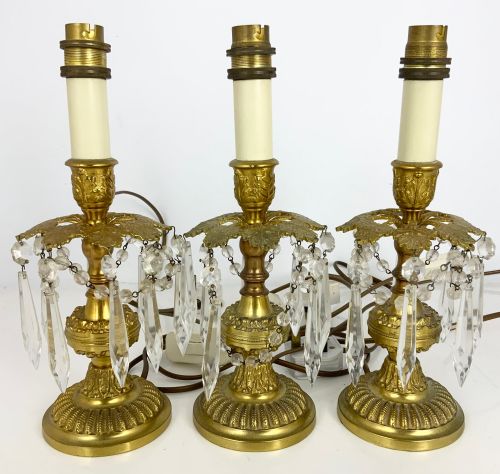
The forms range from simple glass candlesticks fitted with prismatic drops to elaborate multi-branched candelabra and candle lamps in gilt bronze, brass, and ormolu. Green glass and opaline examples feature alongside clear cut-glass designs, showing the broad palette employed by makers across English and continental workshops.
French styles heavily influence the surviving pieces on the market, notably French Chateau and Rococo Revival designs that emphasise ornate metalwork and lavish crystal draping. Buyers most frequently encounter nineteenth-century interpretations that showcase the enduring popularity of these shimmering candle holders.
Materials and construction
Makers fashioned the structural bodies of these items from cast brass, gilt bronze, and ormolu, often combining metal stems with blown or moulded glass components. Enamelled glass and opaline variants required specialised colouring techniques before being finished with hand-cut details.
The defining feature, the glass drops or droppers, relied on skilled glass-cutting to create facets that maximised light reflection from the candles above. Wire pins or metal loops secured these crystal pendants to the upper rim, allowing them to sway and catch the surrounding light.
Materials recorded across the selection include crystal, cut glass, brass, gilt bronze, opaline, and enamel.
Assessing quality and execution
Quality rests significantly on the precision of the glass cutting and the clarity of the crystal or glass used for both the body and the hanging lustres. Sharper facets and heavier metal castings separate finer examples from simpler, mass-produced commercial variants.
The integrity of the matching pair matters immensely, as replacements or mismatched crystal drops disrupt the visual harmony when the candles are lit. Finer pieces demonstrate meticulous hand-finishing in the gilt mounts and securely fitted drip pans that remain steady through decades of use.
The Pair of Table Lustres Glossary
- Lustre
- A decorative glass or crystal candlestick featuring hanging pendants designed to reflect and multiply candlelight. These ornaments gained immense popularity during the Georgian and Victorian periods.
- Drop
- A pendant of cut glass or crystal suspended from the rim of a lustre or chandelier. Also referred to as a dropper, it swings to catch the light.
- Opaline glass
- An opaque or translucent pale glass developed in France, frequently used for nineteenth-century decorative objects. It provides a soft, milky background for hand-painted or gilt decoration.
- Ormolu
- Gilt bronze created by applying a finely ground high-karat gold-mercury amalgam to a bronze base. This technique produces a rich, durable golden finish seen on high-end French and English metalwork.
Pair of Table Lustres: Frequently Asked Questions
How do you clean table lustres safely?
Cleaning requires removing each glass drop individually to wash them in lukewarm soapy water with a soft cloth. Metal bases need gentle dusting rather than liquid cleaning to protect the original gilding.
Leaving the drops to air dry prevents lint transfer before reattaching them to the brass or bronze arms with clean wire ties.
Were table lustres meant for lighting?
These pieces served a dual purpose as functional candle holders and ornamental showpieces for formal dining tables and drawing rooms. The hanging prisms amplified the dim glow of single or multi-branch candles before the advent of gas and electric lighting.
When unlit during daylight hours, the cut crystal still caught natural sunlight to brighten dim corners of the room.
How do I spot a matched pair of lustres?
A truly matched pair displays identical weight, glass colour, and matching arrangements of hanging drops around the rim. Hand-blown glass and early manufacturing tolerances mean slight variations occur, but major discrepancies in height or casting detail suggest a marriage of separate pieces.
Inspecting the base and the underside often reveals consistent wear patterns and matching construction marks confirming their origin as a set.
What periods do these table lustres date from?
The examples available span from the eighteenth century through the Regency and Victorian eras up to Edwardian and early twentieth-century interpretations. Regency and William IV pieces often feature crisp cut-glass and heavy bronze mounts, while later Victorian versions embrace coloured glass and ornate Revival styles.
Stylistic cues such as the shape of the pedestal and the cut of the crystal help narrow down the decade of manufacture.