




Antique Crystal Table Lustres
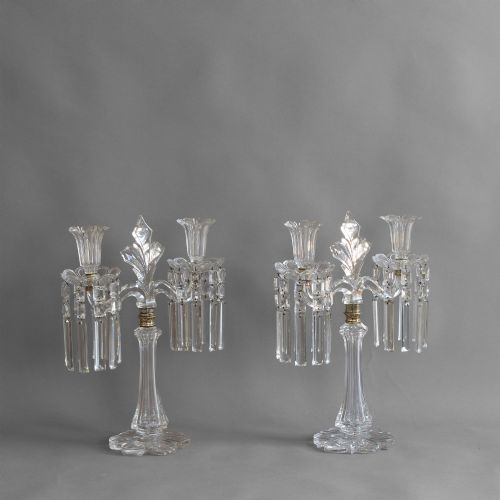
These antique crystal table lustres catch the candlelight and throw it across the room through hanging glass prisms.
Antique Crystal Table Lustres
Antique crystal table lustres are decorative lighting accessories designed to sit on tables, mantels or sideboards, combining a central candleholder with hanging glass drops. When people search for antique crystal table lustres, they encounter objects formed from glass, cut crystal, and gilt metals that date from the eighteenth century through to the early twentieth century. The examples met on this page span Victorian, Regency, and French styles, often appearing in matching pairs.
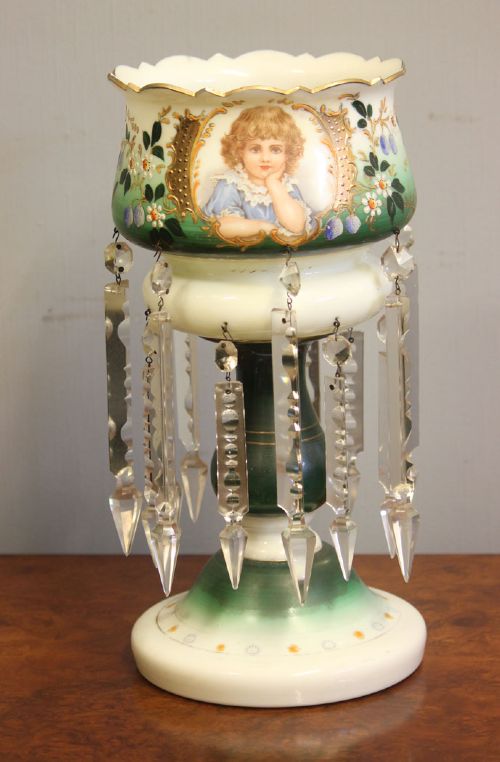
The primary forms include table lustres, mantle lustres, and candelabras fitted with removable pendants. Makers fashioned these pieces using coloured or clear glass bodies, ranging from green and ruby to opaline and clear cut glass. They serve both a practical function for holding candles and a decorative purpose, reflecting light from every angle.
How they were made
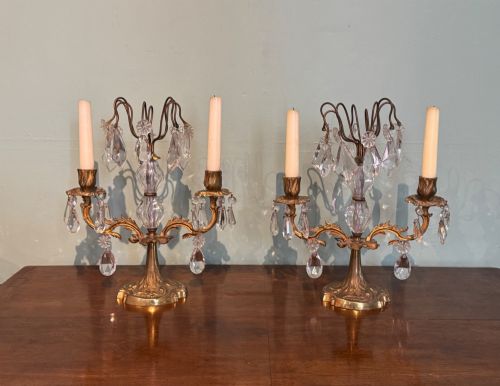
Makers constructed these pieces using heavy glass bases paired with metal mounts made from gilt brass, gilt bronze, or ormolu. Workers cut the glass bodies by hand to create facets that catch and refract the flame of a candle.
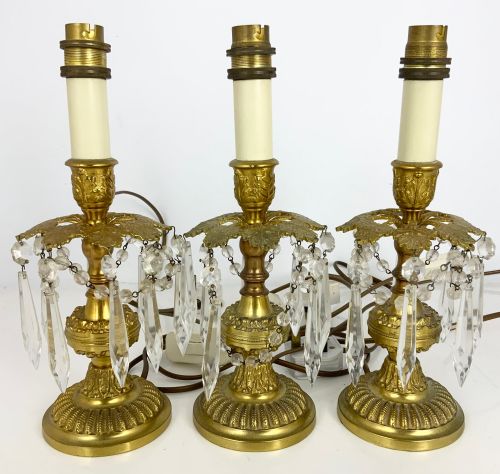
Hanging drops, often called prisms or icicles, were suspended from the rim using wire loops or metal pins threaded through drilled holes. Gilt metal components provided structural support and added decorative contrast to the clear or coloured glass.
Materials recorded on this page range from clear cut crystal and ruby glass to gilt bronze and opaline.
What varies in quality
The clarity and depth of the glass cutting separate standard examples from finer pieces. Deep, crisp facets on the body and the hanging drops produce sharper light refraction than shallow or rounded moulding.
The metalwork also defines the grade of the object, with chased gilt bronze and ormolu demonstrating higher craftsmanship than simpler gilt brass or gilt metal mountings.
The Antique Crystal Table Lustres Glossary
- Lustre
- A candelabra or candlestick decorated with hanging glass pendants designed to reflect light. These pieces usually sit on tables or mantelpieces.
- Drop
- A pendant of cut glass suspended from the rim of a lustre to refract candlelight. Drops take various shapes, including spears, buttons, and icicles.
- Opaline
- An opaque or translucent glass popular in nineteenth-century French decorative objects. It appears in soft colours and white.
- Ormolu
- Gilt bronze created by applying a mercury and gold amalgam to a bronze base. This technique produces a rich golden finish found on higher-grade mounts.
- Regency
- A British design period dating from the early nineteenth century. Pieces from this era often feature classical lines and balanced proportions.
Antique Crystal Table Lustres: Frequently Asked Questions
What are antique crystal table lustres?
These are decorative candleholders fitted with hanging glass prisms designed to reflect and multiply light. They sit on tables or mantelpieces as ornamental centerpieces.
Most examples feature a central stem and cup surrounded by glass drops suspended from a top rim.
How do you use table lustres today?
Collectors place them on dining tables, sideboards, or mantelpieces where natural light or candlelight can pass through the glass drops. They function as decorative focal points in a room.
While they can hold real candles, care must be taken with the surrounding glass and metal components.
How do you clean antique lustres?
Dust the glass bodies and hanging drops gently with a soft, dry cloth to prevent scratching the surface or disturbing the wire hangers. Avoid submerging metal and glass combined pieces in water.
Individual drops can be removed carefully for cleaning if the wire attachments allow safe handling.
How can you tell the period of a lustre?
Dating relies on examining the style of the metal mounts, the cut of the glass, and the shape of the hanging drops. Regency pieces often display classical bronze work, while Victorian examples frequently utilise coloured glass.
Construction methods, such as how the drops attach to the rim, also offer clues to the manufacturing era.