


Glass Candlestick Holders
Glass candlestick holders bring useful light and clear sparkle to a room, ranging from simple nineteenth-century stems to ornate multi-branch candelabra.
Glass Candlestick Holders
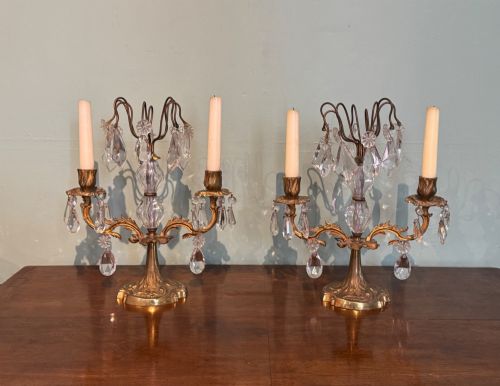
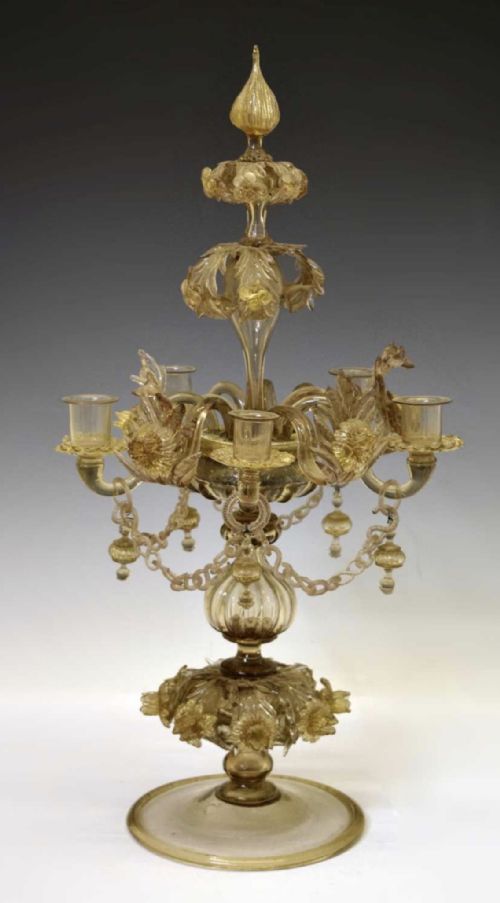
Glass candlestick holders appear in forms spanning simple single stems, tall table candelabra, and decorative lustres fitted with hanging crystal drops. Buyers searching this phrase most frequently encounter nineteenth-century Victorian pieces alongside later twentieth-century examples.
The selection includes pairs and matched sets originating from English, French, and Continental workshops. Alongside straightforward candle holders, the listings incorporate specialised desk accessories and candle lamps.
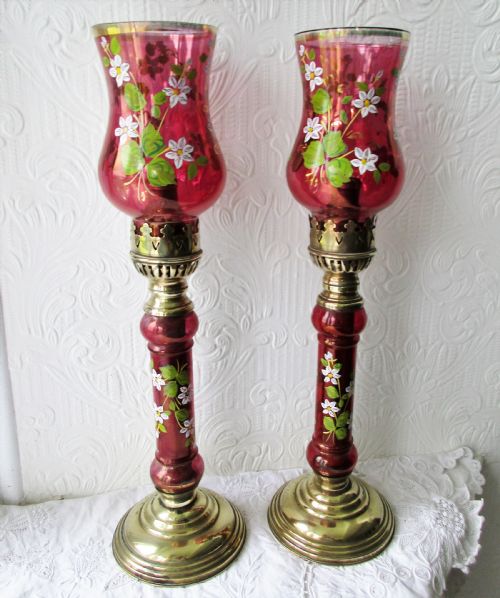
Materials extend beyond plain glass to include cut crystal, ruby glass, and Nailsea glass combined with metal mounts in brass, bronze, and gilt. Styles shift from Regency and French Empire through Victorian revival forms to Art Deco.
Materials and Techniques
Makers shaped glass through blowing, moulding, and heavy cutting to achieve faceted stems, domed feet, and hollow columns. Coloured glass varieties such as ruby and green required precise mineral additions to the molten batch.
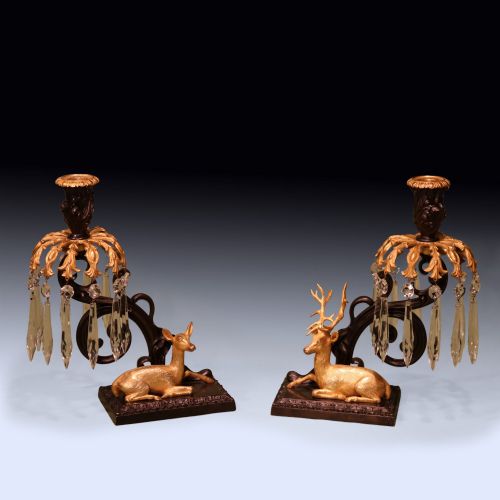
Metal components in brass, gilt bronze, and silver plate provide structural support and decorative contrast to the glass elements. Lustres and candelabra integrate suspended glass drops, known as prisms, linked to the main body with wire loops.
Some nineteenth-century desk stands combine glass inkwells with genuine stag antlers for a robust study.
Judging Quality
Quality rests in the crispness of the glass cutting, the clarity of the material, and the weight of the piece in the hand. Superior examples display sharp facets, smooth polished pontil marks, and harmonious proportions between the glass body and metal mounts.
In multi-part items like lustres and candelabra, quality shows in the matching completeness of the hanging crystal drops and the secure fit of the metal collars. Finer pieces maintain original components without replacement parts or mismatched glass sections.
Rene Lalique·Clarke
The Glass Candlestick Holders Glossary
- Lustre
- A decorative candlestick or candelabra featuring hanging glass prisms that catch and reflect candlelight. These pendants are often attached to a rim encircling the candle socket.
- Pontil mark
- The rough scar left on the bottom of a blown glass object where the pontil rod was snapped off after shaping. Skilled makers usually ground and polished this area flat.
- Cricklite
- A proprietary brand of patent glass candlestick and food warmer developed during the Victorian era. These typically use specialised glass shades and chimneys.
- Cut glass
- Glass decorated by grinding facets and patterns into the surface using a rotating wheel. This technique creates sharp edges and high optical refraction.
- Ormolu
- Gilt bronze ornamentation applied to furniture and decorative objects such as candlesticks. The technique involves bonding a fine layer of gold to a bronze base.
Glass Candlestick Holders: Frequently Asked Questions
What is the difference between a candlestick and a candelabra?
A candlestick holds a single candle in an upright socket, while a candelabra branches out to support multiple candles simultaneously.
Both forms appear frequently in clear cut glass and coloured varieties across the nineteenth and early twentieth centuries.
How do I identify Victorian glass candlesticks?
Victorian pieces often display heavier proportions, ruby or green coloration, and ornamental brass mounts or hanging crystal drops.
Examining the manufacturing techniques and base finishes helps confirm the nineteenth-century period of production.
What are glass lustres used for?
Lustres function as decorative candle holders designed to amplify the flicker of candlelight through suspended glass prisms.
They served as prominent mantelpiece and table ornaments during the Regency and Victorian periods.
Are these glass holders safe to use with modern candles?
Most antique glass holders accommodate standard taper candles, though testing the fit carefully prevents stability issues.
Using drip protectors or keeping them away from drafts protects the fragile glass and metal components during use.