



Pair of Spelter Statues
A pair of spelter statues offers the decorative presence of bronze at a domestic scale, capturing French figurative and historical subjects from the nineteenth century.
Pair of Spelter Statues
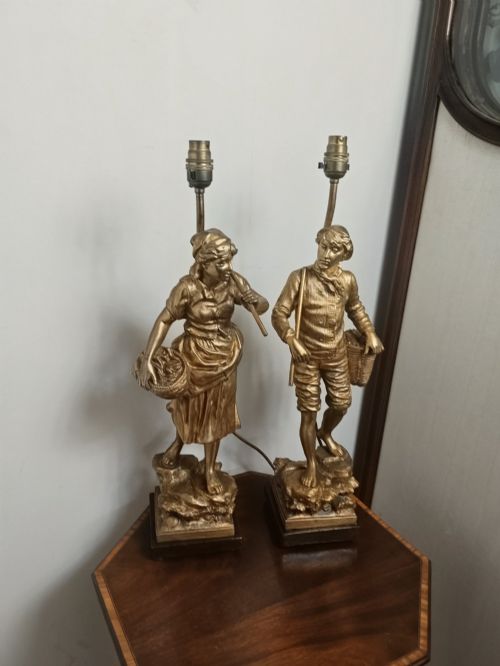
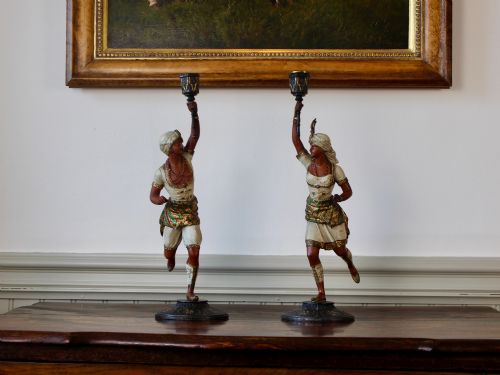
A pair of spelter statues represents matched figural compositions, most frequently encountered in nineteenth-century French and Victorian interpretations of soldiers, harvesters, cavaliers, and allegorical subjects. These matched pieces often take the form of freestanding sculptures, mantel ornaments, or functional items such as table lamps and candlesticks.
The objects span periods from the mid-nineteenth century through to the turn of the twentieth century, encompassing Victorian historicism, Renaissance revival, and art nouveau styles. Buyers encounter both cold-painted finishes and gilt metal treatments that imitate higher-value bronzes of the era.
Materials and construction
These figures are cast from zinc alloy, commonly known as spelter, which served as an accessible alternative to bronze for domestic decorative arts. Manufacturers often applied surface coatings, including paint, bronze patination, or gilding, to achieve the appearance of more costly metals.
Many examples incorporate secondary materials such as wooden bases or alabaster components to provide weight and structural support to the softer metal figures.
Harvesters and musketeers stand shoulder to shoulder with Roman figures and Renaissance soldiers across these nineteenth-century mantel ornaments.
Assessing quality and execution
The definition and crispness of the cast dictate the quality of a pair of spelter statues, separating sharper workshop output from softer secondary castings. Finer examples retain intricate details in costume, facial expression, and textural elements like armour or drapery.
The integrity and application of the original surface finish, whether cold-painted pigments, bronze patination, or gilt metal, heavily influence the visual success of the piece.
E Rousseau
The Pair of Spelter Statues Glossary
- Spelter
- A zinc alloy used extensively in the nineteenth century for decorative castings and figures. It provides a lighter and softer alternative to bronze.
- Cold-painted
- A technique where paint is applied to a metal object without subsequent firing or heat curing. This finish is frequently found on nineteenth-century figural works.
- Neoclassical
- An artistic style drawing inspiration from the classical art and culture of ancient Greece and Rome. It appears across various nineteenth-century decorative objects.
- Gilt metal
- Metal that has been treated with a thin layer of gold or gold-coloured finish. This coating gives the appearance of solid gold or fire-gilt bronze.
Pair of Spelter Statues: Frequently Asked Questions
What are spelter statues made of?
These statues are cast from zinc alloy, a material chosen by nineteenth-century manufacturers for its malleability and lower cost compared to bronze. Makers often finished the base metal with paint, patination, or gilding.
Secondary elements such as wooden mounts or alabaster components sometimes appear in the construction to add stability.
How do I date a pair of spelter statues?
Dating relies on stylistic clues, costume details, and manufacturing methods associated with periods like the Victorian era and late nineteenth century. Pieces frequently reflect aesthetic movements such as Renaissance revival or art nouveau.
Base materials and the ageing of surface finishes also help indicate the approximate decade of production.
Where were most nineteenth-century spelter statues made?
France produced a large portion of these decorative figural works, often exporting matched pairs across Europe and Britain. French foundries specialised in historical, allegorical, and genre subjects.
British and broader continental makers also adopted the medium for domestic mantel ornaments and lighting.
How should I care for antique spelter figures?
Maintenance requires gentle dusting with a dry, soft cloth to protect the delicate surface coatings. Moisture and harsh cleaning agents can damage cold-painted or gilt finishes.
Keeping the pieces away from direct sunlight and stable environmental conditions helps preserve the metal and any applied patination.