





Neoclassical Warrior Figures
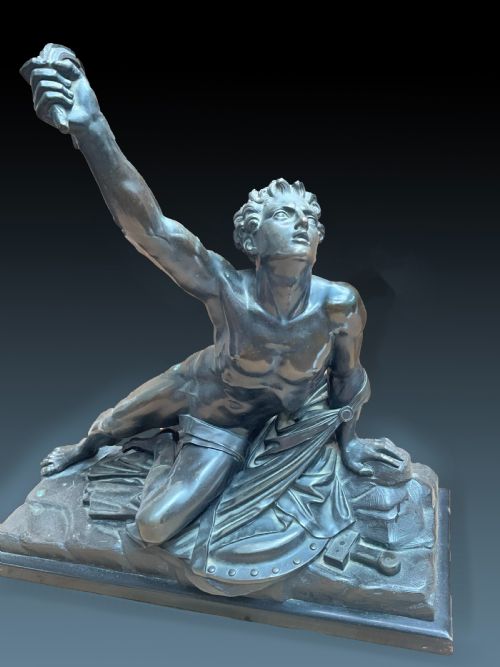
Neoclassical warrior figures bring classical myth and ancient history directly into your interior with cast bronze, brass, and spelter.
Neoclassical Warrior Figures
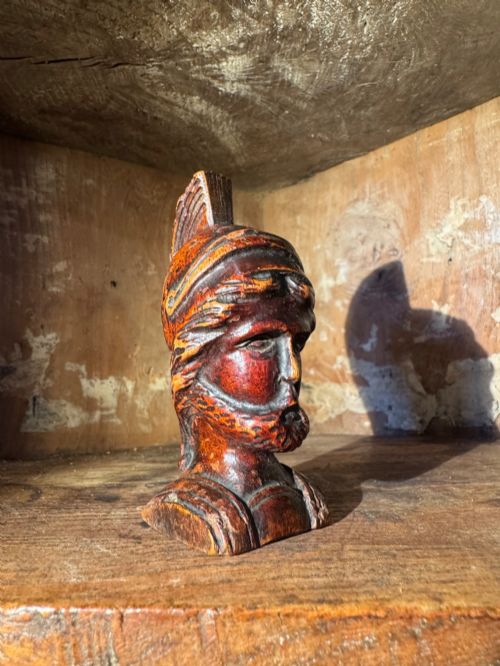
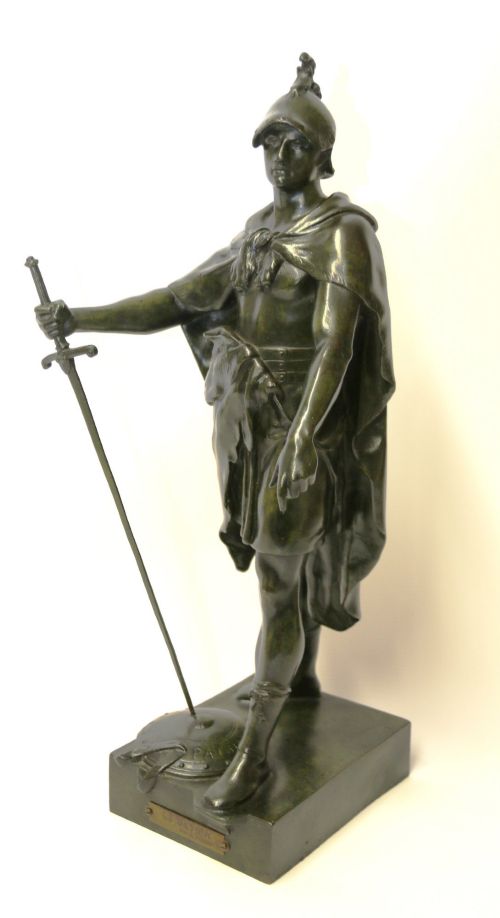
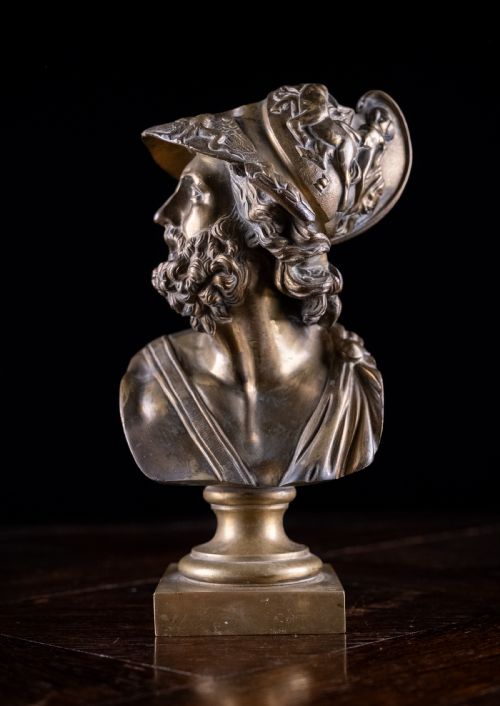
Neoclassical warrior figures capture heroic subjects from antiquity, including Roman soldiers, Greek heroes, and mythological deities. These pieces emerge in various forms, most commonly as freestanding sculptures, table lamps, and detailed busts.
The selections available here span the nineteenth century, including Victorian interpretations and specific decades from the eighteen-fifties through the eighteen-nineties. French academic and Classical revival styles dominate the material, reflecting a nineteenth-century fascination with the ancient world.
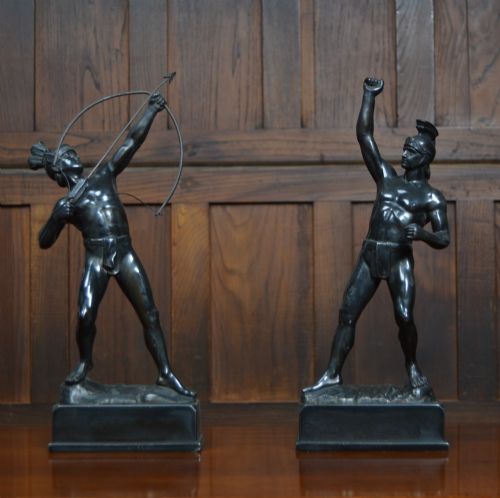
Buyers regularly encounter subjects like Ajax, Hannibal, Perseus, and Athena, often cast during the height of the Grand Tour tradition. These figures range from modest spelter pairs to substantial patinated and gilt bronze sculptures.
Materials and construction
Foundry workers utilised traditional casting methods to shape bronze, brass, and spelter into complex armour, drapery, and weaponry. Patinated bronze and gilt bronze surfaces received careful chemical or metallic treatments to achieve deep, rich tones and highlights.
Zinc alloy and spelter offered accessible alternatives to heavier metals during the Victorian period, often receiving patination to mimic bronze. Marble plinths frequently provided solid mounting bases for busts and standing statues alike.
Listings feature nineteenth-century materials including bronze, spelter, brass, and marble.
Quality and craftsmanship
Casting crispness dictates the upper tier of these pieces, separating sharp facial expressions and armour detail from softer, worn impressions. Heavier metals like genuine bronze provide superior durability and weight compared to lighter spelter and zinc alloys.
The depth and consistency of the patination reveal the skill of the nineteenth-century foundry. Superior examples maintain intact gilding, stable marble mounts, and precise chasing that preserves the original sculptor's intent.
Émile Louis Picault·Franz Iffland·Richard Aurili
The Neoclassical Warrior Figures Glossary
- Spelter
- A zinc alloy frequently used in the nineteenth century as an economical substitute for bronze. It takes a dark patination well, though it is softer and lighter than copper-based metals.
- Grand Tour
- A cultural journey undertaken by nineteenth-century elites across Europe that popularised small-scale classical sculptures and busts as souvenirs. These pieces often depict heroic figures from Greek and Roman history.
- Patinated bronze
- Bronze treated with chemicals to produce a specific surface colour, ranging from deep brown to verdigris. This process enhances the visual depth of muscular forms and fabric folds.
- Chasing
- The manual refinement of a cast metal surface using hammers and punches to sharpen details and remove casting flaws. Higher quality nineteenth-century sculptures show extensive hand-chasing across armour and hair.
Neoclassical Warrior Figures: Frequently Asked Questions
What periods do these figures come from?
These sculptures and busts primarily date from the nineteenth century, encompassing Victorian production as well as specific decades from the eighteen-fifties to the eighteen-nineties.
Many pieces reflect the broader Classical revival and French academic movements popular during this era.
How were these warrior figures displayed originally?
Nineteenth-century collectors placed these bronzes and busts upon libraries, desks, and mantelpieces as symbols of classical learning and taste.
Larger sculptures and Grand Tour souvenirs served as focal points in studies and formal drawing rooms.
What is the difference between bronze and spelter?
Bronze is a durable copper alloy capable of holding fine casting details and substantial weight. Spelter is a softer zinc alloy utilised as a more affordable alternative during the Victorian period.
Bronze examples generally command higher regard for their longevity and crisp surface definition.
Who are the figures typically depicted?
Subjects include prominent figures from classical antiquity, such as Roman soldiers, Greek heroes like Ajax and Perseus, and mythological deities like Athena and Zeus.
These characters stem from heroic narratives recorded in ancient history and epic poetry.