






Classical Warrior Sculptures
Classical warrior sculptures bring the grand scale and dramatic narrative of antiquity into a room through figures cast in bronze and carved in marble.
Classical Warrior Sculptures
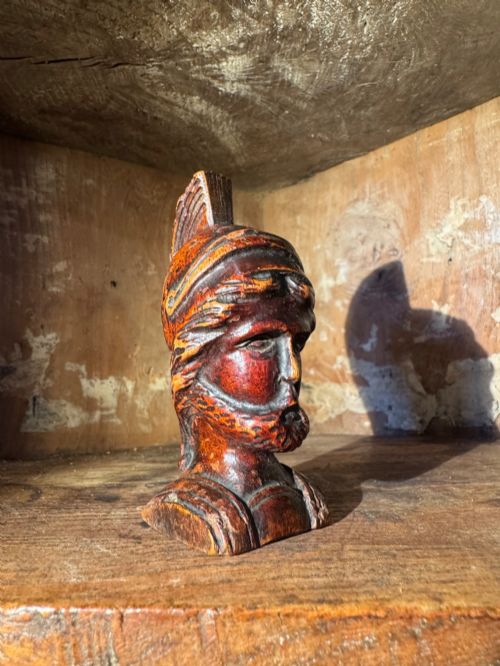
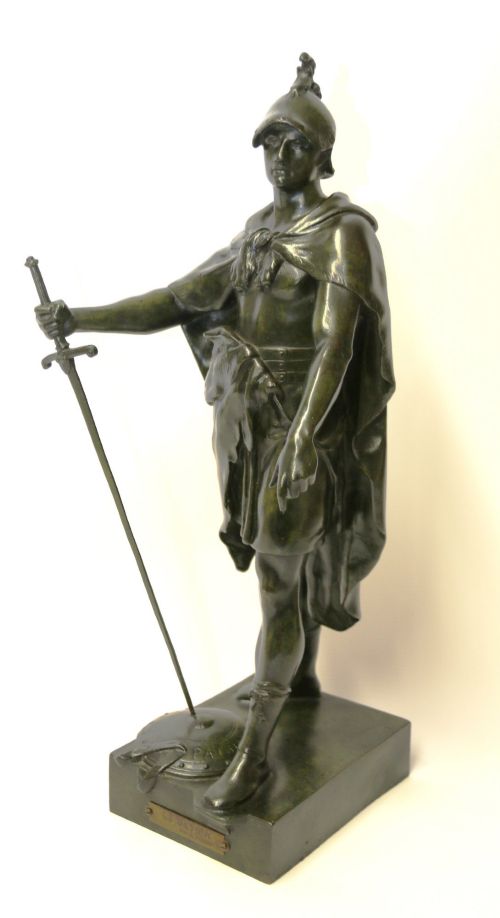
Classical warrior sculptures represent historical and mythological figures from ancient Greece, Rome, and the Celtic world, taking the form of full-length statues, busts, and grand tour souvenirs. These pieces span the nineteenth century, with Victorian interpretations frequently drawing on French academic and neoclassical traditions.
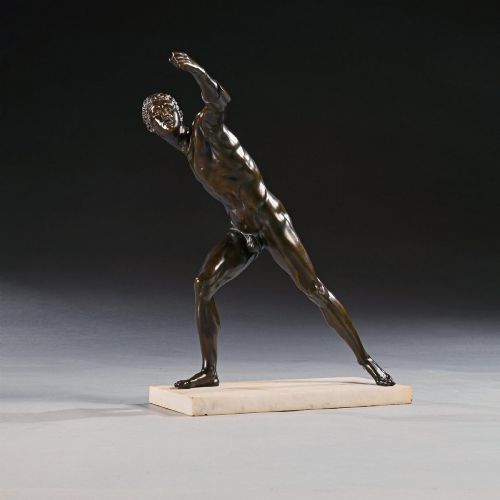
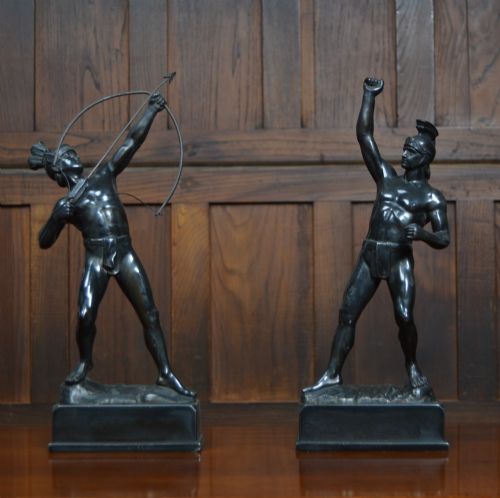
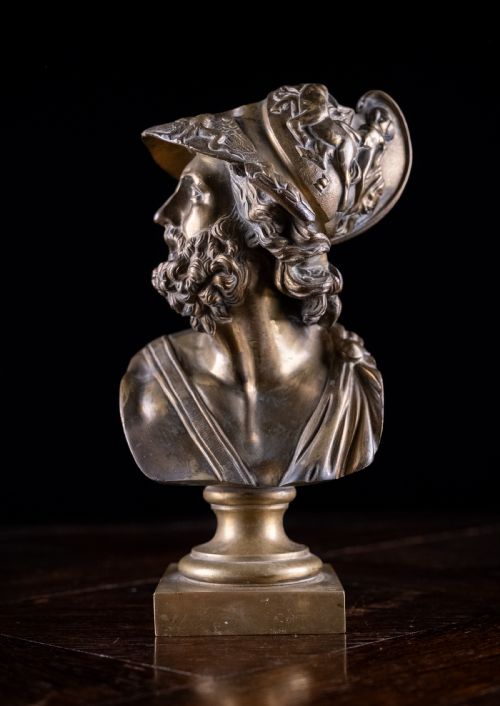
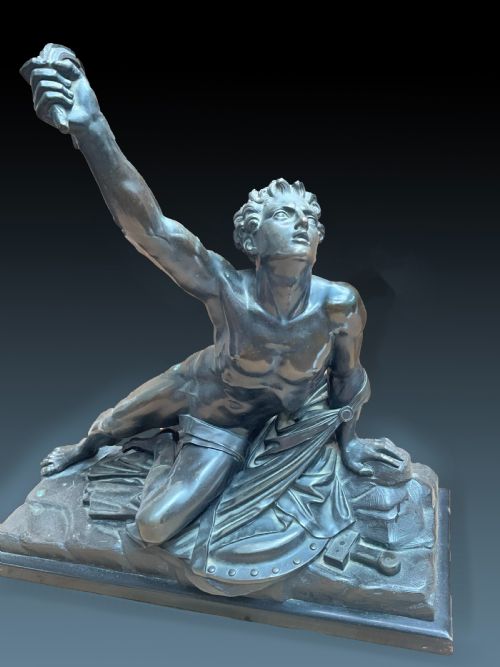
Buyers encounter subjects ranging from the Borghese Gladiator and Ajax to Roman soldiers, Greek archers, and figures such as Boadicea and Hannibal. The most common manifestations on this page are bronze figures and busts produced during the nineteenth century, alongside occasional works in spelter and parian porcelain.
Forms include large-scale decorative bronzes intended for prominent display and smaller grand tour reductions designed for collectors of classical antiquities. Each piece reflects the nineteenth-century revival of interest in antique heroic narratives and sculptural mastery.
Distinctions in quality and execution
The degree of anatomical definition and the crispness of surface chasing separate standard commercial foundry output from masterworks signed by recognised nineteenth-century sculptors. Casts that preserve fine details in armour, hair, and facial expression demonstrate superior craftsmanship.
The quality of the patination and the integrity of the original metal casting dictate the visual impact of a bronze piece. Heavier gauge metals and carefully finished bases indicate a higher standard of production during the Victorian period.
Listings feature works cast in bronze, patinated bronze, gilt bronze, spelter, zinc alloy, and parian porcelain across the nineteenth century.
Émile Louis Picault·Eugene Barillot·Raoul Francois Larche·Franz IFFLAND·Emile Laporte·Richard Aurili·Eden Antony Paul Noel
The Classical Warrior Sculptures Glossary
- Grand Tour
- A cultural journey undertaken by nineteenth-century travellers who collected small bronze sculptures and busts as souvenirs of classical sites in Italy and Greece. These reductions brought antique sculpture into domestic interiors.
- Patinated Bronze
- A bronze sculpture treated with chemical solutions to produce a specific surface colour, most commonly dark brown, green, or black. This finish protects the metal and highlights sculptural contours.
- Spelter
- A zinc alloy frequently utilised as a less expensive alternative to bronze during the Victorian period. It is often given a bronze-coloured coating to simulate true cast bronze.
- Parian Porcelain
- A fine biscuit porcelain developed in the nineteenth century to imitate white marble. It is frequently seen in figures and classical busts.
- Neoclassical
- An artistic movement spanning the eighteenth and nineteenth centuries that drew inspiration from the art and culture of classical antiquity. It prioritises proportion, heroic subject matter, and classical restraint.
Classical Warrior Sculptures: Frequently Asked Questions
What is a Grand Tour sculpture?
A Grand Tour sculpture is a souvenir reduction of an ancient masterpiece, collected by travellers visiting classical sites in Europe during the nineteenth century. These pieces allowed collectors to display famous monuments in their homes.
They range in scale from cabinet busts to substantial bronze figures. Subjects typically include famous gladiators, mythological heroes, and Roman leaders.
How do I care for a bronze warrior?
Bronze sculptures require minimal maintenance, needing only occasional dusting with a soft, dry cloth to prevent grime accumulation. Avoid using chemical cleaners or abrasive polishes that can strip the original patination.
Keeping the piece in a stable environment away from excessive moisture preserves the metal finish. Wax can be applied very sparingly by specialists if protection is required.
What is spelter?
Spelter is a zinc-based alloy used widely in the Victorian era to manufacture decorative figures and statues more affordably than bronze. It has a lighter weight and a softer composition than cast bronze.
Objects made of spelter were often electroplated or painted with a bronze-like finish. They require gentle handling due to the brittle nature of the alloy.
How do I identify a nineteenth-century cast?
Nineteenth-century casts often bear foundry marks, signatures of the sculptor, or registration numbers stamped into the base or metal body. The character of the patination and the weight of the metal also offer strong indications of period.
Examination of the underside frequently reveals construction methods typical of nineteenth-century foundry work, such as threaded bolts or sand-casting seams.