


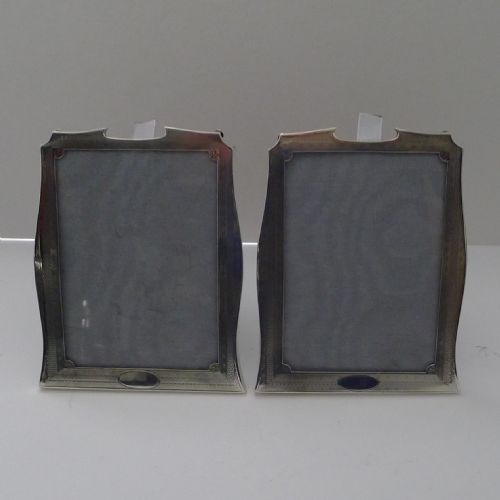


Pair of Silver Frames
A pair of silver frames brings symmetry and polish to a mantelpiece, holding portraits or mirrors with quiet distinction.
Pair of Silver Frames
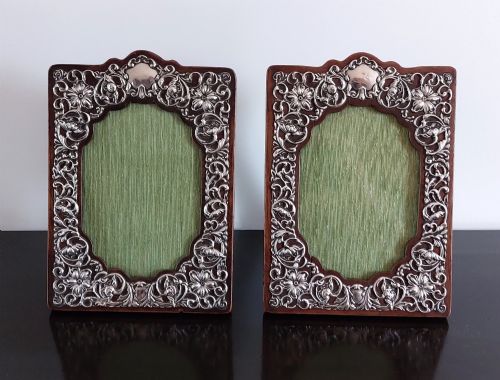
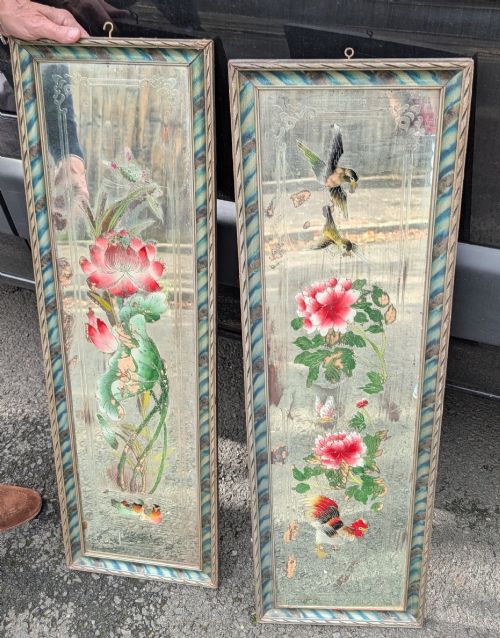
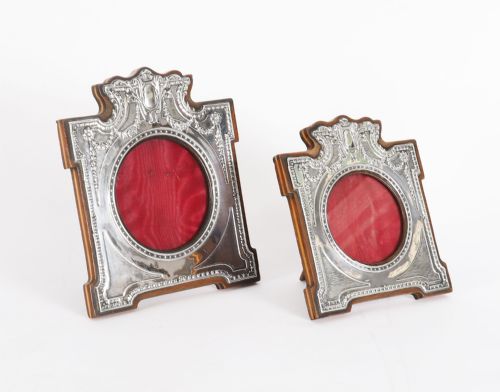
When you search for a pair of silver frames, you encounter items designed to display photographs, pictures or mirrors in matching alignment. The selection on this page spans photo frames, picture frames, and wall mirrors from the Victorian, Edwardian, and George V periods.
The domestic interior relies on these matched sets to create visual balance on desks and mantelpieces. Miniature heart-shaped photo frames and larger rectangular sterling silver items sit alongside more unusual forms like sweetheart frames and circular variants.
Silver frames appear in specific regional styles, including British assay office pieces and Persian Qajar examples from Isfahan. Edwardian and George V items dominate the record, alongside Victorian examples bearing hallmarks from makers such as William Comyns and Sampson Morden.
Materials and construction
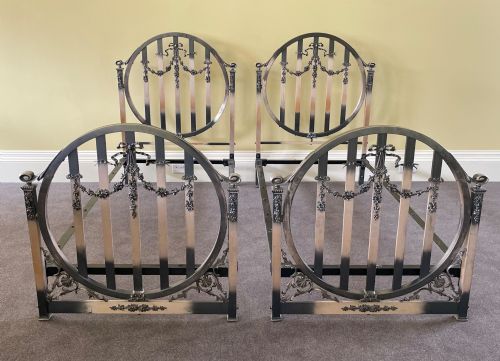
Makers formed these items primarily from solid sterling silver or silver plate over structural cores of wood, incorporating glass to protect the contents and paper backing boards to secure the portraits. Nickel plating also appears on certain bed frames from the Edwardian era.
Surface ornamentation involved techniques like engine-turning, where intricate geometric patterns were cut mechanically into the metal, alongside chased or embossed decorative borders. Hallmarks stamped directly onto the silver record the assay office, standard, and date of manufacture.
Distinctions in quality
The status of a pair rests heavily on the crispness of the hallmarks and the depth of the chased or engine-turned detailing on the metal surface. Crisp edges and heavy gauge silver separate standard commercial production from the output of distinguished makers.
The integrity of the original wooden backs, struts, and glass elements preserves the authenticity of the piece. Matching sets that retain their original components hold greater design cohesion than those assembled from mismatched parts over time.
Mappin Bros·A.W. Pennington·Sampson Morden·William Comyns·Elkington & Co
The Pair of Silver Frames Glossary
- Hallmark
- Official stamps applied by an assay office to indicate the metal standard, city of testing, and year of manufacture. These marks allow collectors to date silver items with precision.
- Engine-turned
- A decorative technique involving geometric patterns machine-engraved into the metal surface. This process creates a textured finish that catches the light.
- Sweetheart frame
- Small frames produced during wartime periods, often carrying sentimental associations for soldiers and their families. They frequently incorporate military badges or specific heart shapes.
- Sterling silver
- An alloy consisting of ninety-two point five percent silver and seven point five percent other metals, usually copper. This standard provides the necessary durability for functional household items.
Pair of Silver Frames: Frequently Asked Questions
How do I date a silver frame?
Dating relies primarily on the stamped hallmarks, which include letters corresponding to specific assay years and city symbols indicating where the piece was tested.
Stylistic cues, such as the curved motifs of Art Nouveau or the clean lines of the Art Deco period, also help narrow down the decade of manufacture.
Are these frames solid silver?
Many examples consist of solid sterling silver supported internally by a wooden frame and backing board, whilst others utilise silver plating over base metals.
Examining the hallmarks reveals whether the piece meets sterling standards or represents plated ware.
What are sweetheart frames?
Sweetheart frames are small, sentimental tokens often exchanged during wartime, frequently designed in miniature or heart shapes to hold photographs of loved ones.
They often feature specific regimental motifs or delicate hand-engraved decorations typical of the early twentieth century.
How should I clean silver frames?
Gentle maintenance involves using a specialist non-abrasive silver cloth to remove tarnish without damaging the delicate embossed or engine-turned surface details.
Harsh chemical dips should be avoided, particularly near the fitted glass and antique wooden backing boards.