


Decorative Silver Picture Frame
These decorative silver picture frames bring immediate warmth and elegance to a room, holding cherished portraits in gleaming metal.
Decorative Silver Picture Frame
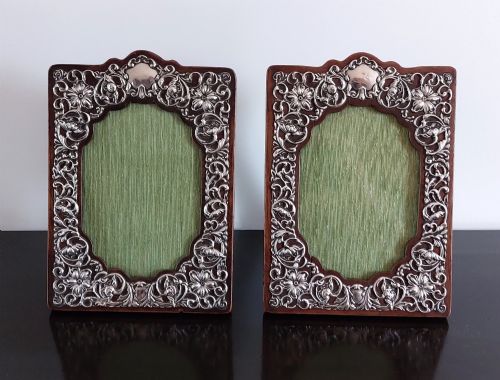
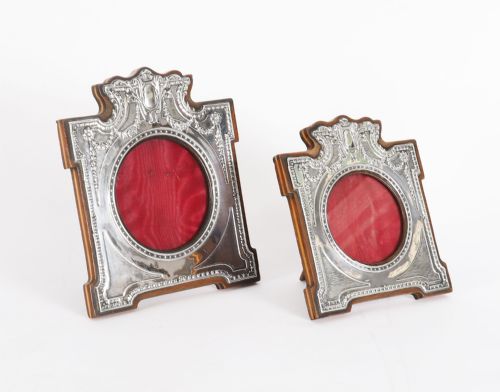
When you search for a decorative silver picture frame, you are looking at items designed to display and protect photographs or watercolours. The examples on this page span the Victorian, Edwardian, and Art Deco periods, encompassing various shapes from circular to large rectangular formats.
The version you are most likely to meet on this page is a sterling silver photo frame dating from the late nineteenth or early twentieth century. Many feature velvet backs, wooden supports, or intricate borders decorated with repousse motifs and cast ribbon and bow tops.
How they were made
Makers constructed these frames using sterling silver, gilt silver, and pewter, often mounted over wooden cores to provide structural stability. The metalwork frequently incorporates repousse decoration, where artisans hammered the design from the reverse side to create raised patterns.
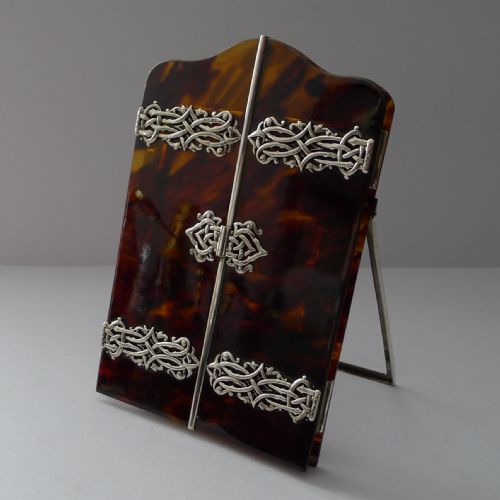
Backings and supports relied on materials such as wood, paper, and blue velvet, holding the glass pane firmly against the photograph. Tortoiseshell inserts also appear, adding depth and tonal contrast beneath the silver mounts.
Listings span five distinct design movements: Victorian, Edwardian, Aesthetic Movement, Art Deco, and Art Nouveau.
What varies in quality
The distinction between standard pieces and the finest examples rests on the depth and crispness of the chased or repousse decoration. Frames with cast motifs like ribbons, bows, or classical faces demonstrate a higher degree of sculptural ambition.
Material combination also elevates a piece, particularly when tortoiseshell or rich gilt silver is employed alongside substantial gauge sterling silver. The integrity of the original wooden backing and the quality of the velvet lining further distinguish superior works.
Mappin Bros·Hardy Brothers
The Decorative Silver Picture Frame Glossary
- Sterling silver
- An alloy containing 92.5 percent silver by mass, forming the primary metal for the majority of these frames. It provides a bright surface that accepts detailed chasing and repousse work.
- Repousse
- A metalworking technique where the artisan hammers the design from the reverse side to form a raised relief on the front. This method is common on Victorian and Edwardian picture frame borders.
- Gilt silver
- Silver that has been coated with a thin layer of gold, often referred to as silver gilt or vermeil. This treatment gives the metal a warm, golden sheen.
- Aesthetic movement
- A late nineteenth-century design style that emphasised visual beauty over narrative content, visible in certain pewter and silver frames of the era.
- Art Deco
- A style from the 1920s and 1930s characterised by streamlined geometric forms and modern materials. Frames from this period often display clean lines rather than ornate floral motifs.
Decorative Silver Picture Frame: Frequently Asked Questions
How do I clean a silver frame?
Use a soft cloth specifically designed for silver to gently remove tarnish from the decorative borders. Avoid getting polish on the velvet backs or the glass.
Take care around raised repousse details where paste can accumulate if applied too heavily.
What is a double folding frame?
A double folding frame consists of two hinged picture frames that close together like a book. This design allowed travellers to carry portraits of family members securely.
Edwardian examples often feature matched photo apertures connected by delicate metal hinges.
How are photographs secured inside?
Photographs are typically held in place behind a glass pane by a wooden or cardboard backing board. Turn-pins or sliding clips usually secure the backing within the silver mount.
Velvet or paper coverings often finish the reverse side for a neat appearance.