


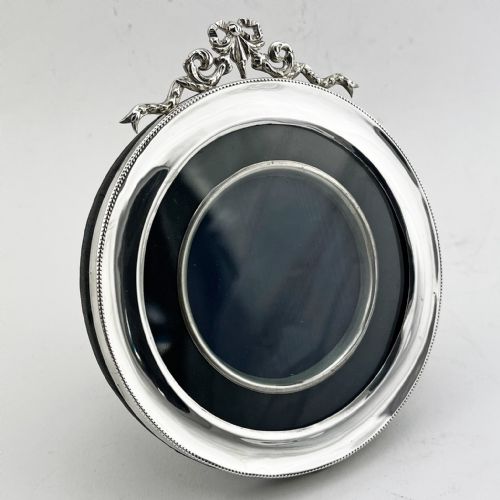
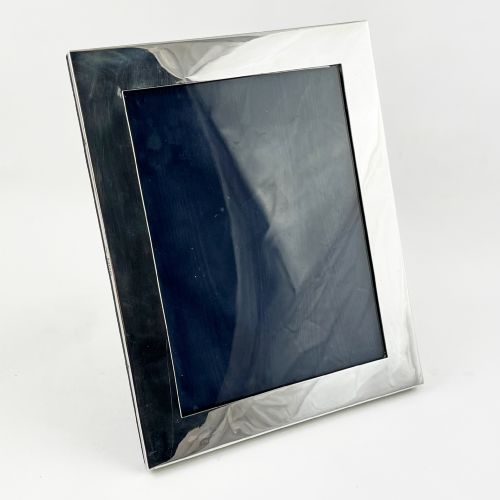


Vintage Silver Photo Display
These vintage silver photo display pieces bring enduring British craftsmanship to your mantelpiece, pairing precious metal with glass and velvet.
Vintage Silver Photo Display
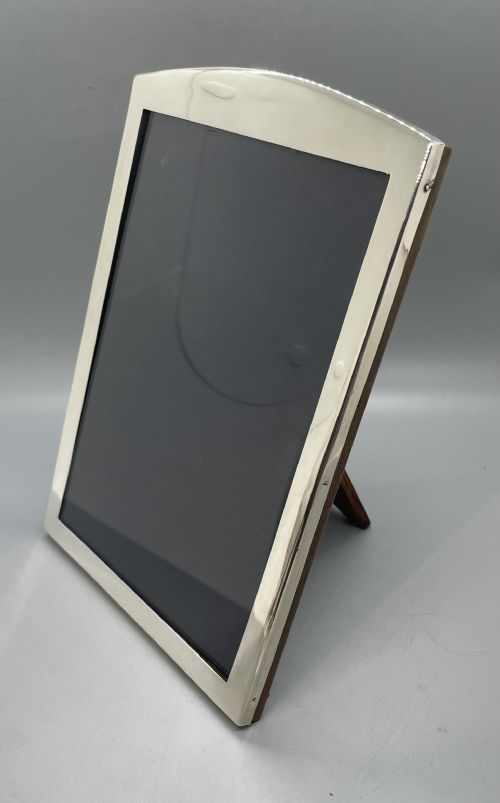
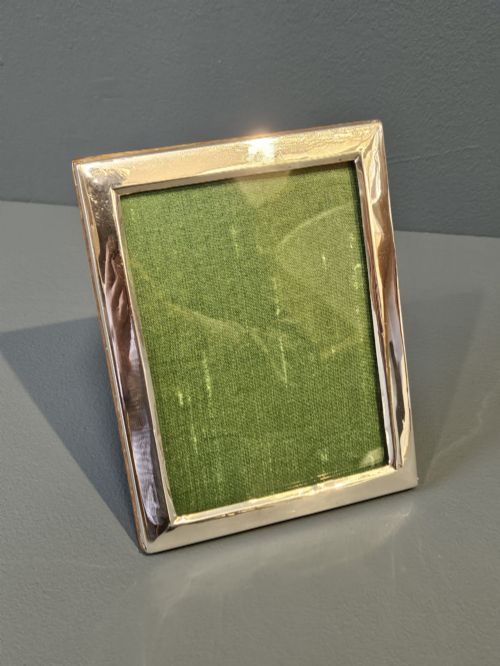
When you search for vintage silver photo display, you are looking at functional desktop accessories designed to hold personal portraits and family photographs. These items take the form of photo frames, picture frames, and wall mirrors created across multiple decorative eras.
The pieces on this page are most frequently encountered as sterling silver or silver-plated frames originating from the Edwardian period and the George V reign. They range from small round trinket sizes to exceptionally large display formats intended to anchor a room.
Makers utilised diverse materials to construct the backing and structural support, pairing precious metals with wood, oak, glass, and velvet. You will also find chrome examples from the mid-century alongside Italian silver designs bearing continental hallmarks.
How they were made
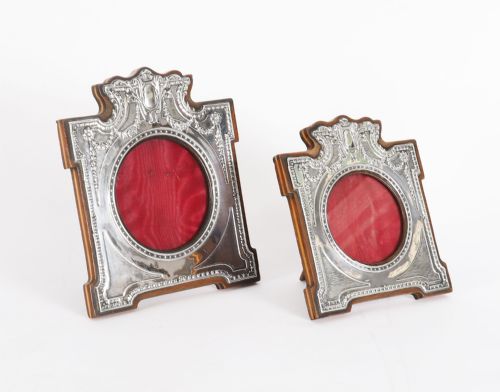
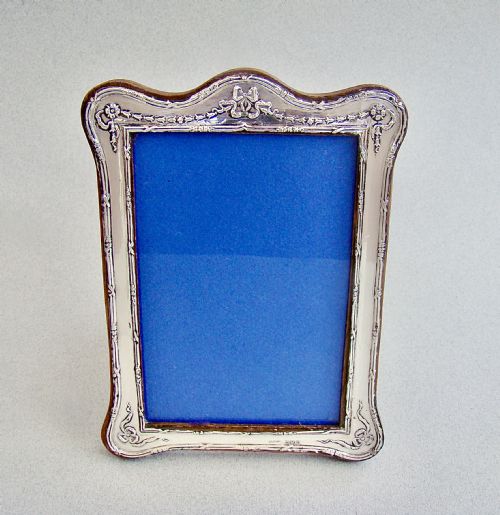
Silversmiths constructed these frames using sterling silver and 800 silver sheets, often shaping them around a wooden core or an easel support. Artisans employed embossing, planishing, and engraving techniques to create floral borders and geometric motifs across the metal surface.
Backings were finished with materials such as black leather, blue velvet, or polished oak, secured with hinged struts for stability. Glass panels were cut to fit precisely over the aperture, protecting the photograph held within.
Vintage Silver Photo Display Retail Price Guide 2026
Typical asking prices for vintage silver photo display among the pieces listed under this phrase on Sellingantiques today, from the lower quarter to the upper quarter. They describe what is for sale here now, not the wider market.
Listings span from Victorian and Edwardian items to Art Deco and mid-century Italian pieces, utilising sterling silver, chrome, glass, and wood.
What varies in quality
The distinction between standard items and superior examples lies in the depth of the metalwork and the crispness of the chased or embossed details. Frames bearing clear hallmarks from notable makers like William Comyns or Mappin Bros demonstrate higher precision in their construction.
Material integrity also dictates value, with heavy sterling silver structures maintaining their form far better than lighter plated alternatives. The original presence of intact velvet or leather backing boards further elevates the preservation standard.
Mappin Bros·W.I.Broadway & Co·Pinci, Roma·William Comyns
The Vintage Silver Photo Display Glossary
- Sterling silver
- A silver alloy containing 92.5 percent pure silver and 7.5 percent other metals, usually copper, ensuring durability for decorative items.
- Hallmark
- An official stamp applied to precious metals indicating the standard of purity, the assay office of origin, and the year of manufacture.
- Planished
- A metalworking technique involving light hammer blows across the surface to create a distinctive faceted texture that catches the light.
- Easel back
- A hinged wooden or cardboard strut attached to the reverse of a frame, allowing it to stand upright on a flat surface.
- Chased
- A method of ornamenting metal by indenting the front surface with punches and hammers rather than removing material through engraving.
Vintage Silver Photo Display: Frequently Asked Questions
How do I clean tarnished silver frames?
Use a soft microfiber cloth and a dedicated silver polish, applying gentle pressure to avoid flattening embossed details around the border.
Keep cleaning agents away from the glass, leather, and velvet backing materials to prevent staining or water damage.
Can these frames be hung on walls?
Most pieces are designed as free-standing accessories with easel backs intended for desks, tables, or mantelpieces.
Certain variations include dedicated wall mirrors or specialised brackets, so inspect the reverse of the frame before attempting to hang it.
What do Edwardian hallmarks tell us?
British hallmarks stamped on the silver border reveal the specific assay office, the purity standard, and a date letter corresponding to the year of manufacture.
These marks allow collectors to trace the exact origin of a piece back to cities like Birmingham or London during the early twentieth century.
Are replacement glass panes standard?
Original glass is frequently bevelled and cut to fit the specific rebate of the frame by hand.
When replacing broken glass, a local glazier can match the thickness required to secure the pane safely within the silver bezel.