
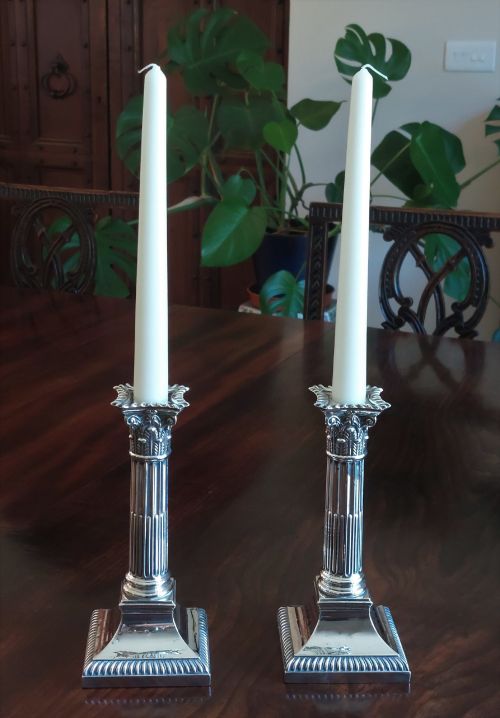
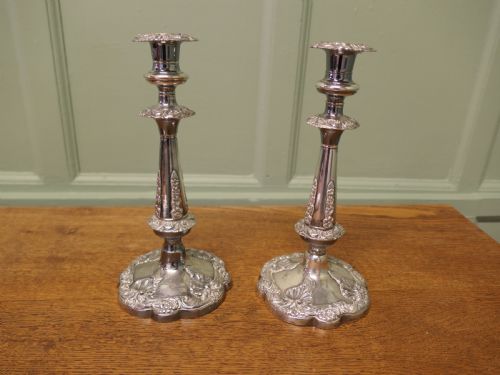
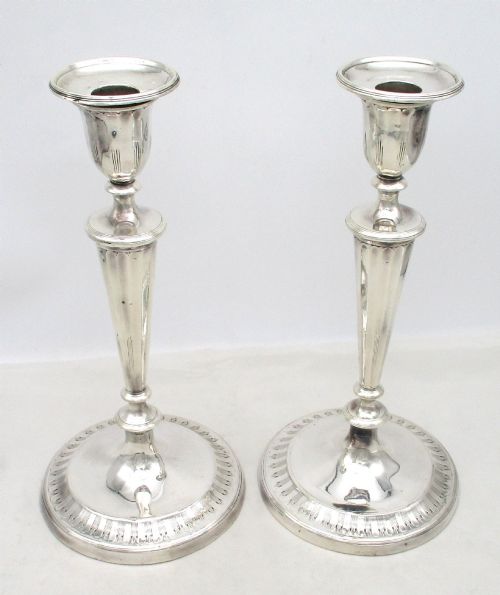
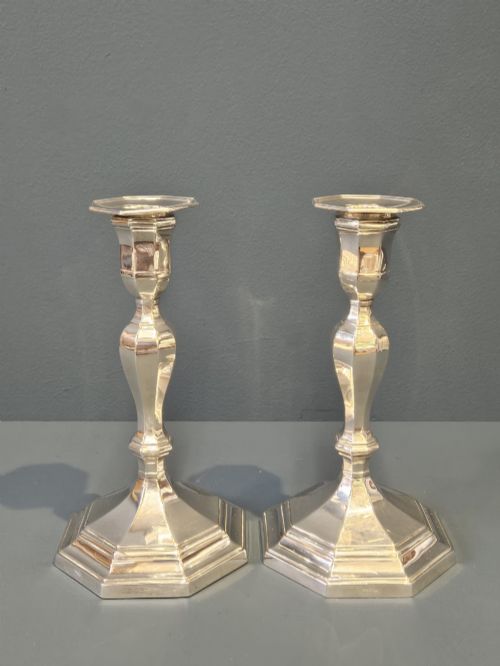

Pair of Silver Candleholders
A pair of silver candleholders provides balanced symmetry and warm illumination, making them a lasting centrepiece for any room.

Pair of Silver Candleholders
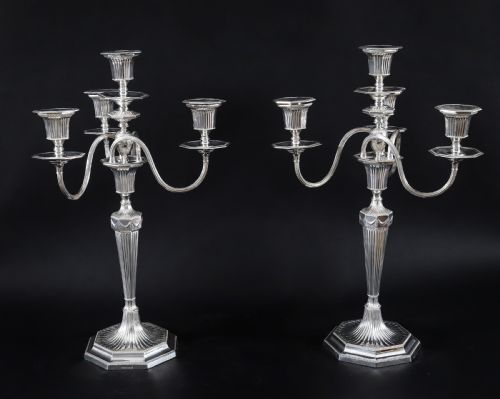
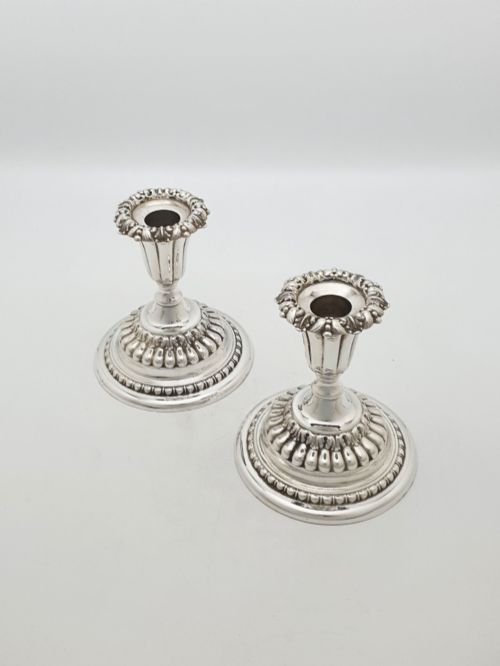
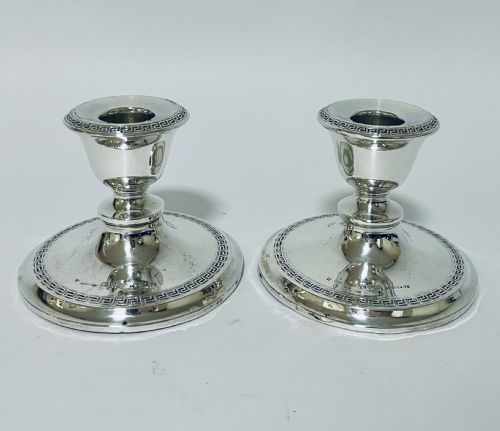
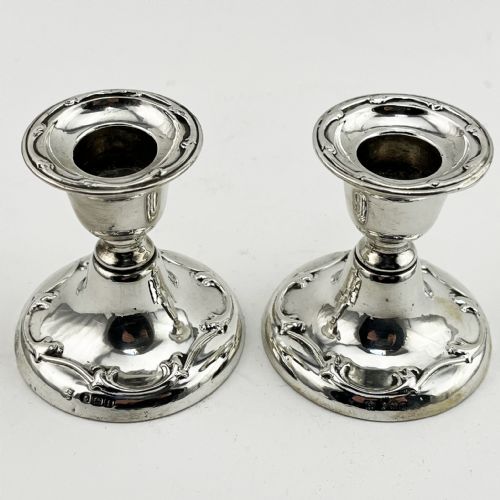
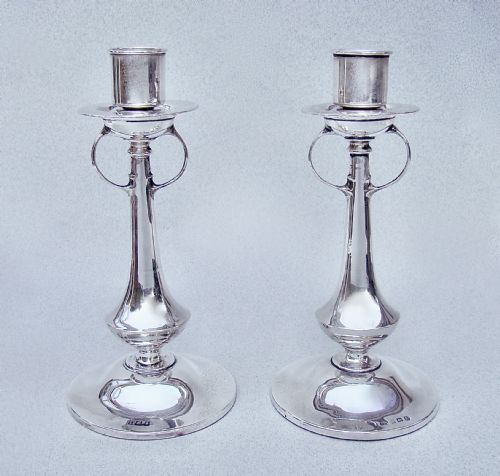
A pair of silver candleholders encompasses matching light fixtures designed to support tapers or multi-light arrangements on tables, desks, and walls. These objects appear in forms such as standard candlesticks, low dwarf models, desk variants, and branching candelabra.
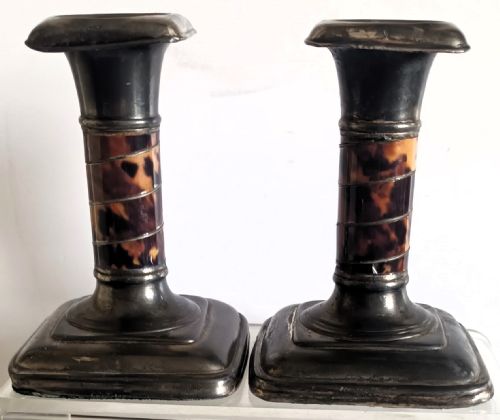
The options span several centuries of design, with pieces originating from the eighteenth, nineteenth, and early twentieth centuries. Sterling silver and silver-plated metals dominate the selection, alongside variants in pewter, copper, and silvered carved wood.
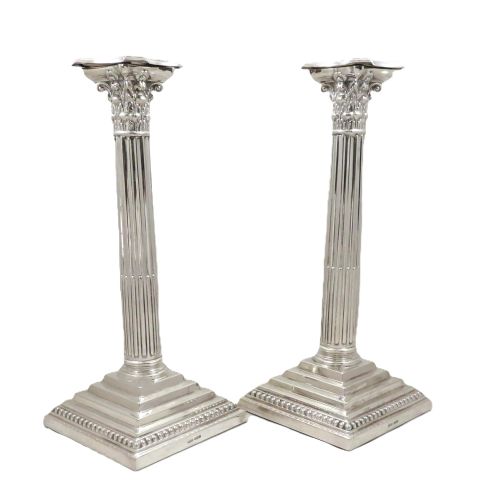
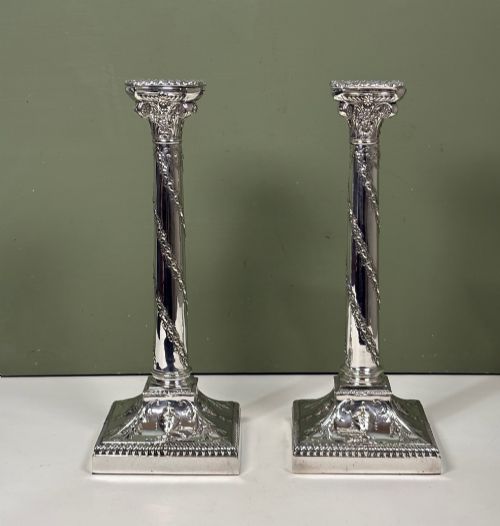
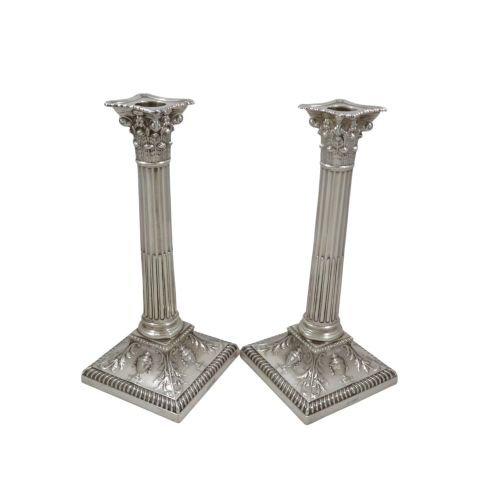
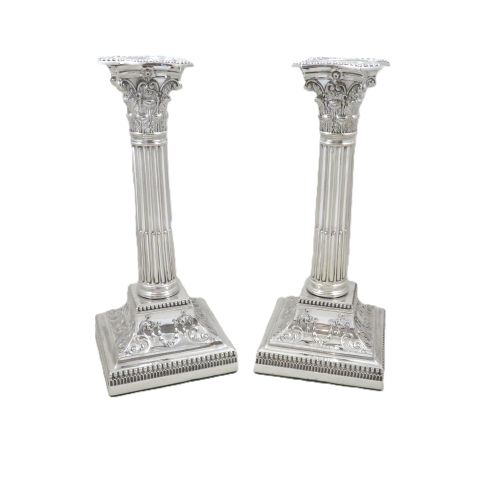
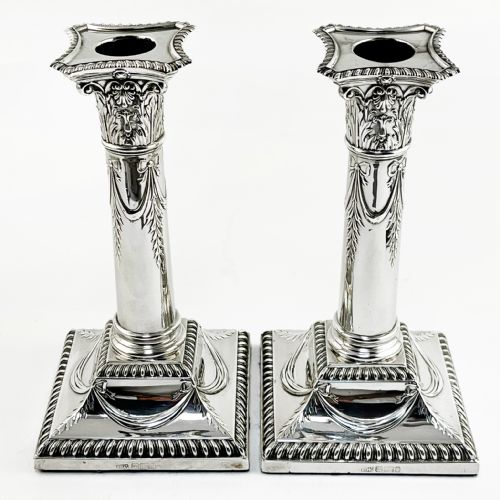
Victorian and Edwardian examples emerge most frequently, alongside Georgian interpretations and revival styles like Neoclassical, Rococo, and Art Nouveau. Buyers encounter everything from miniature desk pieces to tall Corinthian column designs and telescopic shafts.
Materials and construction
Metals form the core of these items, utilising solid sterling silver, copper cores fused with silver via Old Sheffield Plate methods, or standard silver plating over base metal. Pewter and carved wood also appear in specific period examples, offering diverse weights and patinas.
Silversmiths employed casting, hammering, and turning techniques to shape columns, stems, and bases, often incorporating weighted interiors for stability. Plated items relied on fusing thin sheets of silver to copper or base metals before assembly and chasing.
Telescopic stems let Victorians adjust candle height after dinner as the wax burned low.
Distinctions in quality
The definition of the cast ornament and the crispness of chased details reveal the maker's initial skill. Crisp fluting on a column or deep relief in Rococo scrolls indicates superior handwork compared to soft, cast-over-again forms.
Weight and structural integrity also separate standard production from finer output. Solid sterling elements, substantial gauge silver plate, and well-balanced weighted bases ensure the pair stands firmly and ages gracefully through decades of use.
Garrard & Co·Hawksworth Eyre·James Fenton·John Cafe
The Pair of Silver Candleholders Glossary
- Sterling silver
- A silver alloy containing 92.5 percent pure silver and 7.5 percent other metals, usually copper, chosen for durability.
- Old Sheffield plate
- An early plating method fusing a thin layer of silver to a copper base, producing a warm dual-metal edge over time.
- Corinthian column
- A classical architectural column style featuring ornate acanthus leaves on the capital, frequently used on tall candlesticks.
- Candelabra
- A branched lighting fixture designed to hold multiple candles simultaneously from a single central stem.
- Chamber candlestick
- A short, low-profile candlestick fitted with a handle and a small drip pan, historically used for carrying light through bedrooms.
Pair of Silver Candleholders: Frequently Asked Questions
How do I polish antique silver candleholders safely?
Use a soft microfibre cloth and a gentle, non-abrasive silver polish formulated specifically for antiques. Avoid vigorous rubbing on plated items to preserve the underlying metal.
Work around raised details carefully and rinse with warm water if the paste instructions require it, then dry thoroughly to prevent tarnishing.
Why are some candlesticks weighted at the bottom?
Silversmiths loaded the bases with pitch, resin, or plaster to provide stability and balance for tall forms. This weight prevents the thin metal shaft from tipping over.
Buyers often find green felt covering the base underside to protect furniture surfaces from these filling materials.
How can I tell Old Sheffield Plate from standard silver plate?
Old Sheffield plate reveals a faint copper line along cut edges or worn high points where the outer silver layer has thinned. Standard nineteenth-century electroplate shows a base metal like white brass or nickel underneath.
Examining the underside or rim under magnification usually clarifies the manufacturing method used.