
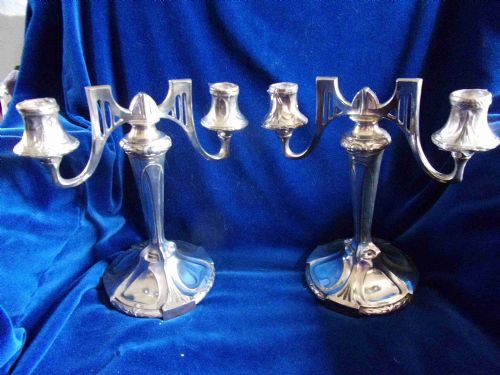


Silver Twin Branch Candelabra
These silver twin branch candelabra bring genuine presence to a dining table, offering that unmistakable warm glow across decades of design.

Silver Twin Branch Candelabra
When you search for silver twin branch candelabra, you are looking at lighting pieces designed with two distinct arms branching from a central column. These items span periods from the Victorian era through the Edwardian years and into Art Deco and Mid-Century Modern designs. They appear in forms such as low table candelabras and pairs featuring two arms holding three lights.
The materials you encounter range from sterling silver and solid 916 silver to silver plate, electroplated nickel silver, and base metal. Certain pieces combine silver with spelter or onyx, whilst others embrace Jugendstil or George I revival aesthetics. Most examples survive as matched pairs, designed to balance a formal sideboard or dining arrangement.
How they were made
The construction of these pieces relies heavily on traditional silversmithing techniques alongside electroplating methods developed during the nineteenth and twentieth centuries. Makers utilised sterling silver or coated base metals such as nickel silver and spelter to achieve sturdy structures. Hand wrought examples demonstrate individual hammering and shaping by skilled silversmiths.
Details often include detachable drip pans and removable branch sections to facilitate cleaning and polishing. Bases are weighted or reinforced to support the balance of the dual arms safely. The surface finishes range from bright polished silver plate to patinated continental silver.
Materials documented across the pieces include sterling silver, silver plate, nickel silver, spelter, and onyx.
What varies in quality
The distinction between standard production pieces and superior examples lies in the weight of the metal and the crispness of the casting. Hand wrought details and distinct hallmarks elevate an item above mass-produced silver plate. Superior makers applied thicker layers of silver or utilised solid sterling, ensuring the piece ages gracefully without wearing through to the base metal.
Proportion and balance also define the better items in this category. The junction where the branches meet the central column should feel secure and integrated rather than clumsy. Articulation in the design, whether through clean Jugendstil curves or precise George I revival styling, dictates visual success.
Robert Edgar Stone·Elkington and Company
The Silver Twin Branch Candelabra Glossary
- Sterling silver
- A silver alloy containing 92.5 percent pure silver and 7.5 percent other metals, usually copper, to add strength. This standard is frequently marked with specific hallmarks.
- Silver plate
- A base metal such as copper, nickel, or brass coated with a thin layer of pure silver. It offers the visual appeal of silver at a different scale of production.
- Spelter
- An alloy of zinc and other metals used widely for sculptural figures and decorative objects. It is often painted or plated to imitate bronze or silver.
Silver Twin Branch Candelabra: Frequently Asked Questions
How do I polish these safely?
Use a soft microfibre cloth and a reputable silver polish specifically formulated for plated or sterling surfaces. Avoid harsh abrasives that can wear away thin silver plate.
Take extra care around soldered joints and detailed ornamentation where polish can accumulate and harden. A gentle touch preserves the original patina over time.
How do I identify the period?
Look to the stylistic cues such as Victorian ornamentation, Edwardian restraint, or the geometric lines of Art Deco. Maker marks and silver hallmarks provide definitive dating on sterling pieces.
Continental silver often uses distinct numbering systems, such as 916, which indicate the purity of the metal rather than British hallmarking codes.
Are pairs always matched?
The listings typically offer matched pairs created together by the same workshop or manufacturer. These display identical weight, height, and decorative motifs.
Examine the base stamps and arm angles closely to confirm consistency across both items when setting them together on a table.