
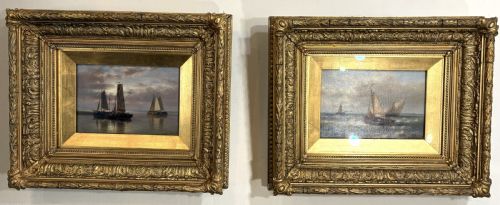


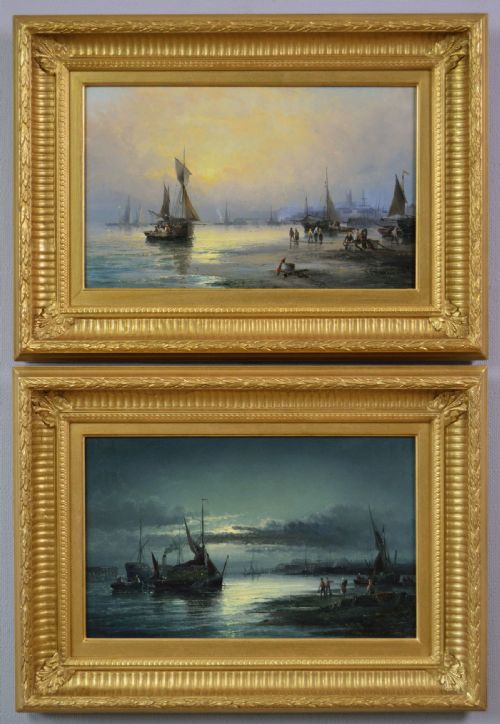
Pair of Seascape Paintings
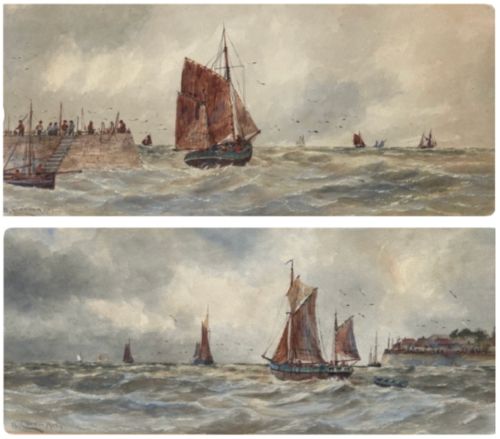
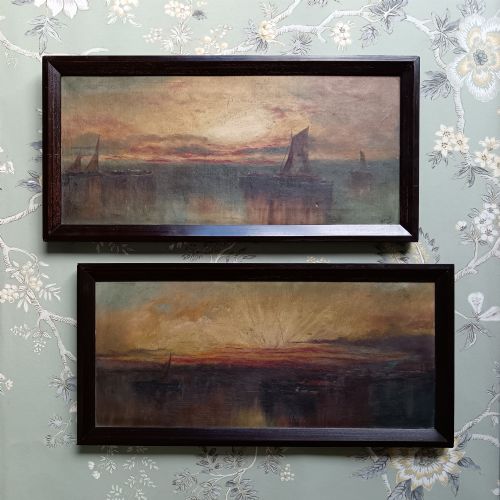
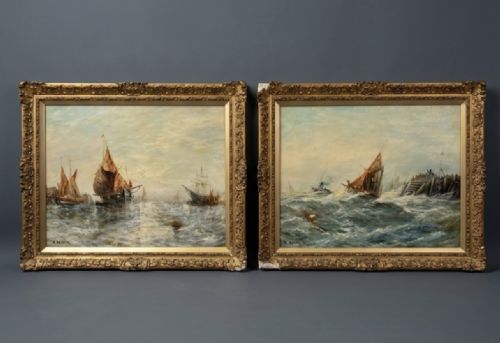
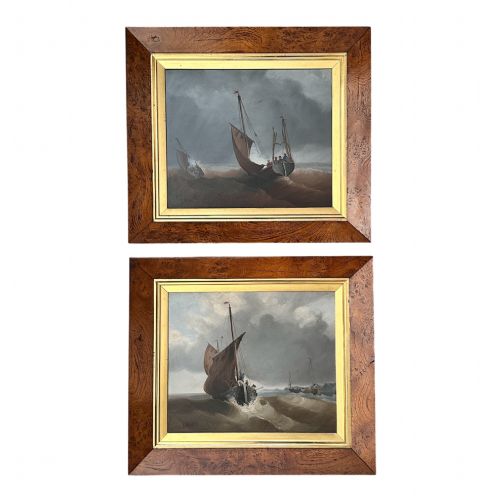
A pair of seascape paintings brings the movement of coastal tides and maritime shipping straight into a room, offering matching views of water and sky.
Pair of Seascape Paintings
A pair of seascape paintings comprises matching works capturing coastal scenes, marine vessels, and maritime views across twin panels or canvases. These balanced pairs typically present contrasting moments such as sunrise and sunset, or complementary views of busy harbours and quiet fishing boats.
The pieces meeting on this page originate predominantly from the nineteenth century and the Edwardian era. Artists of these periods recorded everything from local British shores and Dutch coastlines to distant Arabic waters.
Buyers encounter both oil paintings and watercolour paintings within these selections. Many retain their original frames, ranging from moulded wood to ornate giltwood.
Materials and construction
Artists painted these works using oil paint or watercolour applied to canvas, wood, paper, or board. Oil on canvas allowed for rich layering and textured depictions of water, while watercolours offered delicate transparency on paper.
Frames frequently utilised wood, gesso, and gold leaf to create giltwood or ebonised surrounds that protected and highlighted the artwork. These period frames are often integral to the presentation of the matching pair.
Pair of Seascape Paintings Retail Price Guide 2026
Typical asking prices for pair of seascape paintings among the pieces listed under this phrase on Sellingantiques today, from the lower quarter to the upper quarter. They describe what is for sale here now, not the wider market.
Current listings feature nineteenth-century and Edwardian works executed in oil and watercolour on canvas, wood, paper, and board.
Factors of quality
Quality rests in the artist's command of light, atmosphere, and maritime detail, distinguishing skilled observation from standard studio output. The best works capture the specific weight of water and the play of weather across open skies.
The preservation of both companion pieces together without mismatched fading or later restoration maintains the integrity of the pair. Original matching frames further elevate the standing of the set.
William Cannon·B. Nash·John Moore of Ipswich·Abraham Hulk I·Gustave De Bréanski·Pieter Cornelis Dommersen·Adrian Van Porten·George Dodgson Callow·Thomas Bush Hardy·Ebeneezer Colls·Hubert Thornley·John James Wilson·Walter Meegan·Thomas Rose Miles·Francis Moltino·Walter Williams
The Pair of Seascape Paintings Glossary
- Giltwood
- Wood carved and coated with gold leaf or metallic paint. This finish provides a reflective border popular in nineteenth-century framing.
- Gesso
- A plaster-like mixture applied to wooden frames before gilding or painting. It creates a smooth surface for detailed moulding.
- Marine art
- Painting that focuses primarily on ships, harbours, and the sea. This genre encompasses both commercial shipping and coastal weather.
- Watercolour
- Paint consisting of pigment suspended in a water-based solution applied to paper. It dries with a translucent quality that suits bright coastal scenes.
Pair of Seascape Paintings: Frequently Asked Questions
Why were marine paintings created as pairs?
Painters produced companion pieces to hang side by side, balancing compositions through contrasting elements like calm water versus rough seas, or morning light against evening dark.
This symmetry suited Victorian and Edwardian interiors, where balanced wall displays created a sense of order and narrative flow between the two views.
How do I care for antique watercolours?
Watercolours require careful placement away from direct sunlight to prevent the pigments and paper from fading over decades. Keeping them behind glass in stable indoor humidity protects the fragile paper support.
Avoid hanging them in damp spaces such as unheated porches or steamy kitchens.
What subjects appear in these coastal scenes?
Artists painted working fishing boats, merchant shipping, rolling waves, and quiet cliffs along British, Dutch, and international shores. Some works capture specific named harbours like Portsmouth, Whitby, or the Medway.
Others focus on atmospheric effects over the open channel during changing weather.