
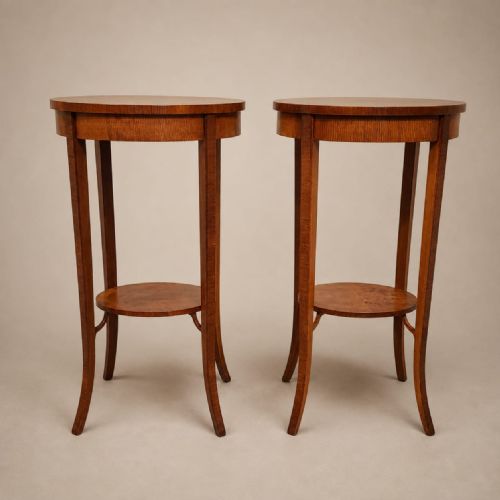
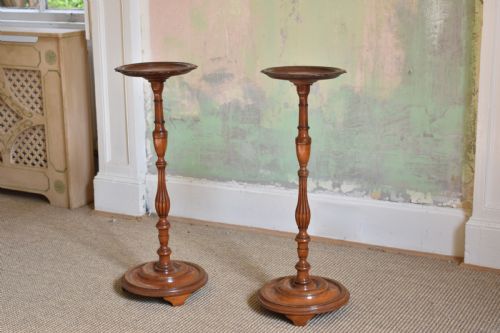
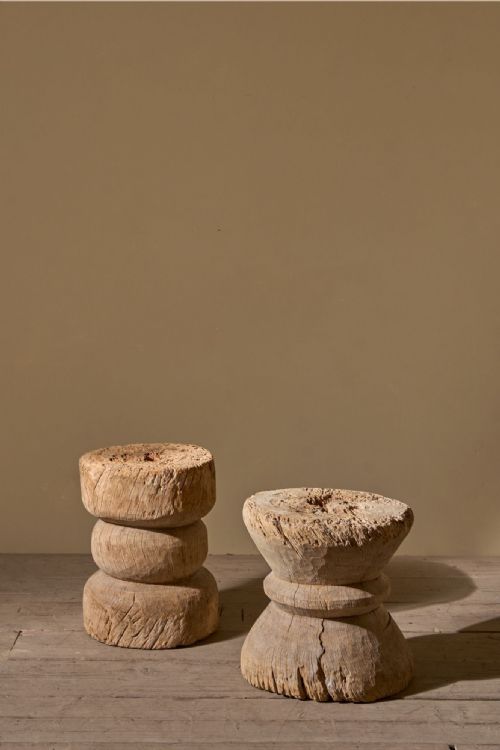
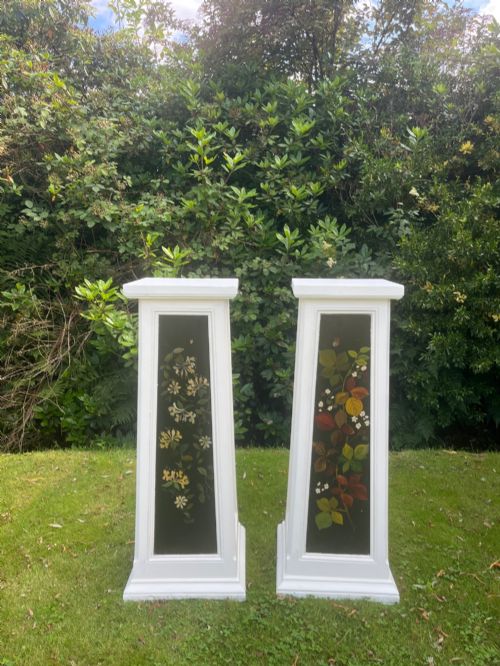
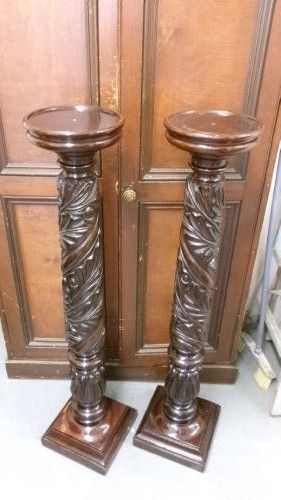
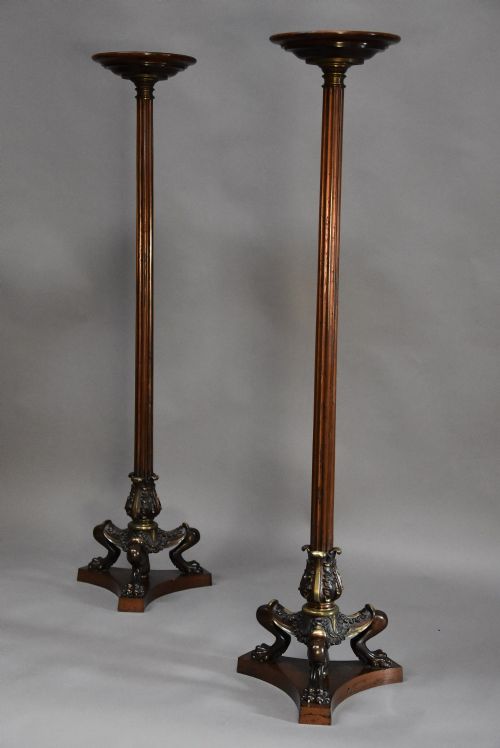
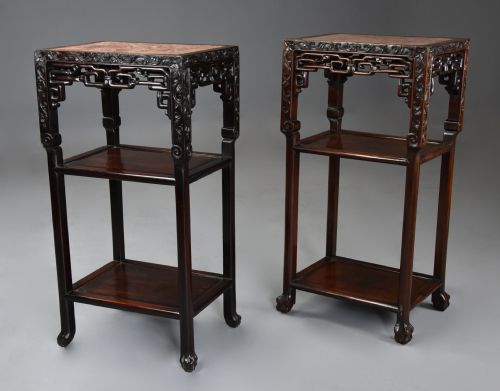

Pair of Plant Pedestals
A pair of plant pedestals elevates botanical displays, holding heavy urns or delicate foliage aloft with architectural presence.
Pair of Plant Pedestals
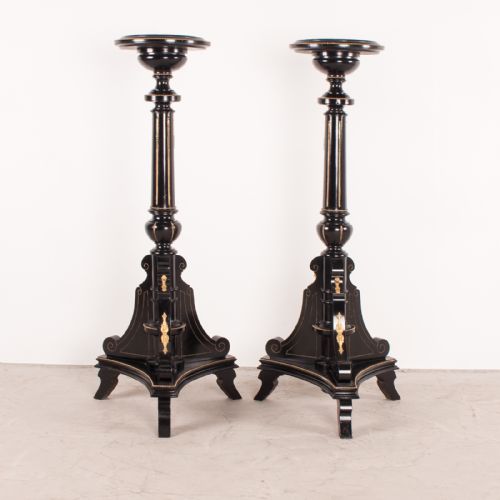
A pair of plant pedestals provides symmetrical elevation for flora, sculpture, or lighting within a room. These supports appear across the nineteenth and twentieth centuries in various forms, including torcheres, columns, and plant stands.
The versions most common on this page span the Victorian and Edwardian periods, utilising timbers such as mahogany, satinwood, and oak alongside marble and cast iron. Their designs range from classical revival columns to rustic wood constructions and Asian hardwood stands.
Makers and workshops across Britain, Europe, and Asia produced these matching pairs for domestic parlours, conservatories, and grand halls. They serve to lift decorative elements to eye level, creating balance and rhythm in an interior layout.
Materials and Construction
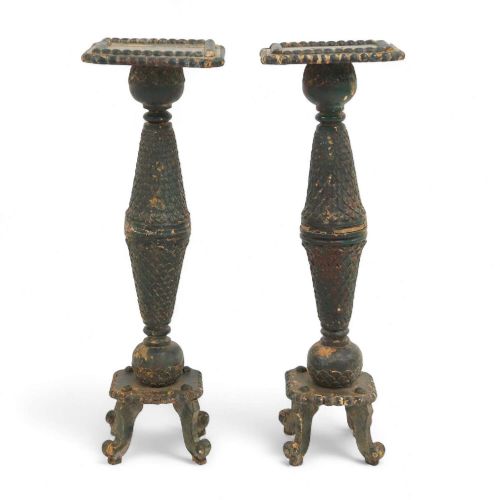
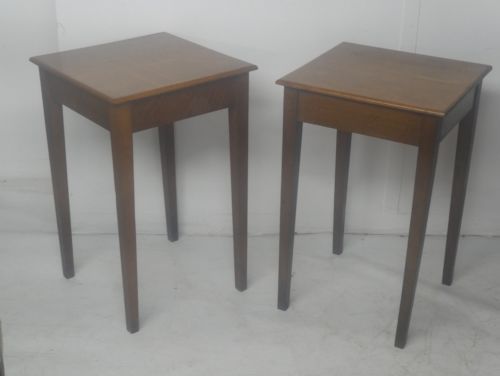
Cabinetmakers and artisans constructed these pieces using solid and veneered timbers such as walnut, rosewood, and mahogany, frequently employing marquetry, inlay, and ebonising for surface decoration. Turning, carving, and joinery define the timber examples, from simple Scottish oak lamp tables to intricately carved Anglo-Indian and Kashmiri works.
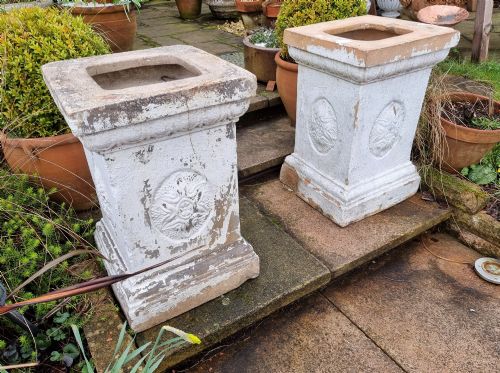
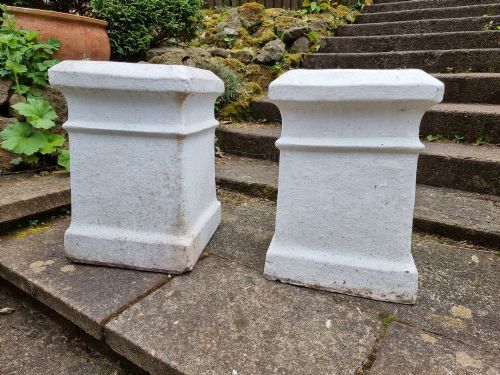
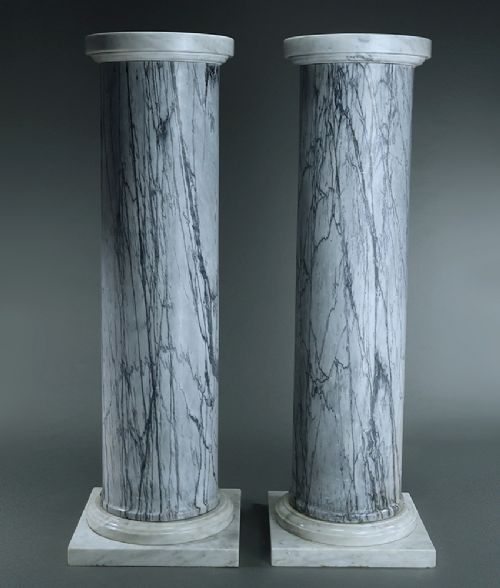
Mineral and metal elements feature prominently alongside wood, with columns carved from solid bardiglio, carrara, and onyx marble, often complemented by cast iron, bronze, or ormolu collars and mounts. Terracotta, clay, and plaster also appear in garden planters and decorative pedestals, utilising moulding and casting techniques suited to each medium.
Kashmiri artisans carved wooden elephants into lacquer pedestals, proving that domestic flora occasionally required very unorthodox bodyguards.
Distinctions in Quality
The standard of a pair of plant pedestals rests upon the selection of materials and the rigour of the maker's hand. Finely grained timbers, richly variegated marble columns, and crisp, deep carving separate ambitious workshop pieces from standard commercial output.
Structural integrity and fidelity of design govern the upper tier of these items. Matched pairs showing precise symmetry, cohesive patination, and substantial weight - whether in cast bronze, heavy hardwood, or solid stone - reflect superior original manufacture.
Dunfermline Clay Company·George Smith·Thomas Hope·Gillows
The Pair of Plant Pedestals Glossary
- Torchiere
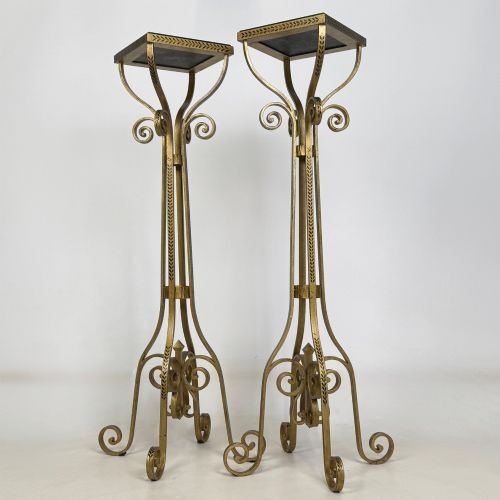
- A tall, slender stand designed originally to support a light source and later adapted for urns and plants. These elevated supports often feature slender shafts terminating in circular or square tops.
- Ormolu
- Gilded bronze mounts applied to furniture and decorative columns. This decorative technique adds metallic contrast to marble and exotic woods.
- Campana
- An inverted bell-shaped garden urn or vessel. These classic forms sit atop pedestals and plinths in exterior or conservatory settings.
- Marquetry
- The art of applying pieces of veneer to a structure to form decorative patterns. Craftsmen utilise varied woods like satinwood and walnut to create geometric or floral motifs.
- Plinth
- The lower square block or base supporting a column, pedestal, or statue. It provides stability and visual grounding to vertical supports.
Pair of Plant Pedestals: Frequently Asked Questions
What were pair of plant pedestals used for?
These supports held potted plants, floral arrangements, or sculptural busts within domestic interiors and conservatories. By raising greenery off the floor, they improved visibility and protected flooring from moisture.
They also functioned as torcheres to illuminate dark corners with candles or lamps. Matched pairs created symmetrical focal points on either side of doorways, windows, or fireplaces.
How do I style pair of plant pedestals at home?
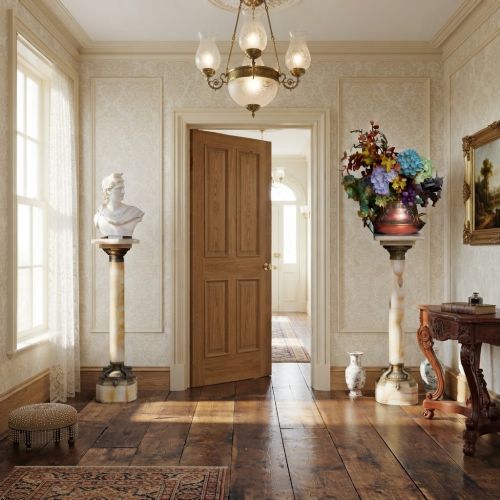
Position matching pedestals symmetrically in a hallway, drawing room, or orangery to frame a view or architectural feature. Placing complementary plants or urns on top maintains visual balance.
Ensure the weight of the object placed on the stand matches the robust capacity of the pedestal. Lighter timber stands suit delicate ferns, while marble and cast iron columns support heavier stone vessels.
How do I date pair of plant pedestals?
Examine the timber species, construction methods, and stylistic motifs to determine the period of manufacture. Nineteenth-century pieces frequently display Victorian revival styles, hand-turned elements, or dense hardwoods like mahogany and rosewood.
Twentieth-century examples often incorporate cleaner lines, lighter oak, or cast concrete and terracotta. Compare the surface patina and wear patterns on the base and top to confirm age.
Are these pieces strictly for plants?
While originally designated for botany or lighting, these versatile surfaces accommodate sculptures, lamps, and decorative ceramics. Many historical examples served as lamp tables or side tables.
Their primary function in interior design is elevation and architectural punctuation rather than strict botanical utility.