



Pair Tall Plant Tables
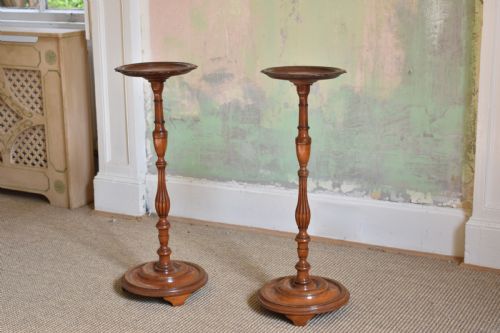
Pair tall plant tables bring elevated vertical display to interiors, offering twin surfaces designed to lift greenery, urns or art.
Pair Tall Plant Tables
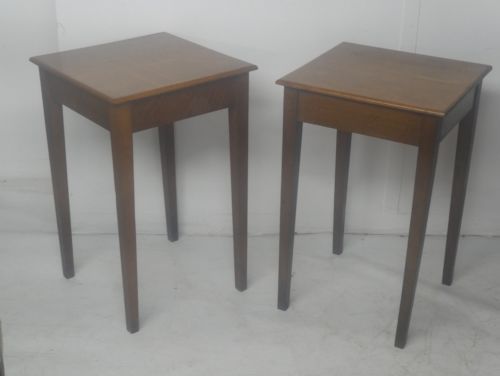
When you search for pair tall plant tables, you encounter matching duos designed primarily for elevated botanical display. The selection ranges from Victorian and Edwardian iterations to nineteenth-century oriental hardwood supports and twentieth-century occasional pieces.
The inventory encompasses specific forms including plant stands, urn stands, kettle stands, and pedestal tables. These tall dual furnishings serve both conservatory and interior room settings effectively.
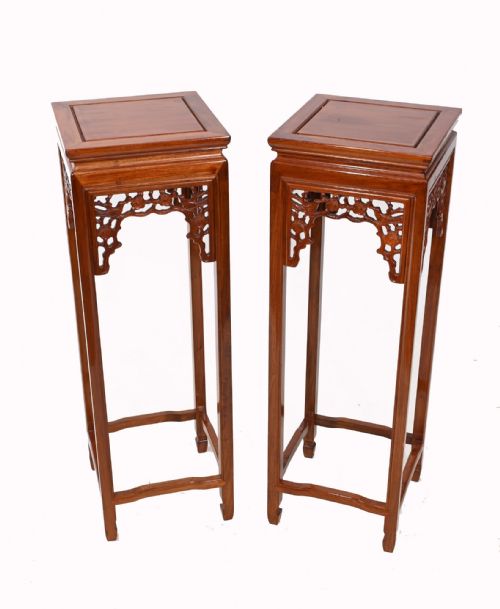
Origin variations span from Scottish oak and English mahogany to French neoclassical designs and Chinese Qing Dynasty carved hardwood vases stands. Buyers most frequently meet nineteenth-century and Edwardian examples on this page.
How they were made
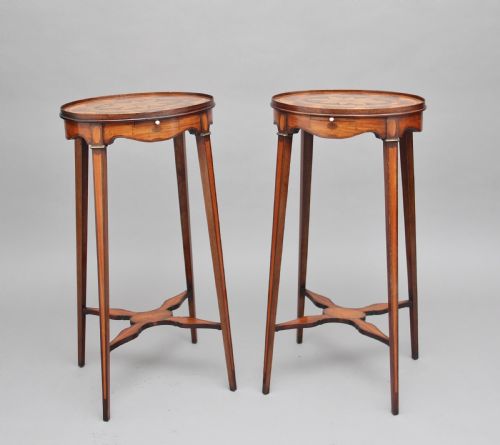
Maker construction relies heavily upon traditional hardwoods such as mahogany, satinwood, oak, amboyna, and burr elm. Structural integrity often incorporates intricate inlay work, gesso detailing, or painted surfaces.
Top surfaces introduce contrasting textures through the integration of statuary marble, alabaster, and brass fittings. Iron elements also appear in specific Victorian portico table configurations.
Joinery techniques reflect the period of origin, from Scottish country craftsmanship to Sheraton revival cabinetmaking and Amsterdam School styling.
Occasionally, a pair of wooden figures masquerades among the tables, proving that plant display sometimes requires a pair of human hands.
What varies in quality
Material selection dictates much of the distinction, with dense exotic hardwoods and pristine marble or alabaster tops marking superior pieces. The refinement of inlaid satinwood or hand-carved hardwood details distinguishes finer examples from simpler utilitarian frames.
Proportional harmony and structural balance between the elevated height and the supporting base determine overall design success. Matched pairs require genuine symmetry in timber grain and decorative execution rather than superficial similarity.
The Pair Tall Plant Tables Glossary
- Satinwood
- A lustrous tropical hardwood known for its pale golden yellow colour and fine grain. It is frequently utilised in decorative inlay and neoclassical revival furniture.
- Gesso
- A plaster mix applied to wood surfaces as a base for painting or gilding. It provides a smooth ground for ornate surface decoration.
- Pedestal stand
- A tall, single-column support designed to elevate objects such as urns, busts, or plants. These stands focus visual weight upward within a room.
- Urn stand
- A specialised small table traditionally created to hold a water urn or decorative vessel. They typically feature raised galleries or compact circular tops.
- Amboyna
- A highly valued burr wood harvested from Pterocarpus indicus trees, displaying rich mottled figuring. Collectors prize its warm amber tones in luxury occasional tables.
Pair Tall Plant Tables: Frequently Asked Questions
What were pair tall plant tables used for?
These matched tall supports served primarily to elevate potted plants, flowers, or decorative garden foliage within interior drawing rooms and glazed conservatories.
Beyond botany, households utilised them for displaying bronze busts, tea urns, or decorative lamps where height added architectural interest to a corner.
How do I date pair tall plant tables?
Dating relies upon identifying timber species, construction joinery, and stylistic markers such as Sheraton revival inlay or heavy Victorian ironwork. Comparing the turned legs or carved motifs against documented nineteenth and early twentieth-century design books clarifies the period.
Examine the underside and interior joints for hand-tool marks and traditional fixings which distinguish older pieces from later reproductions.
Where should I place these tables at home?
Place matched pairs symmetrically flanking a fireplace, doorway, or window bay to create a balanced focal point in a reception room. Their elevated stature makes them ideal for brightening neglected corners with trailing foliage or sculptural objects.
Ensure the floor surface is level, as tall narrow stands benefit from stable placement away from heavy household traffic.
How do I care for marble and alabaster tops?
Clean stone surfaces gently with a soft, damp cloth and dry immediately to prevent moisture rings or mineral etching. Avoid acidic cleaners or abrasive scrubbing pads which damage polished finishes.
Treat the wooden bases with appropriate furniture wax according to the timber type, keeping them away from direct heat sources.