

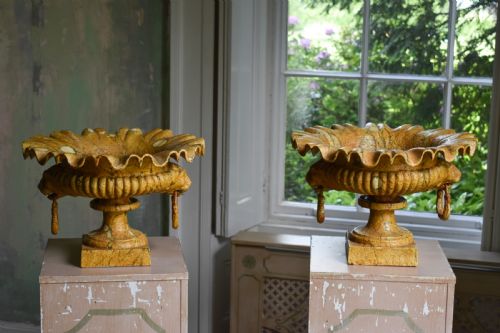
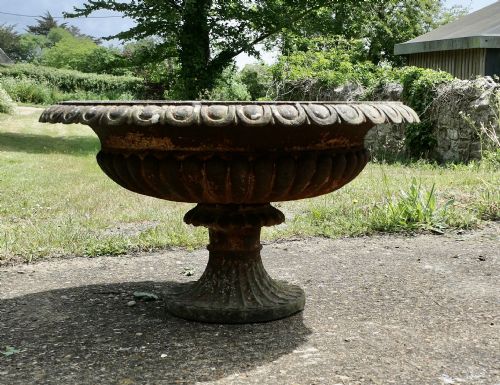
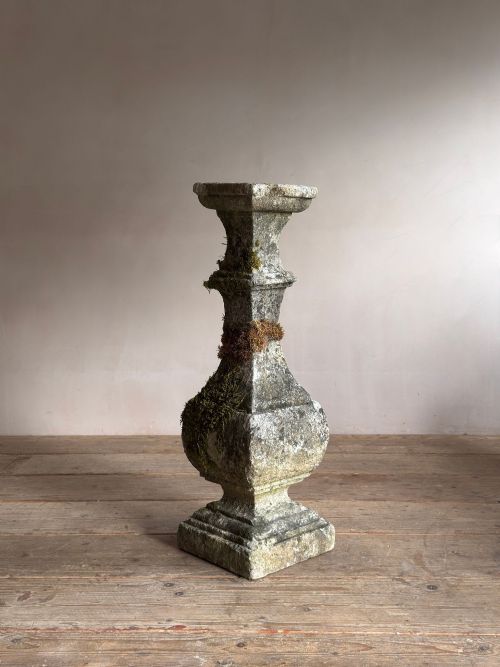
Outdoor Garden Pedestals
Outdoor garden pedestals raise urns, sundials and busts above the ground to draw the eye across a terrace or lawn.
Outdoor Garden Pedestals
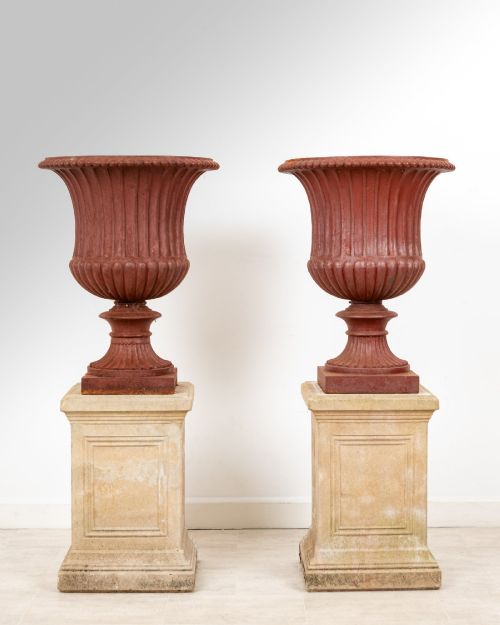
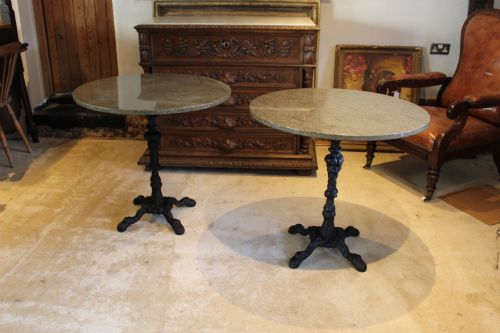
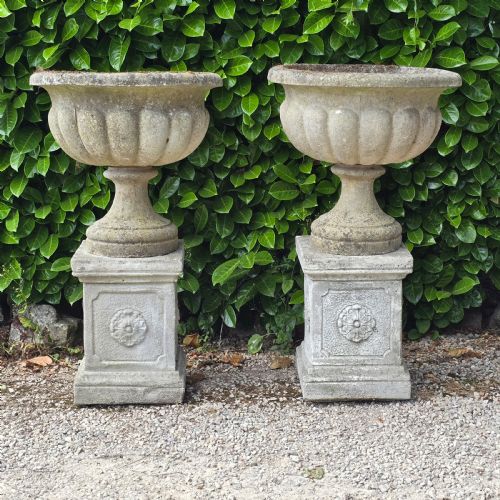
Outdoor garden pedestals support garden ornaments, urns, statues and sundials, elevating them to create focal points in a landscape. When you search for outdoor garden pedestals, you find structural columns, plinths and column planters dating from the eighteenth century to the mid twentieth century.
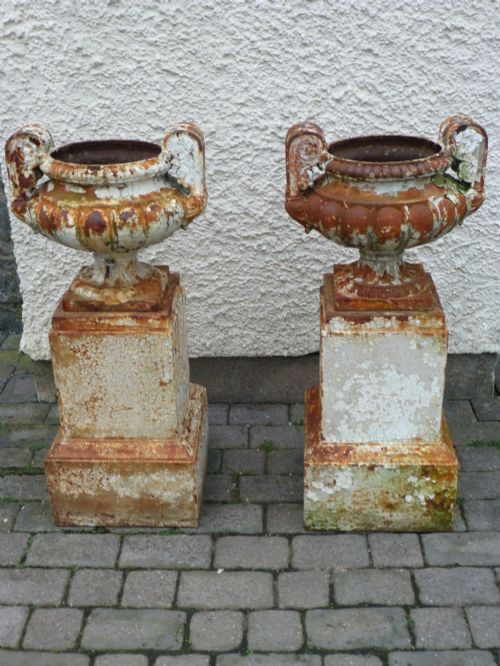
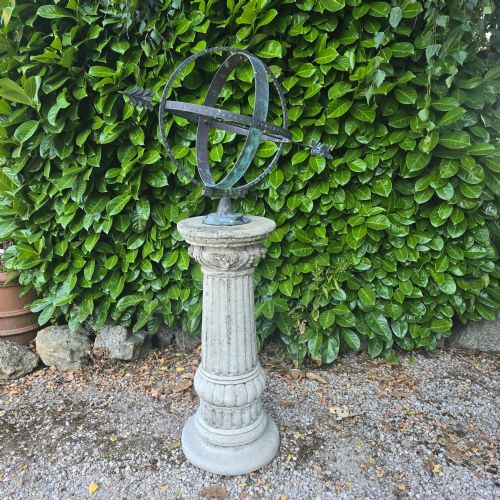
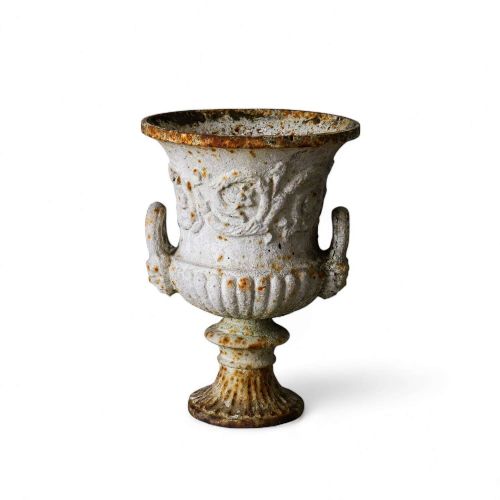
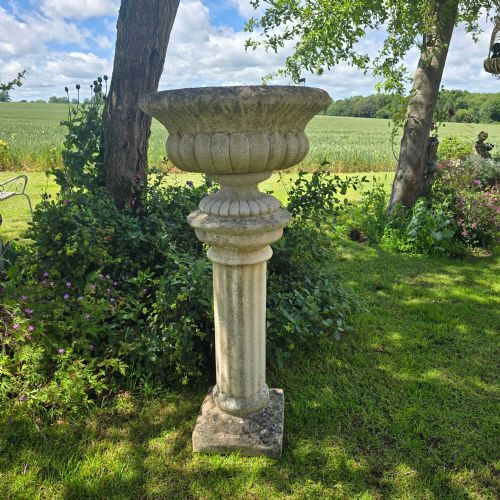
The versions most common on this page are nineteenth century cast iron columns, stone plinths and composite stone bases. Many examples support campana urns, classical busts or armillary sphere sundials, often surviving as matched pairs.
Makers and foundries such as Falkirk Carron, Coalbrookdale and Andrew Handyside produced iron pedestals and stands alongside decorative urns. Other examples emerge in simpler stone, terracotta, limestone and reconstituted stone, reflecting classical revival and gothic styles.
How they were made
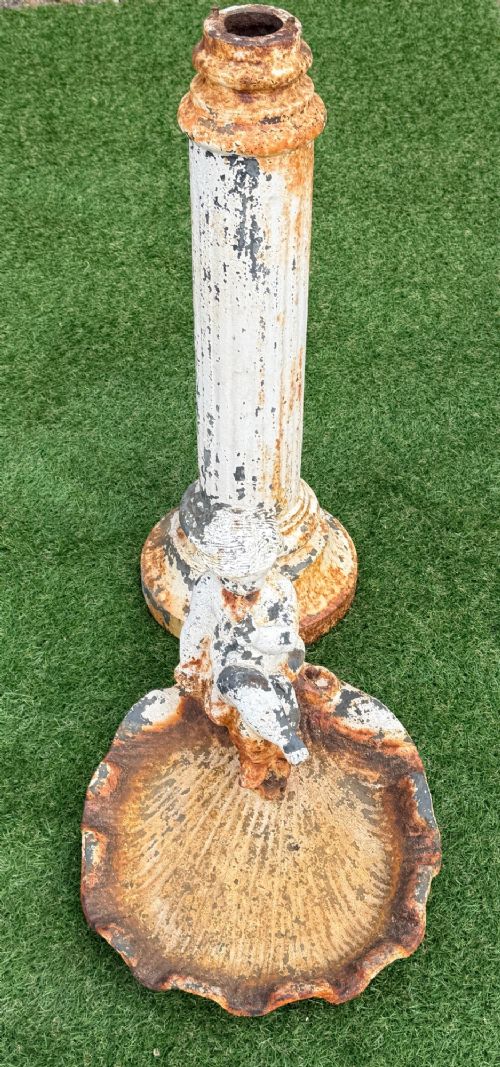
Foundries cast iron using sand moulds, producing robust columns and plinths designed to bear heavy campana urns and jardinieres outdoors. These iron pieces often display crisp detailing such as acanthus leaves and fluted shafts.
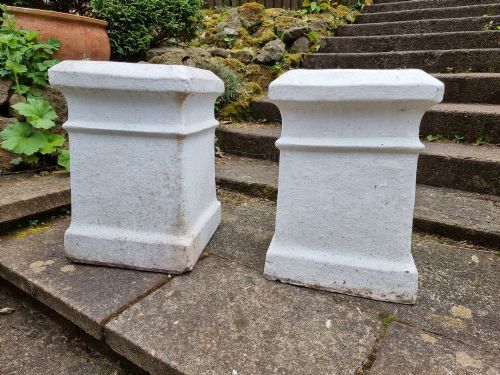
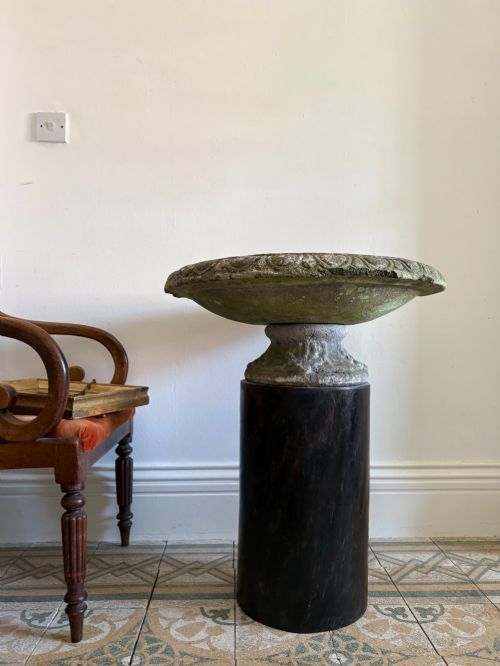
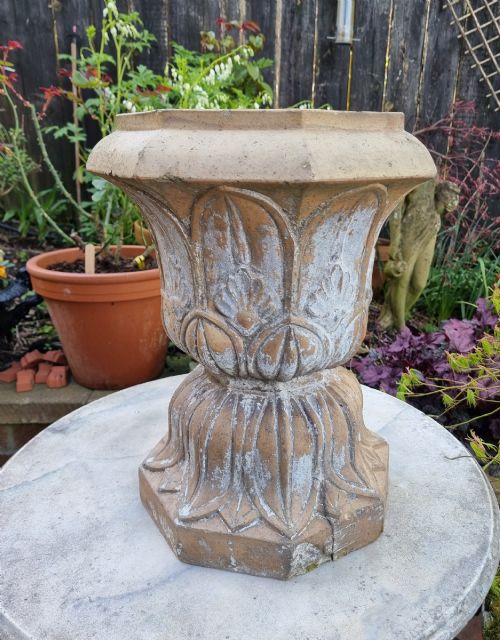
Stone, limestone, terracotta and composite stone examples were carved or cast in moulds using aggregates and binders to replicate classical statuary and architectural elements. These materials weather over decades, developing patinas from moss and lichen.
Surfaces receive protective treatments or paint layers, though many items now show weathered textures resulting from prolonged exposure to the elements.
Listings feature materials spanning cast iron, reconstituted stone, terracotta, limestone, marble and brass across the nineteenth and twentieth centuries.
What varies in quality
The clarity of the casting separates standard production items from superior foundry work, where details like acanthus leaves remain sharp and well defined. Heavier metal and denser stone indicate substantial mass and stability in a garden setting.
Original pairs command greater interest than matched assemblies, particularly when pedestals and their corresponding urns share the same foundry or period. The depth of the natural weathering and surface patination also influences the visual weight of the piece.
Falkirk Carron foundry·Coalbrookdale·Andrew Handyside
The Outdoor Garden Pedestals Glossary
- Campana urn
- A bell shaped garden vessel mounted on a foot and stem, frequently placed atop a pedestal or plinth.
- Plinth
- A heavy base or block supporting a statue, column, urn or sundial.
- Staddle stone
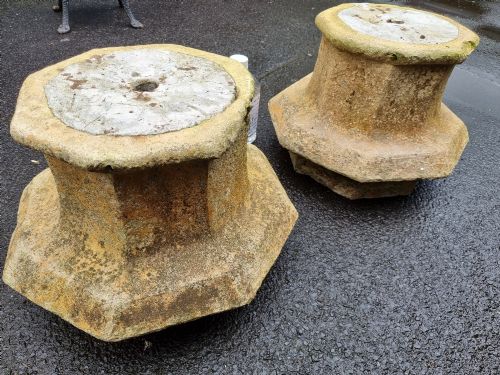
- A mushroom shaped stone support originally used to elevate granaries and barns off the ground to deter pests.
- Armillary sphere
- A model of objects in the sky consisting of a spherical framework of rings, often mounted as a garden sundial on a stone pedestal.
- Terracotta
- Fired clay used for garden urns and planters, valued for its warm earthy tone and porous nature.
Outdoor Garden Pedestals: Frequently Asked Questions
What is the purpose of an outdoor garden pedestal?
Outdoor garden pedestals elevate heavy items like urns, sundials and statues to improve sightlines in a landscape. Raising these objects protects them from ground moisture and integrates them with surrounding planting.
They create formal axes on terraces, frame pathways and establish vertical focal points among lawn and border layouts.
Are cast iron pedestals stable outdoors?
Cast iron pedestals provide exceptional weight and structural stability, allowing them to support heavy stone or iron urns safely in exposed gardens. Their mass prevents tipping in strong winds.
Over time, iron requires periodic inspection and maintenance to manage surface oxidation and maintain protective paint coatings.
How do I date a stone or iron pedestal?
Dating relies on stylistic clues, casting marks, foundry stamps and the degree of material wear. Neoclassical and Gothic revival forms appeared across the nineteenth century, while smoother composite stones often point to twentieth century production.
Foundry names stamped into iron components offer precise attribution to makers like Coalbrookdale or Andrew Handyside.
Can pedestals remain outside during winter?
Most stone, cast iron and composite stone pedestals withstand winter weather, provided trapped water does not freeze within unsealed joints or hollow cavities. Placing pedestals on gravel or stone flags prevents rising damp from soaking into the base.
Terracotta and porous stone components benefit from being raised slightly off the soil during freezing conditions.