

Pair of Painted Urns
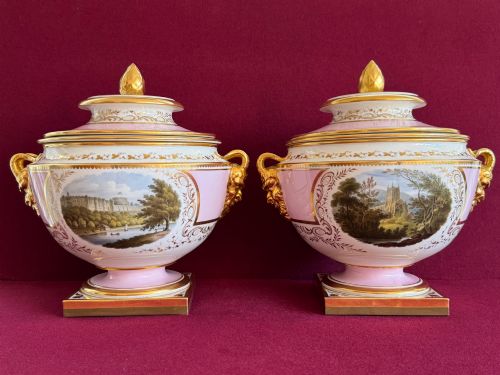
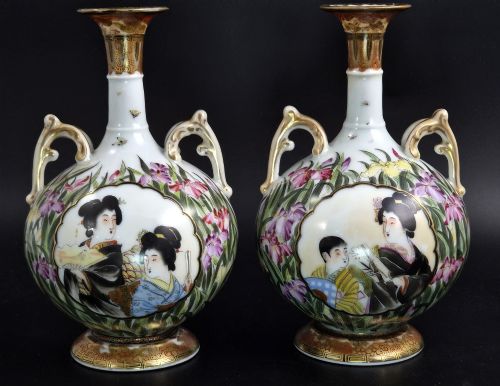
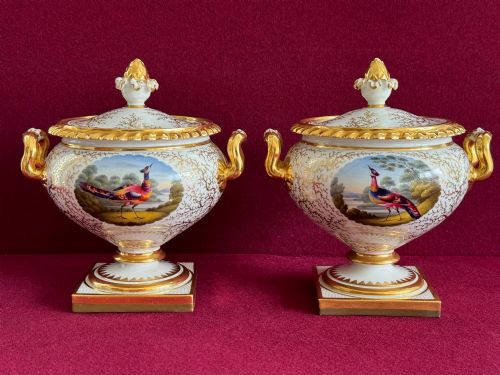
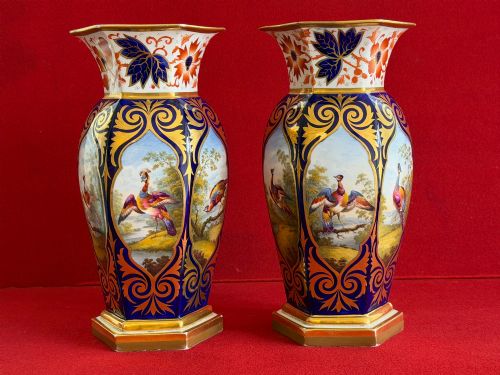
These pair of painted urns bring classical symmetry and hand-painted detail to any mantel or hall, offering matched decorative impact across porcelain, earthenware, and cast iron.
Pair of Painted Urns
A pair of painted urns comprises matching vessel forms designed for symmetry, taking shapes from classical garden ornaments to lidded porcelain vases and table lamps. Buyers seeking this search phrase encounter pieces spanning the Regency era through the Edwardian period, executed in European porcelain, earthenware, and heavy cast iron.
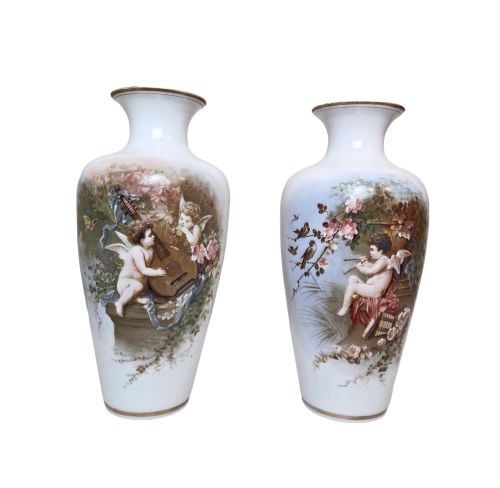
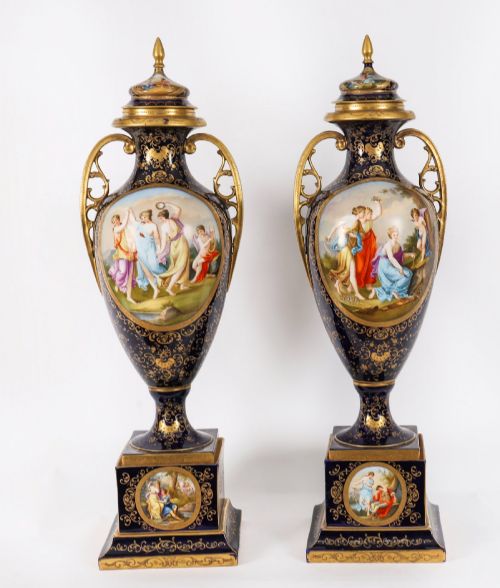
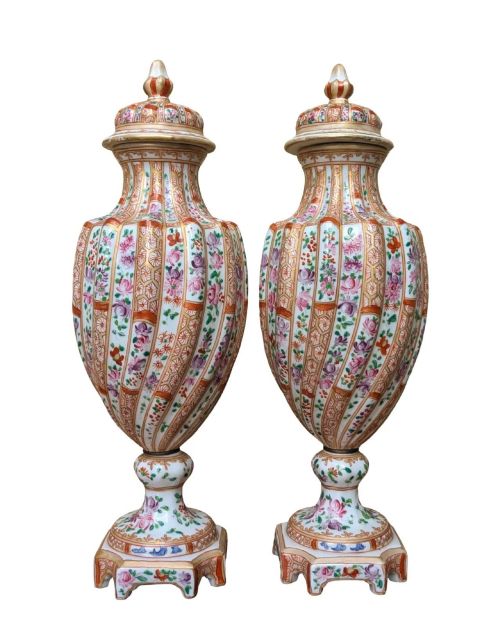
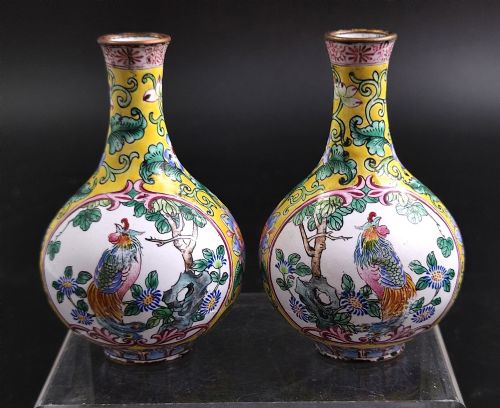
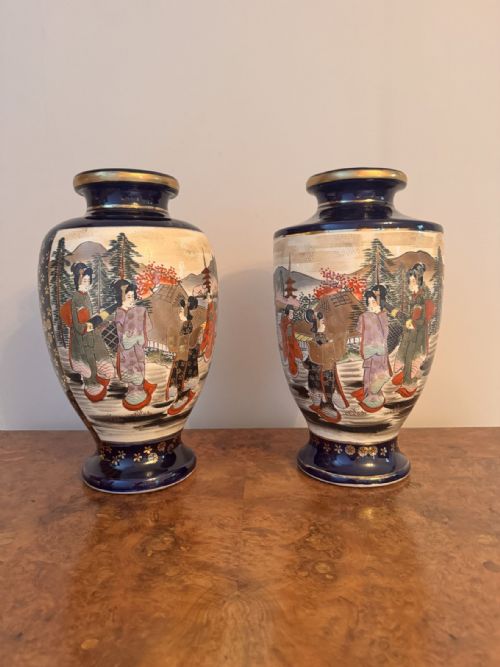
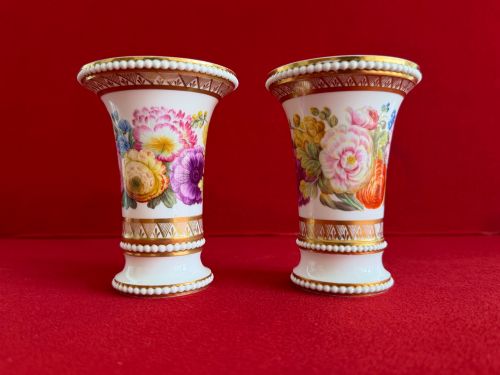
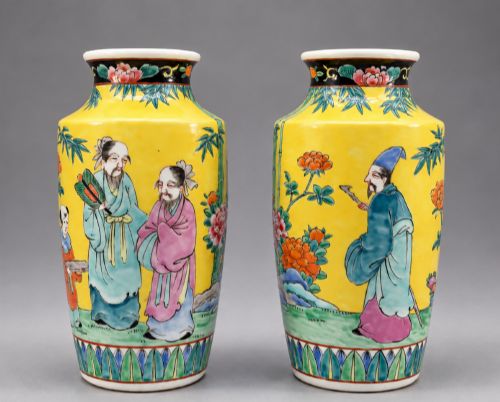
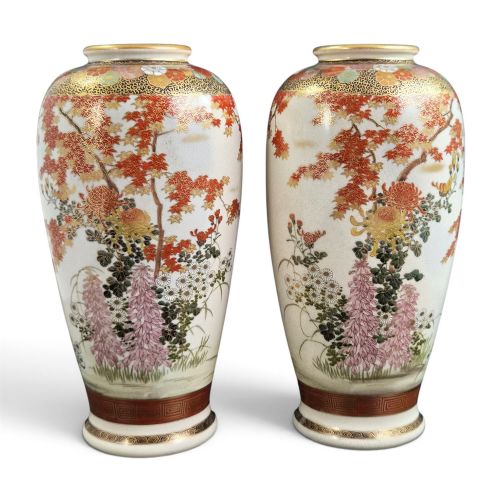
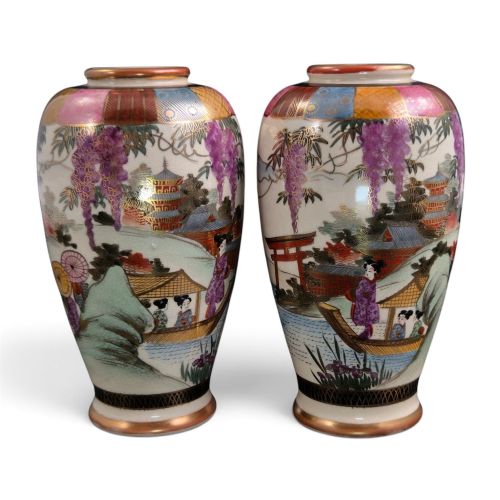
Makers utilised diverse regional traditions, applying hand-painted floral motifs, figural scenes of cherubs or ladies, and rich enamelling. The matching pairs function visually to anchor a room or fireplace, maintaining balance through coordinated design and colour palettes.
Materials and manufacture
Porcelain and earthenware bodies were shaped by throwing or moulding, then coated in glazes before receiving hand-painted decoration in enamel, paint, and gold leaf. Factories like Royal Vienna, Worcester, and Satsuma workshops fired these pigments onto the ceramic surface to achieve lasting colour.
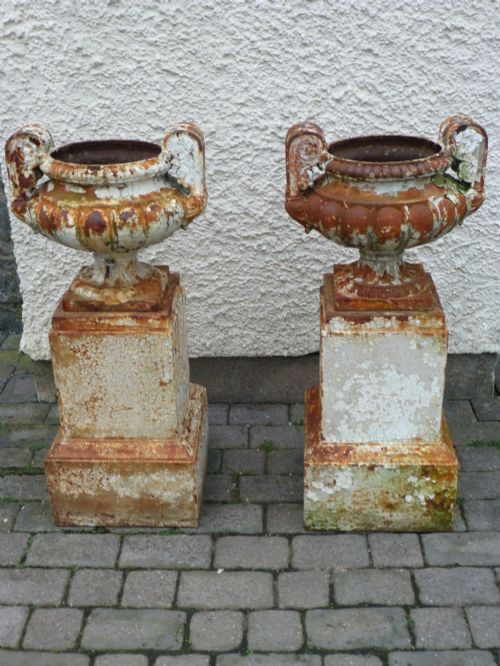
Cast iron examples, such as those from the Falkirk Carron foundry and Coalbrookdale, were poured into sand moulds to create heavy garden urns and campana vessels. These metal pieces often received protective paint coatings and stood on dedicated plinths or bases.
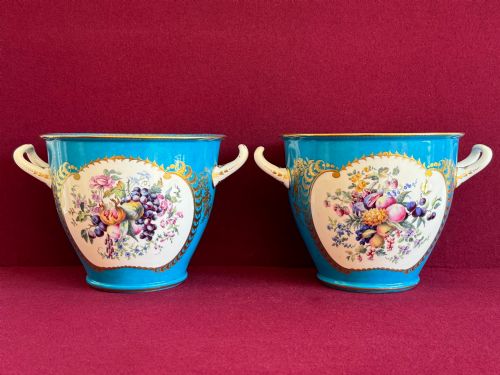
Object forms range from garden urns and ice pails to table lamps and cabinet vases with hand-painted decoration.
Evaluating quality and execution
Quality rests in the crispness of the modelling and the skill of the hand-painted brushwork, distinguishing factory pieces with signed artists from standard commercial output. Finer porcelain items show precise gilding, intricate figural details, and harmonious palettes without blurring or misalignment.
For cast iron garden urns, quality is evident in the sharpness of the cast relief and the structural integrity of the metalwork. Consistency between the two items in a matched pair determines their visual harmony when displayed together.
Flight Barr And Barr·Royal Vienna·Edme Samson·Takasaka Toemon·Maruni Kobe·Jacob Petit·Fourmaintraux Courquin·Sitzendorf·Helena Wolfsohn·Walter Slater
The Pair of Painted Urns Glossary
- Campana urn
- A bell-shaped garden vessel with an everted rim and a pedestal foot. This classical form appears frequently in cast iron and porcelain.
- Famille Rose
- A palette of opaque enamel colours dominated by pink or rose, used extensively on Chinese porcelain and European imitations. It allows for soft shading in floral and figural designs.
- Satsuma
- Japanese earthenware featuring a crackled cream glaze decorated with enamels and gilding. These pieces often depict traditional figures, landscapes, and floral motifs.
- Ice pail
- A specialised lidded vessel designed to hold ice for cooling wine or bottles at the dining table. They frequently double as decorative urns in ceramic collections.
- Cassolette
- A decorative vase or urn featuring a reversible lid that transforms the piece from a solid vessel into a burner for perfumes. They are typically mounted with brass or gilt bronze.
Pair of Painted Urns: Frequently Asked Questions
How were urns used historically?
Many ceramic urns served as decorative garnitures on mantelpieces, while larger lidded versions functioned as ice pails or potpourri holders in grand dining rooms.
Cast iron counterparts were placed outdoors in gardens and on terraces to provide architectural symmetry and frame pathways.
Where should I display my urns?
Matched pairs look best when given symmetrical placement, such as either side of a fireplace mantel, on console tables, or flanking a doorway.
Heavier iron versions belong in garden settings or entrance halls where their weight and material withstand the environment.
How do I care for painted ceramic urns?
Dust porcelain and earthenware gently with a soft, dry cloth to protect delicate enamel work and gold leaf from abrasion.
Avoid using water or chemical cleaners on hand-painted surfaces, as moisture can damage historical pigments.
How can I tell the period of an urn?
Examine the base for factory marks, pattern numbers, and signatures which often correspond to specific manufacturing decades.
Stylistic cues, such as Regency classical lines or Meiji period motifs, also point to the era of production.