
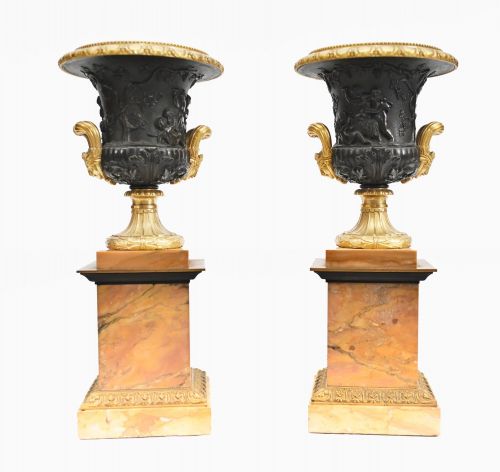


Pair of Cherub Vases
A pair of cherub vases brings sculptural grace and classical ornament to a mantelpiece, uniting porcelain or bronze figures with decorative vessels.
Pair of Cherub Vases
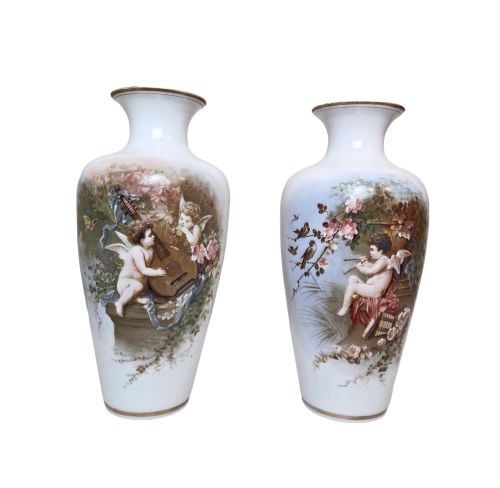
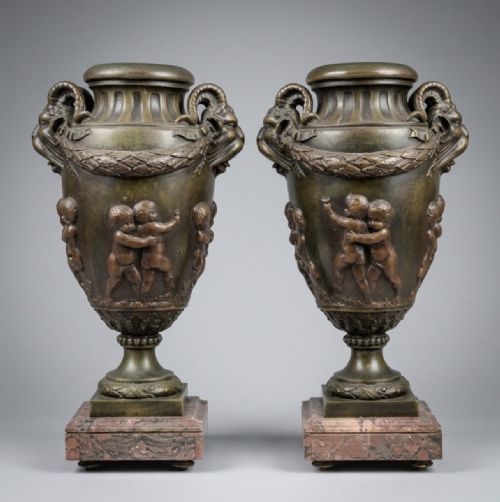
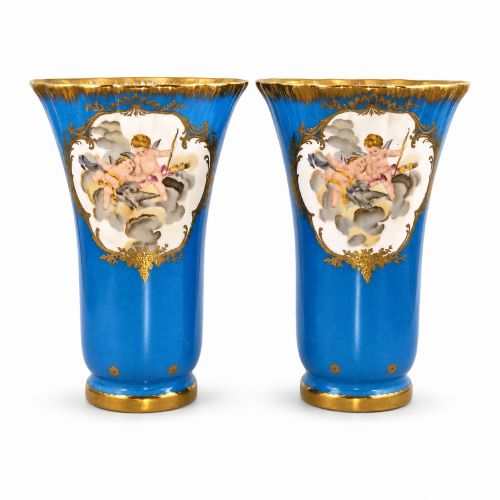
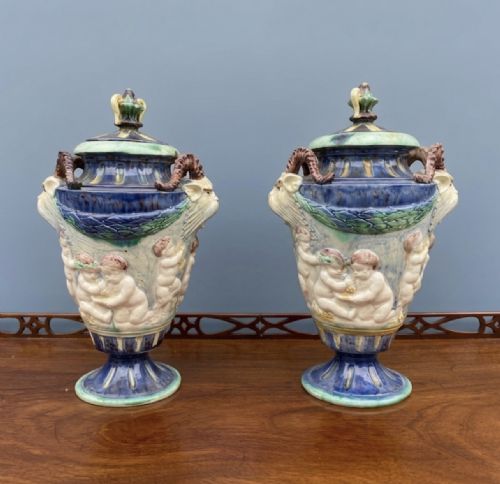
A pair of cherub vases combines figurative sculpture with functional vessel forms, spanning porcelain and bronze across the nineteenth century. These ornamental objects draw heavily on revivalist aesthetics, incorporating classical motifs into domestic displays.
The versions most frequently met on this page date from the Victorian era and the later nineteenth century. They include porcelain painted scenes, majolica urns, and cast bronze ewers or campana vessels.
Makers ranged from major European porcelain houses like Sèvres, Samson Paris, and Dresden to continental manufactories such as Bernhard Bloch and Minton. Forms vary from lidded vessels to chariot vases and monumental urns on marble bases.
How they were made
Construction relies upon the skilled casting of bronze, spelter, and ormolu, often paired with heavy marble plinths. Metal components frequently receive patination, gilding, or silvering to accentuate the sculptural details.
Ceramic examples utilise fine porcelain, earthenware, and majolica bodies that are glazed, hand-painted, and occasionally decorated with specialised techniques like pâte-sur-pâte. These ceramic vessels demonstrate intricate kiln firing and detailed enamel work.
Listings feature nineteenth-century materials including porcelain, majolica, bronze, spelter, and marble across diverse revivalist styles.
What varies in quality
The distinction between standard production and superior work lies in the crispness of the casting and the finesse of the hand-painting. Finer metal figures display sharp chiselling and sophisticated patination, whereas lesser examples lose definition in softer metals.
Ceramic quality is judged by the depth of the glaze, the precision of the enamel or pâte-sur-pâte application, and the harmonious integration of the cherubic figures with the main body of the vase.
Samson Paris·Bernhard Bloch·Minton
The Pair of Cherub Vases Glossary
- Ormolu
- Gilt bronze mounted onto decorative objects or furniture. This technique involves applying a finely ground high-carat gold mercury amalgam to bronze.
- Campana
- An inverted bell-shaped vase form originating from classical antiquity. These vessels often feature distinctive flared rims and twin handles.
- Pâte-sur-pâte
- A ceramic decorating method where liquid porcelain relief is built up layer upon layer. This creates a cameo-like translucent design against a contrasting background.
- Spelter
- An alloy of zinc and lead cast to imitate bronze. It takes patination well and was widely utilised for nineteenth-century decorative figures.
- Majolica
- Tin-glazed earthenware decorated with brightly coloured metal oxide paints. The technique produces a rich and durable glossy surface.
Pair of Cherub Vases: Frequently Asked Questions
What materials are used?
These decorative vessels incorporate porcelain, earthenware, majolica, marble, bronze, spelter, and ormolu.
Many pieces combine ceramic bodies with cast metal mounts and gilt highlights.
How were they displayed?
Nineteenth-century interiors typically positioned such matched pairs upon mantelpieces, console tables, or pedestals.
Their symmetrical design made them ideal centrepieces for formal reception rooms.
Are they waterproof?
Most nineteenth-century decorative urns and figurative vases served an entirely ornamental purpose.
Using them for fresh flowers risks damaging delicate interior glazes, painted surfaces, or metal components.
How do I identify the period?
Dating relies on stylistic clues such as revivalist motifs, specific ceramic marks, and manufacturing techniques.
Nineteenth-century examples frequently draw upon Renaissance, Rococo, or Neoclassical design vocabulary.