


Victorian Style Porcelain Vases
These Victorian style porcelain vases bring colourful 19th-century craft into modern rooms.
Victorian Style Porcelain Vases
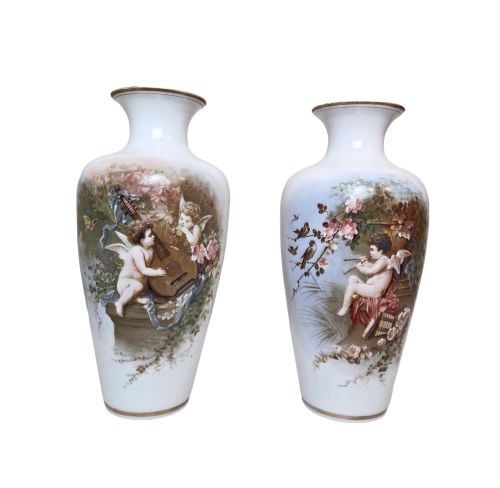
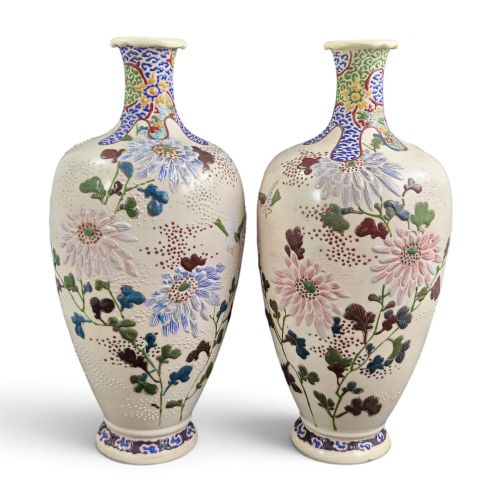
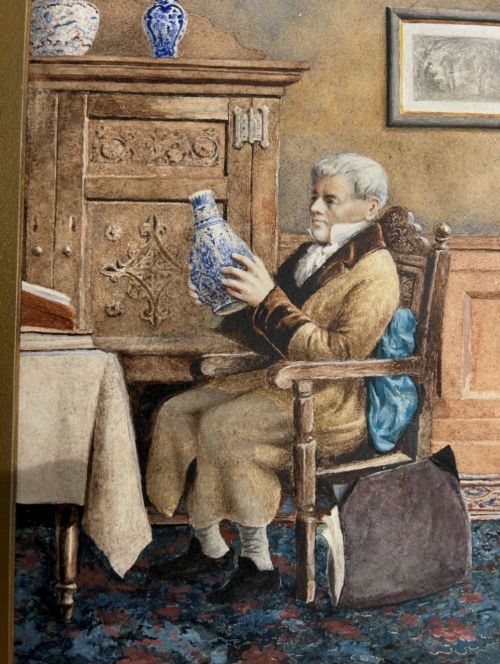
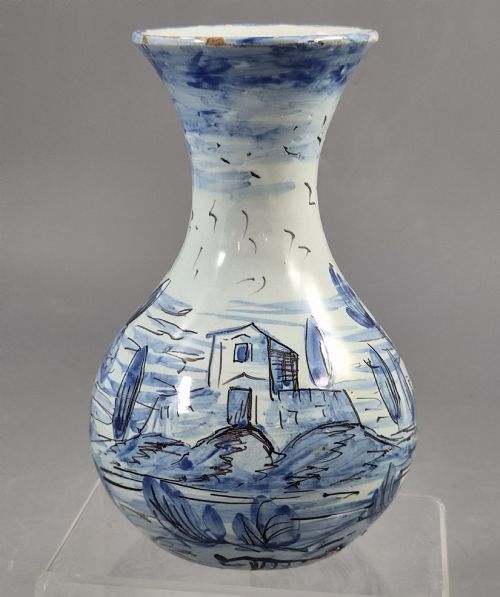
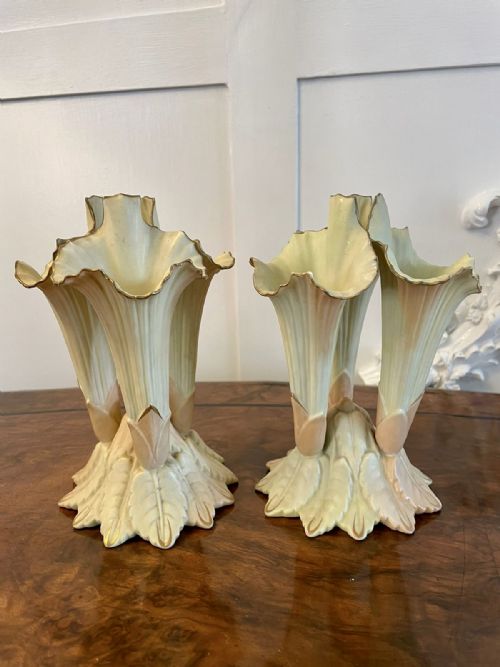
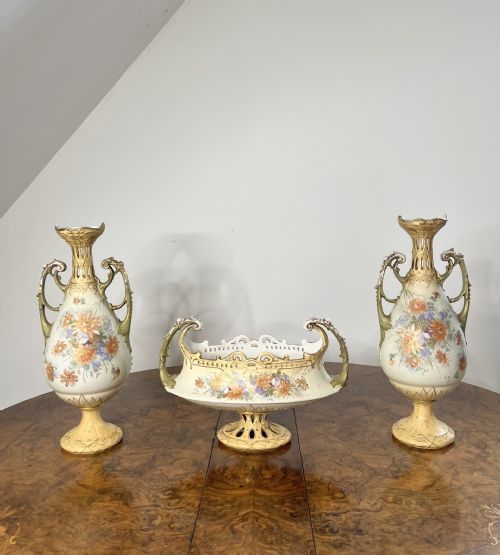
Victorian style porcelain vases encompass an eclectic mix of 19th-century decorative ceramics, ranging from large lidded urns to delicate spill vases and garniture sets. These pieces often draw on historical revivals, including Rococo, Gothic, and Italian Renaissance styles, alongside French Chateau and Chinoiserie influences.
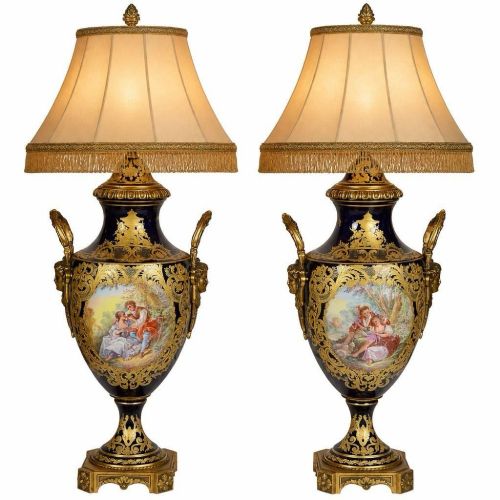
Buyers will most frequently encounter continental European factory pieces and British earthenware bearing ornate hand-painted details. Forms span from classical ovoid bodies and gourd shapes to ewers and cabinet pieces, frequently paired with metal trim or fashioned into table lamps.
How they were made
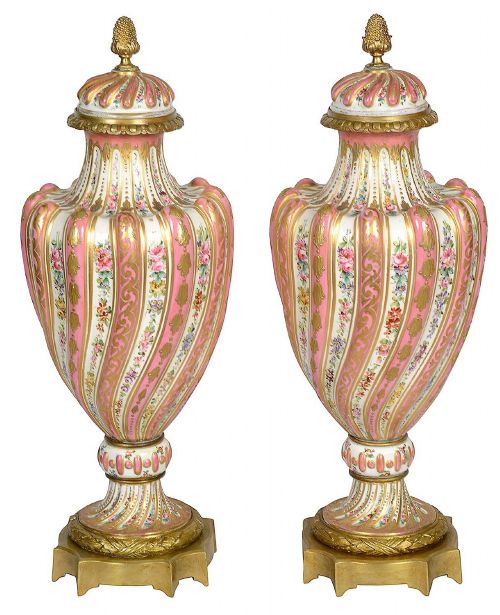
Makers utilised fine porcelain and ironstone bodies, shaped through casting or throwing before applying delicate enamel hand-painting and intricate gilding. Many vessels incorporate applied gold leaf and rich blue grounds, reflecting the high standards of period porcelain production.
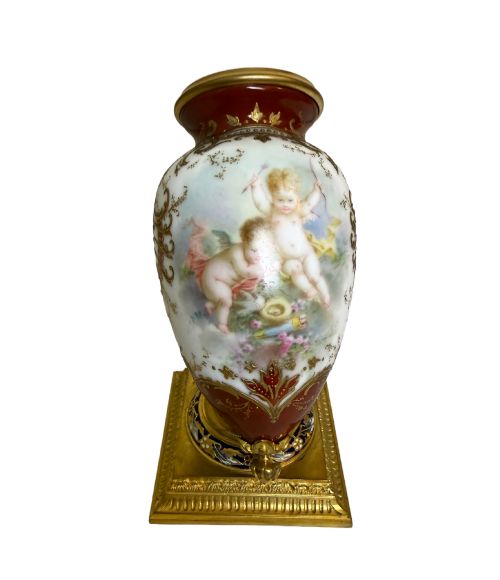
Mounts in gilt bronze, ormolu, and brass frequently frame the ceramic bodies, particularly on pieces produced in the French Sevres style. These metal elements provide structural definition and decorative contrast to the painted porcelain surfaces.
Listings feature 19th-century periods spanning from 1850 to 1920, incorporating styles from Rococo Revival to the Victorian Aesthetic Movement.
What varies in quality
The standard of hand-painting largely dictates the standing of each piece, distinguishing hurried factory output from meticulous artistic execution. Subtlety in floral motifs, figural scenes, and pate-sur-pate layering signals superior craftsmanship.
The integration of metal mounts also sets pieces apart, where chased gilt bronze or ormolu fits the ceramic form with absolute precision. Heavier, more substantial porcelain bodies and crisp gilding distinguish the finer examples from standard decorative ware.
Royal Crown Derby·Cantagalli·Locke And Co·Royal Vienna·Royal Worcester·Doulton Burslem·Sevres·Helena Wolfsohn·Meissen·Masons·Jacob Petit·Wedgwood·Vion Et Baury·Sitzendorf·Minton·Samuel Alcock
The Victorian Style Porcelain Vases Glossary
- Ormolu
- Gilt bronze mounted onto decorative objects. This technique involves applying a finely ground high-carat gold mercury amalgam to bronze.
- Garniture
- A set of matching vases or urns designed to be displayed together on a mantelpiece or sideboard. They typically comprise a central larger vessel flanked by smaller matching pieces.
- Ewer
- A large jug with a wide spout and handle, traditionally used for holding water but frequently produced in ceramic as a purely decorative ornamental vase.
- Pate-sur-pate
- A porcelain decoration technique where wet white slip is built up in successive layers on a coloured clay body to create a low relief cameo effect.
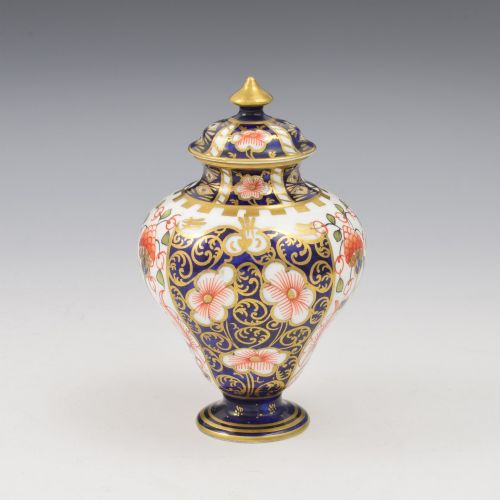
- Imari
- A style of Japanese porcelain export ware featuring underglaze blue and iron red highlights, widely copied by European factories during the 19th century.
Victorian Style Porcelain Vases: Frequently Asked Questions
How were these vases used?
These vessels served primarily as decorative showpieces for mantelpieces, drawing rooms, and cabinets during the 19th century. Some functional forms held flowers or potpourri, while larger garniture sets anchored formal interior displays.
Over time, many of these decorative items were adapted into table lamps or paired with candelabra arms. Their primary purpose remained visual enhancement rather than utility, reflecting the elaborate tastes of Victorian interiors.
How do I spot factory marks?
Makers often stamped, painted, or impressed insignia directly onto the unglazed base of the porcelain. These blue underglaze marks, monograms, and pattern numbers help identify specific European potteries and individual decorators.
Genuine period marks can vary significantly because many continental factories produced wares in the style of earlier houses. Comparing the mark's style to known factory timelines remains essential for proper attribution.
How do I clean antique porcelain?
Dusting gently with a soft, dry brush removes surface particles without risking fragile enamel or gold leaf layers. For heavier grime, lukewarm water and mild soap applied with a cloth work safely on glazed surfaces.
Harsh chemical cleaners and abrasive cloths must be avoided because they strip away historic gilding and hand-painted details. Metal mounts should be polished separately with care to prevent cleaning agents from touching the porcelain.