
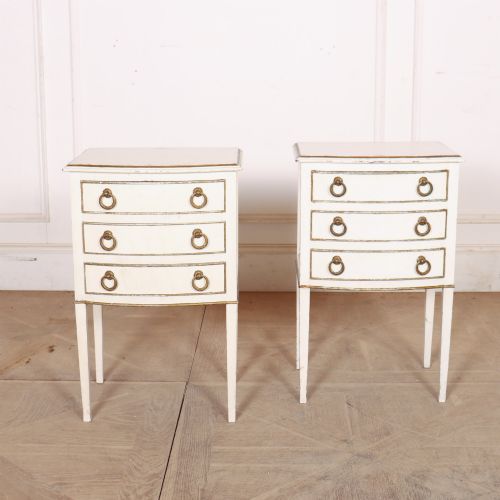
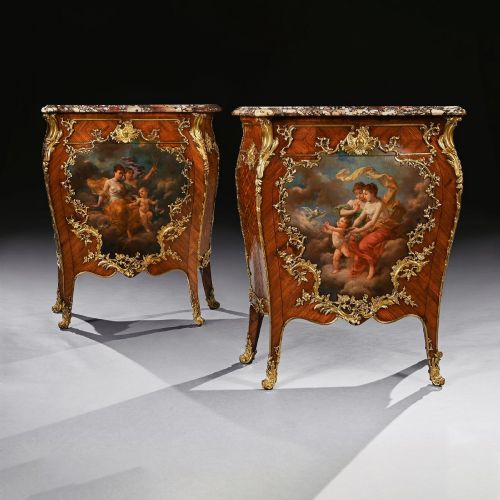
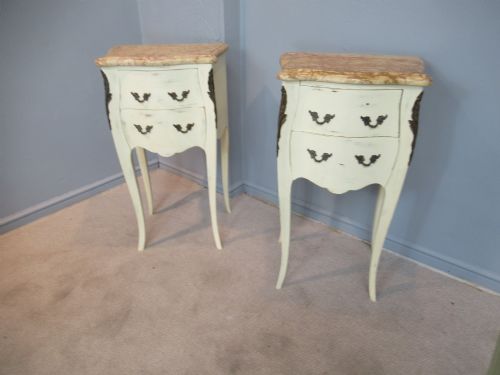


Pair of Painted Commodes
A pair of painted commodes brings symmetry and storage to a room, offering matching decorative fronts across nineteenth and early twentieth century designs.
Pair of Painted Commodes
Most examples function as chests of drawers or side cabinets, with two drawer formats appearing frequently. They bridge utility and decorative impact, often standing beside beds or within sitting rooms.
The origins span Scandinavia, France, and England, drawing on Gustavian, Louis XVI, and Adam revival traditions. Painted finishes dominate, ranging from simple white and grey coats to intricate Chinoiserie and Vernis Martin decoration.
How they were made
Constructed primarily from pine and painted wood, these pieces rely on solid timber carcases built to hold multiple drawers. Artisans applied layers of paint, sometimes incorporating faux marble tops or lacquer to elevate the visual weight.
Metal components play a distinct structural and decorative role, with brass hardware and gilt bronze mounts securing corners and drawer pulls. Kingwood and satinwood surface veneers appear alongside painted pine in revival and continental workshops.
Materials documented across the pieces include pine, satinwood, kingwood, brass, lacquer, and marble.
What varies in quality
The nuance in quality rests upon the sophistication of the painted surface and the crispness of applied ornament. Hand painted floral motifs, layered patination, and detailed gilt bronze mounts separate standard workshop production from finer decorative output.
Structural integrity of the timber carcase and the smoothness of drawer operation distinguish superior cabinet work. Well proportioned mouldings and integrated faux marble tops reflect the skill invested during manufacture.
The Pair of Painted Commodes Glossary
- Commode
- A low chest of drawers or cabinet designed for domestic storage. Originating in France, the form evolved from heavy baroque standards to lighter neoclassical proportions.
- Gustavian
- A Swedish neoclassical design style characterised by restraint, pale paint finishes, and subtle fluting. It reflects Scandinavian interpretations of French Louis XVI taste.
- Vernis Martin
- A type of simulated Japanese lacquer developed by the Martin brothers in eighteenth century France. It involves applying successive coats of varnish to achieve a translucent, glossy finish.
- Chinoiserie
- European artistic interpretations of Chinese and East Asian motifs, popular in decorative painting and lacquerwork. These designs often depict pagodas, figures, and exotic landscapes.
- Satinwood
- A durable timber known for its golden lustre and reflective grain. It gained favour during late eighteenth and nineteenth century revival periods for fine cabinetwork.
Pair of Painted Commodes: Frequently Asked Questions
Where should I place a pair of painted commodes?
These matching cabinets suit symmetrical placement flanking a bed, fireplace, or large doorway. Their surface height also works well for holding lamps or decorative objects in a hallway.
Because they provide enclosed storage behind drawers or doors, they help balance a room visually while keeping smaller items tidy.
How do I care for painted wood surfaces?
Dust the painted surfaces regularly with a soft, dry cloth to prevent abrasive particle buildup. Avoid harsh chemical cleaners that can lift or soften historic paint layers.
Keep the furniture away from direct sunlight and major heat sources to protect the timber carcase from warping and the paint from cracking.
What is the difference between Gustavian and French styles?
Gustavian pieces typically feature muted white or grey paintwork with simpler neoclassical carving and straighter lines. They reflect Scandinavian adaptation of continental court aesthetics.
French styles from similar eras often incorporate more elaborate curves, gilt bronze mounts, and richer wood veneers like kingwood under painted or polished surfaces.
Are faux marble tops original to these commodes?
Many nineteenth century pieces incorporated painted faux marble tops to mimic costly stone surfaces at a lower weight and expense. Artisans brushed and sponged pigments onto wood to replicate natural veining.
These painted tops formed part of the original design specification for specific regional workshops, particularly across Swedish pieces.