

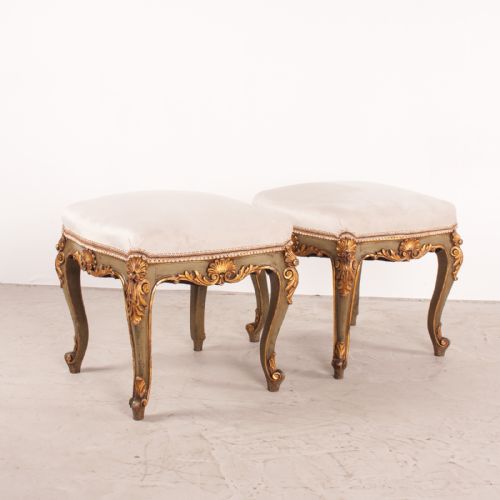
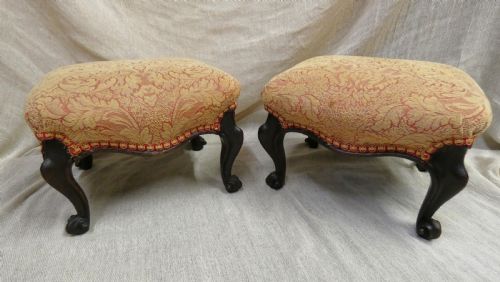
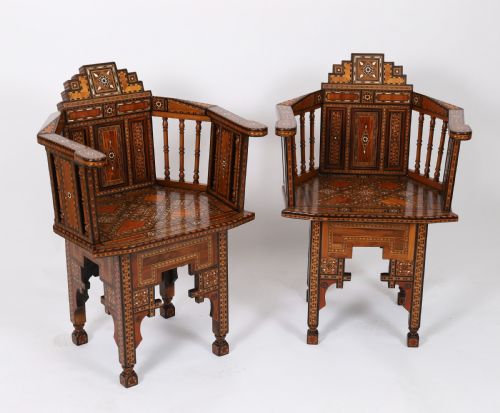
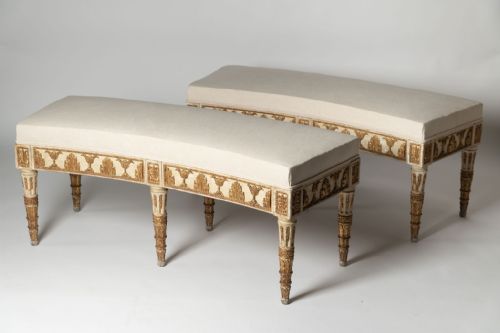
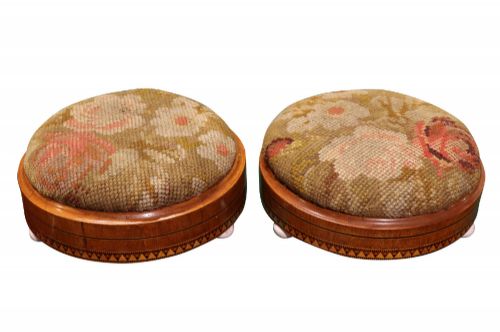

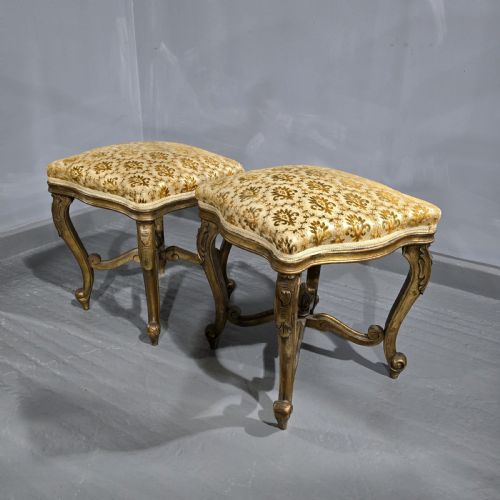

Pair of Ottomans
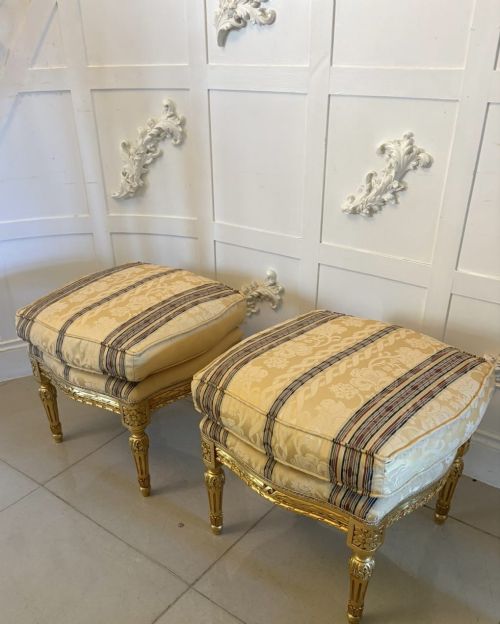
These pair of ottomans offerings bring together matched seating spanning the Victorian, Regency, and nineteenth century periods.
Pair of Ottomans
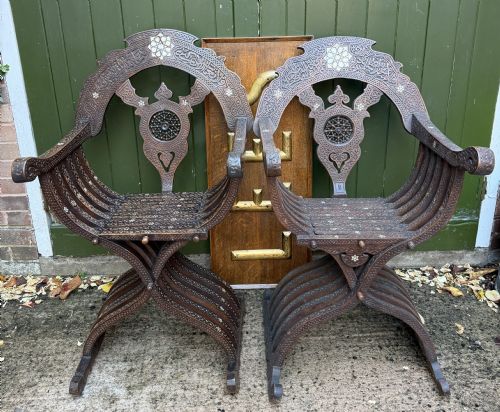
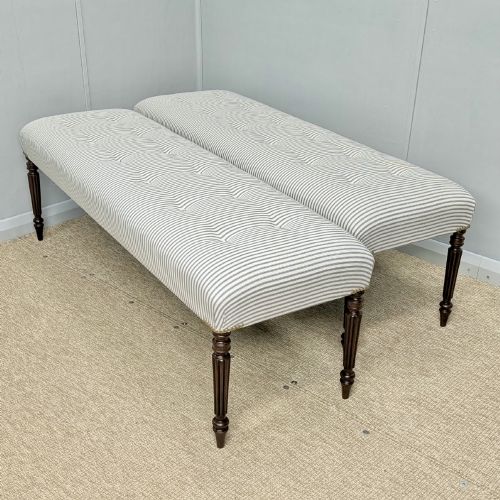
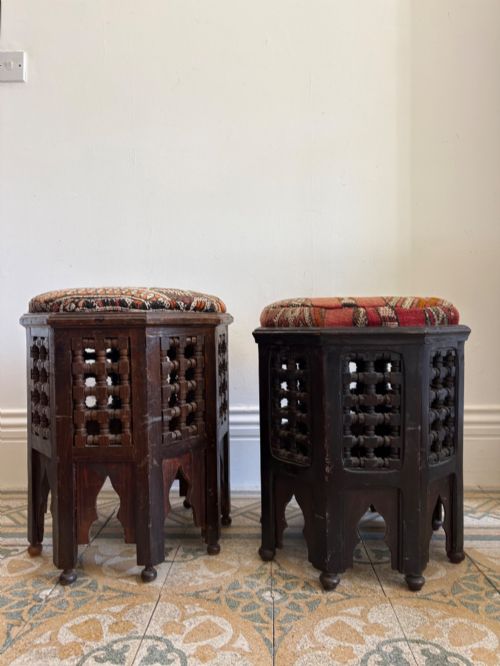
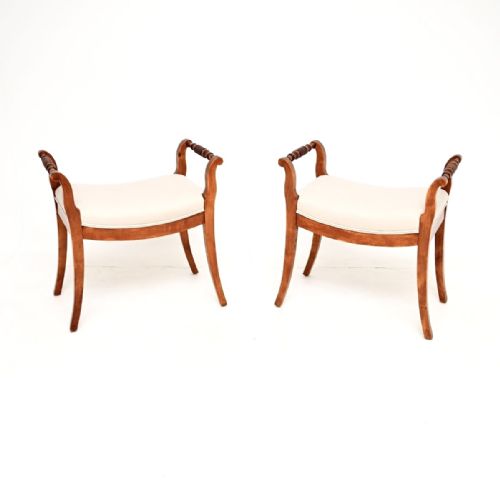
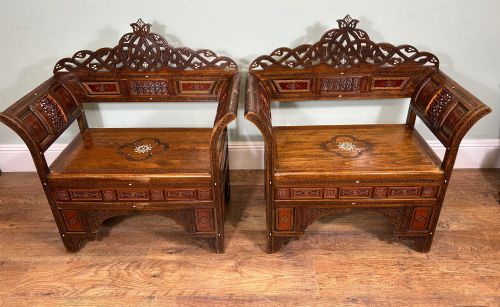
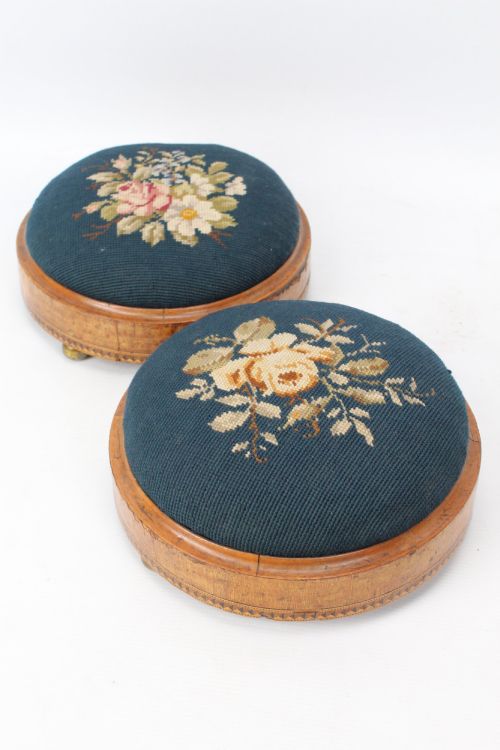
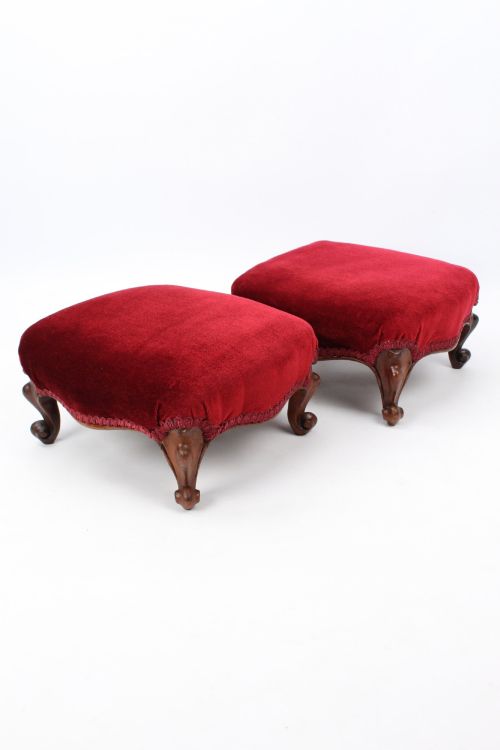
The inventory encompasses various forms including circular footstools, long window benches, and upholstered stools featuring buttoned leather, velvet, and fabric coverings. Alongside traditional British designs, the selection includes Swedish satin birch pieces, Levantine parquetry inlaid items, and French Louis revival styles.
While primarily functioning as upholstered seating and footrests, the category occasionally extends to related decorative objects, carved wooden shoes, and occasional armchairs. The unifying characteristic across these pieces is their matched duality, originating from formal domestic settings.
How they were made
Construction relies heavily on traditional hardwoods such as walnut, mahogany, satin birch, and rosewood, frequently shaped with carved detailing, gilding, or painted finishes. Frame joinery supports padded upholstery finished in silk, velvet, leather, or patterned fabric, often secured with brass-studded edging.
Surface decoration incorporates specialist techniques including parquetry inlay, gold leaf application, and hand-carved woodwork. Makers utilised these methods to create decorative frames that complemented the rich textiles chosen for the seats.
Pair of Ottomans Retail Price Guide 2026
Typical asking prices for pair of ottomans among the pieces listed under this phrase on Sellingantiques today, from the lower quarter to the upper quarter. They describe what is for sale here now, not the wider market.
Period origins span the Georgian, Regency, and Victorian eras, extending into early twentieth-century revivals including Louis XV and Continental Rococo styles.
What varies in quality
Quality differentiates itself through the crispness of the timber carving and the sophistication of secondary materials like parquetry inlay or original gilding. Finer examples display balanced proportions and superior cabinetmaking within the frame structure.
The integrity and authenticity of the upholstery materials, from buttoned leather to silk and velvet, heavily influence the standing of each piece. Retained original surfaces and matching pairs with uncompromised frames represent the upper tier of the range.
James Shoolbred
The Pair of Ottomans Glossary
- Regency
- A British design period spanning the early nineteenth century, known for drawing inspiration from classical Greek, Roman, and Egyptian forms. Pieces from this era often feature mahogany frames and clean architectural lines.
- Giltwood
- Wood that has been treated with a thin layer of gold leaf or gold paint for decorative effect. This technique was frequently applied to ornate Continental and revival frames.
- Parquetry
- A geometric mosaic of wood pieces used for decorative inlay on furniture surfaces. Levantine and Moorish pieces often employ this intricate woodworking technique.
- Ottoman
- A piece of upholstered seating typically without a back or arms, designed for use as a footstool or bench. Historical examples often feature buttoned leather or rich fabric coverings.
- Biedermeier
- A central European style of furniture from the nineteenth century focusing on utilitarian comfort and clean lines. Swedish examples frequently utilise lighter woods such as satin birch.
Pair of Ottomans: Frequently Asked Questions
What is an ottoman?
An ottoman is a piece of upholstered seating, typically designed without a back or arms, used either as a footstool or a low bench. Historical examples served various domestic functions in libraries, drawing rooms, and boudoirs.
Over time, the form evolved from padded footstools to substantial long benches and window seats upholstered in leather, velvet, or silk.
How do I identify a Victorian footstool?
Victorian footstools generally feature dense hardwoods such as walnut or mahogany, often combined with turned legs or carved wooden frames. Upholstery methods frequently include buttoned fabric, woolwork, or velvet.
Examining the underside and joint construction helps determine the period, as nineteenth-century cabinetmaking employed specific hand-tool techniques.
Where were these pieces used?
These matched stools and benches were primarily placed in formal reception rooms, libraries, and bedrooms of nineteenth-century homes. Long window seats fitted neatly beneath large casements, while smaller circular stools accompanied armchairs.
Their matched nature indicates they were commissioned or acquired as companion pieces to furnish balanced domestic interiors.
How do I care for antique leather?
Antique leather upholstery requires gentle cleaning and occasional conditioning to maintain the material's natural flexibility. Avoiding direct sunlight and excessive heat prevents the leather from drying out or cracking.
Preserving the original surface finish maintains the character and historical integrity of nineteenth-century seating.
What is parquetry inlay?
Parquetry is a decorative woodworking technique where small geometric pieces of timber are fitted together to create patterned surfaces. This method appeared frequently on Levantine and Moorish furniture from the nineteenth century.
It adds visual texture to the frames and highlights the craftsmanship of regional workshops.