
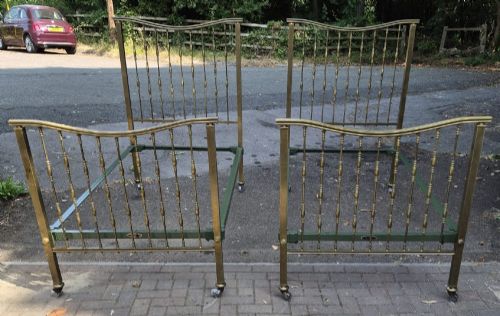
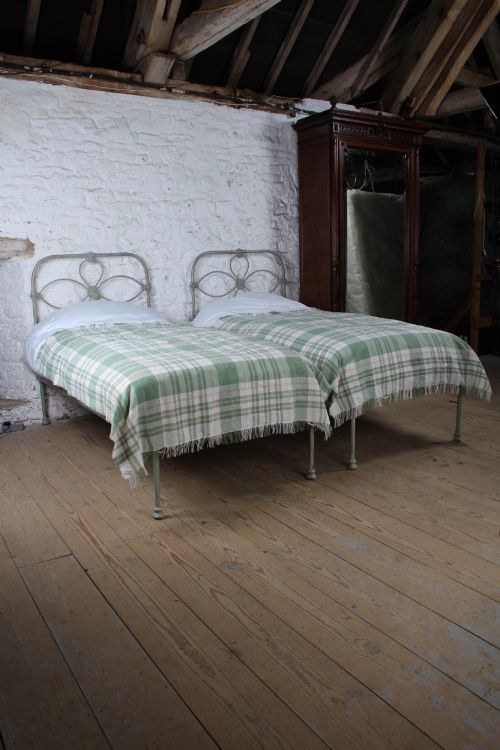


Pair of Metal Single Beds
These pair of metal single beds bring reliable Victorian and Edwardian craftsmanship to any bedroom, offering flexible arrangements with frames that can often be joined.
Pair of Metal Single Beds
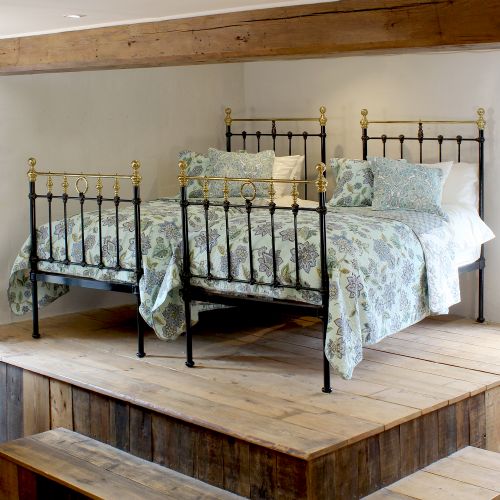
A pair of metal single beds consists of matched bedframes or bedsteads originating predominantly from the Victorian and Edwardian eras, spanning the late nineteenth and early twentieth centuries. These pieces appear in forms such as standard single beds, platform beds, and no-end beds.
Most examples found here date from the 1880s through to 1900, reflecting British, French, and Portuguese traditions. Many of these historical frames share the practical capability of being joined together to form a larger sleeping arrangement.
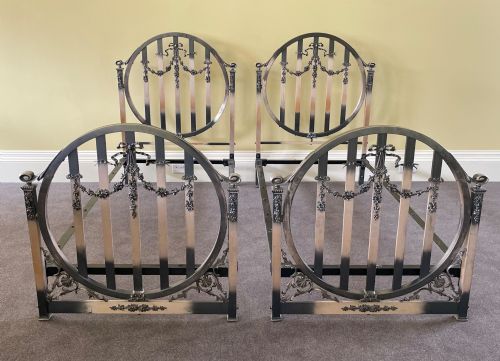
Makers such as Hoskins and Sewell contributed to this heritage, producing robust iron and brass structures. Buyers encounter styles ranging from classic Victorian and Art Nouveau to French Country and Rustic European.
How they were made
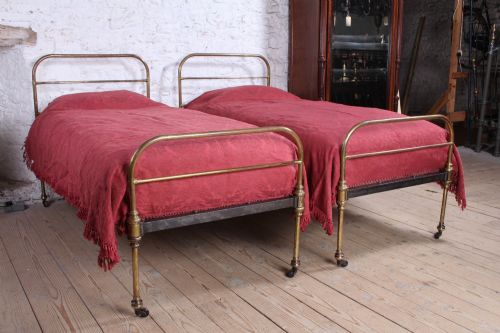
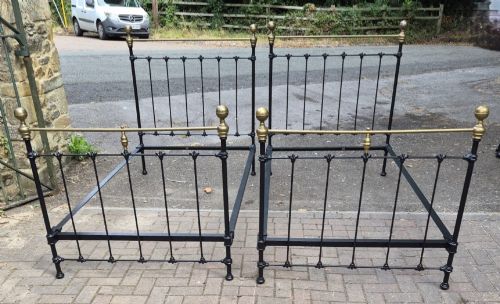
Construction relies heavily on cast iron, wrought iron, and structural steel, providing enduring strength to the bedframes. Brass components, including polished rails and decorative finials, are frequently incorporated alongside the iron frameworks.
Surfaces are finished with protective layers of paint in colours like black, white, and cream, or treated with nickel plating for a metallic sheen. Specialised techniques allow elements like rings and brass decoration to be securely fastened to the metal bodies.
Listings feature cast iron, brass, and painted metal materials from the Victorian and Edwardian periods.
What varies in quality
The sophistication of decorative metalwork sets individual pairs apart, with intricate Art Nouveau motifs or applied brass details representing more elaborate manufacturing efforts. Simpler utilitarian frames rely purely on clean lines and balanced proportions.
The integrity of the original finishes and plating contributes significantly to the character of each bedstead. Superior examples maintain well-preserved painted or nickel-plated surfaces that highlight the underlying metal.
Hoskins & Sewell
The Pair of Metal Single Beds Glossary
- Bedstead
- The complete framework of a bed, including the headboard, footboard, and side rails. In older pieces, this framework is constructed entirely from heavy metals like iron and brass.
- Nickel plating
- A thin coating of nickel applied over an iron or steel base to prevent corrosion and provide a bright, reflective finish. This treatment was particularly popular on Edwardian frames.
- Platform bed
- A bed structure designed to support a mattress directly on a raised base without the need for traditional box springs. These frames often feature integrated metal slats or platforms.
- Art Nouveau
- A decorative style prevalent in the late nineteenth and early Edwardian periods, characterised by flowing, organic lines and stylized plant motifs. Metal beds from this era often display these curved, naturalistic patterns.
- No end bed
- A bedstead designed without a high footboard, creating an open profile that suits smaller rooms. This configuration emphasises the continuous lines of the side rails and headboard.
Pair of Metal Single Beds: Frequently Asked Questions
Can these single beds be joined together?
Many of the listed frames are specifically built with the capability to be linked together to form a wider sleeping surface. This modular flexibility was common in period manufacturing.
Buyers should inspect the specific configuration of the side rails to understand how the two pieces connect.
What periods do these metal beds represent?
The selection spans the late nineteenth and early twentieth centuries, capturing Victorian and Edwardian design sensibilities. Pieces primarily date between 1880 and 1900.
Stylistic influences range from British institutional forms to continental French and Portuguese domestic traditions.
How do I care for antique metal bed frames?
Routine maintenance involves dusting with a dry cloth and avoiding abrasive cleaners that might damage painted or plated surfaces. Preserving the original finish protects the underlying iron and brass.
Checking joints and fasteners periodically ensures the structural stability of the bedstead over time.