



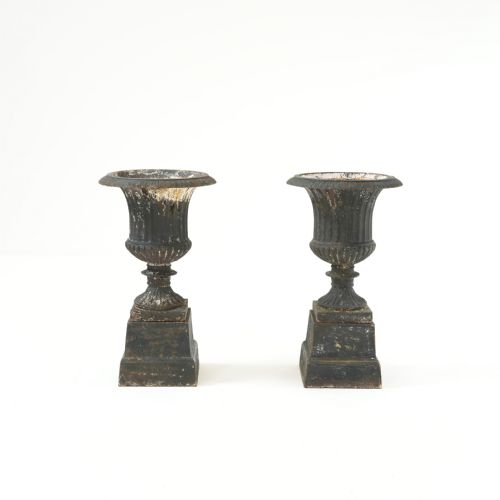
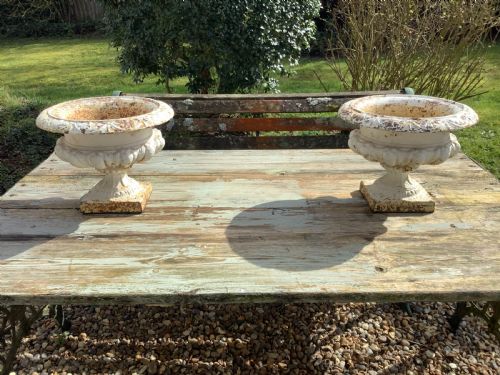


Pair of Iron Planters
Pair of iron planters bring weight and formal balance to garden paths and terraces, offering enduring structure for seasonal planting.
Pair of Iron Planters
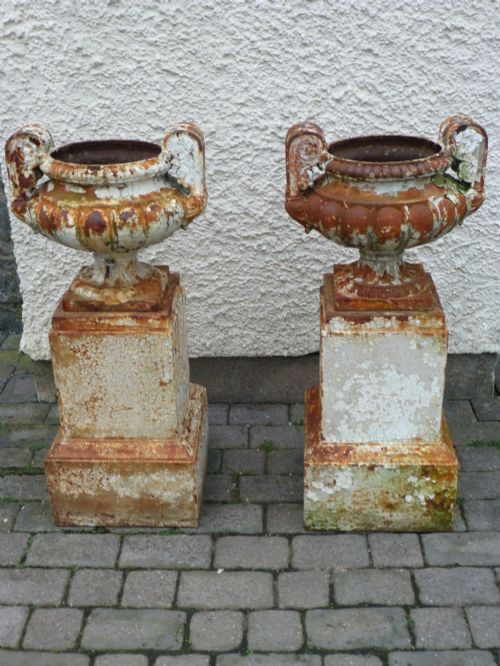
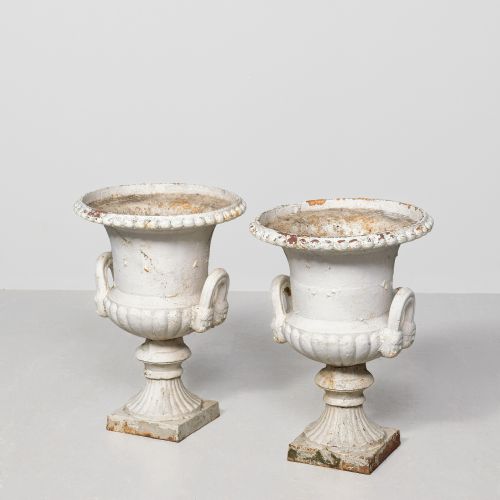
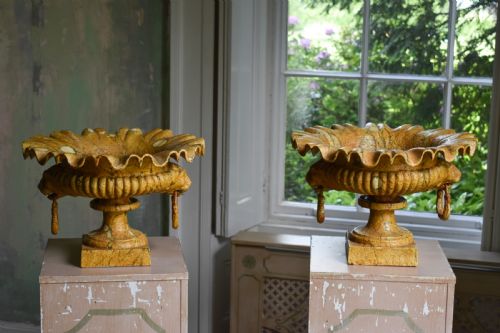
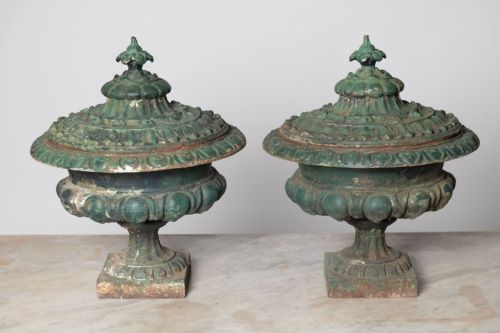
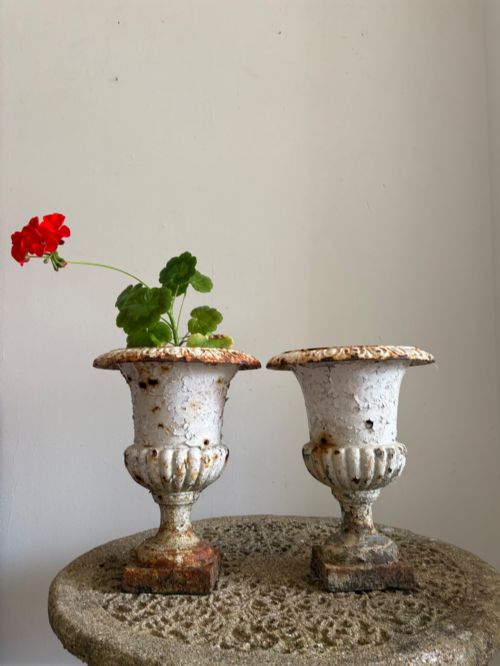
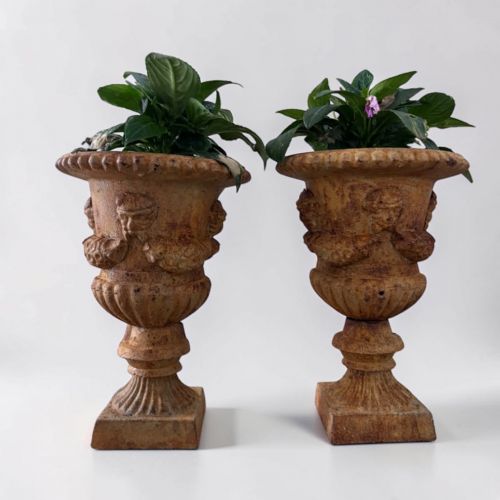
A pair of iron planters typically takes the form of classical garden urns, campana shapes, or heavy tazza vessels designed for symmetry in outdoor spaces. These pieces emerge predominantly from the nineteenth century, spanning Regency, Victorian, and Edwardian periods.
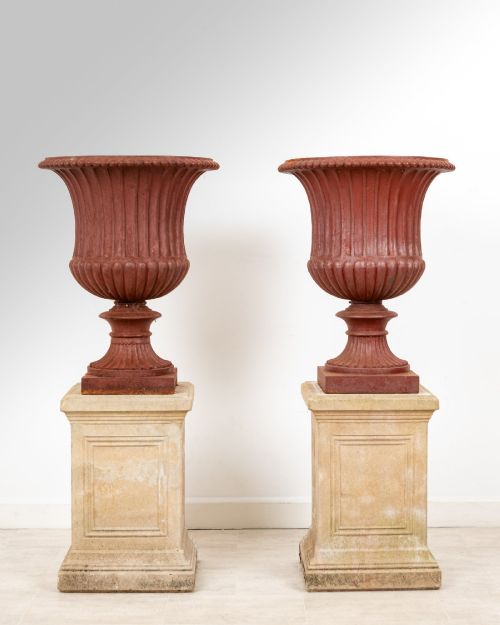
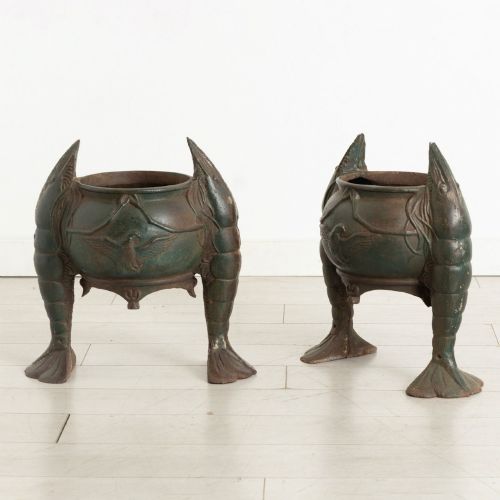
Beyond traditional urns, the selection includes column planters, novelty forms like shrimp or figurative statues, and wall-hanging designs. Buyers frequently encounter examples complete with original stone pedestals or matching plinths that elevate the display.
French and English foundries dominate the historical record, producing robust vessels intended to weather the elements while retaining sculptural detail.
Assessing craftsmanship and design
The distinction between standard utility vessels and superior examples rests in the sharpness of the casting and the depth of classical relief moulding. Finer pieces demonstrate careful finishing of seams and incorporate matching original plinths or lids that complete the composition.
Some Victorian designers abandoned solemn classical urns entirely, opting instead for cast iron planters shaped convincingly as giant swimming shrimp.
Falkirk Carron foundry·Coalbrookdale
The Pair of Iron Planters Glossary
- Campana urn
- A bell-shaped garden vessel with an everted rim, widely produced in cast iron during the nineteenth century.
- Tazza
- A shallow bowl-shaped ornamental vessel raised on a stem and foot, often utilised as a formal garden planter.
- Plinth
- A heavy rectangular or square base block that elevates a garden urn or planter above ground level.
- Jardiniere
- An ornamental receptacle designed to hold growing plants or flowers, frequently seen in metal and ceramic.
Pair of Iron Planters: Frequently Asked Questions
How do I secure heavy iron planters outdoors?
Most substantial cast iron urns rely entirely on their own considerable weight to remain stable on garden terraces and lawns without additional fixings.
When placed upon matching stone pedestals or plinths, gravity and broad bases prevent tipping even in exposed outdoor positions.
Can these metal planters stay outside in winter?
Cast iron handles freezing temperatures well, though adequate drainage inside the bowl prevents expanding ice from cracking the metal walls.
Elevating vessels slightly on feet or blocks allows excess rainwater to escape freely during wet weather months.
How do I identify a true pair?
A true pair shares identical casting moulds, matching dimensions, and consistent wear patterns accumulated side by side over generations.
Matched pairs, assembled later from similar single vessels, often show subtle variations in base height or surface detailing upon close inspection.
Should I repaint historic iron planters?
Original distressed paint surfaces and weathered patinas are generally preserved by collectors for their historical character and visual depth.
If active oxidation threatens the metal, applying a protective outdoor coating or traditional paint finish safeguards the iron for future decades.