


Pair of Goblets
A pair of goblets brings symmetrical presence to a sideboard or table, uniting drinking vessels and decorative display from centuries past.
Pair of Goblets
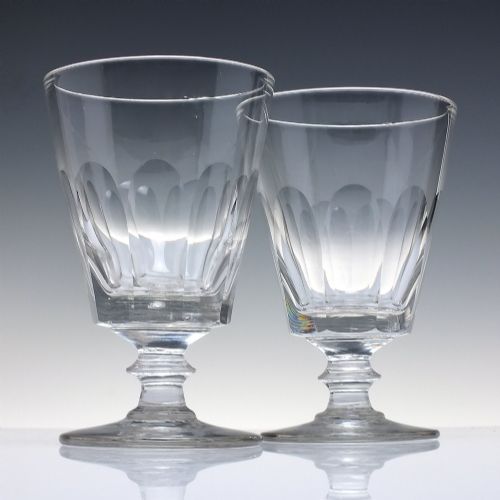
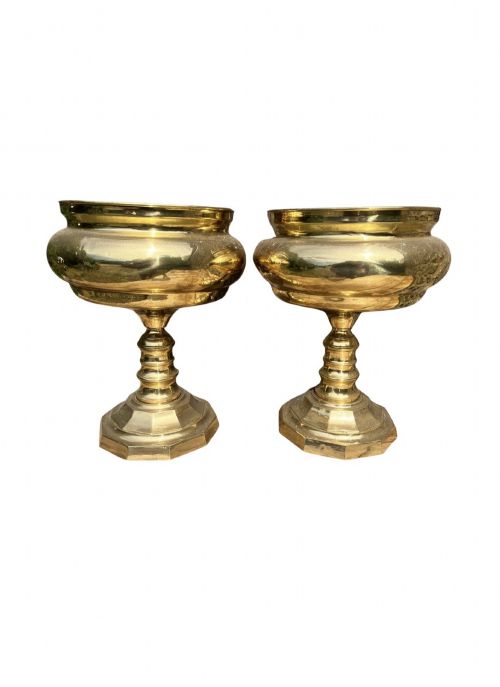
A buyer seeking a pair of goblets encounters diverse forms ranging from drinking vessels to chalices and vases. The selection spans Georgian and Victorian periods, alongside earlier eighteenth-century examples and later Victorian specimens.
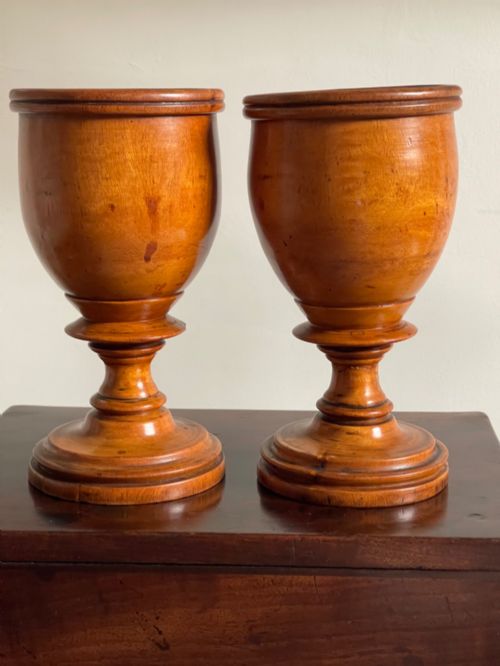
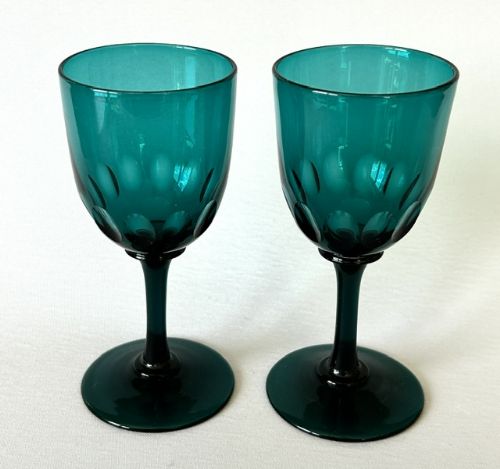
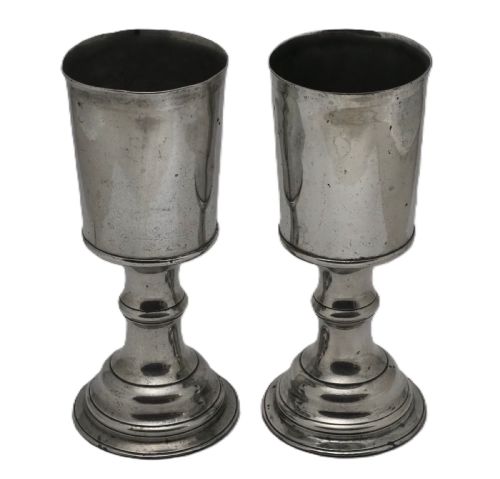
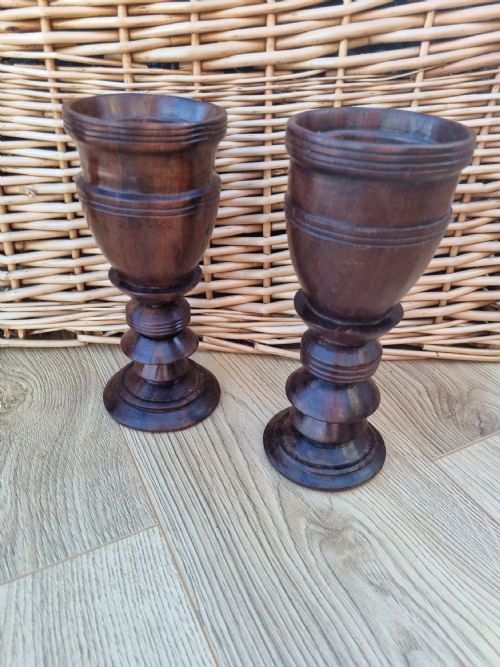
Glassware dominates the offerings, appearing as clear lead crystal, cut glass, and coloured vessels alongside metalwork in copper, bronze, brass, silver, pewter, and Old Sheffield Plate. Wooden treen examples in fruitwood, walnut, and yew add organic texture to the category.
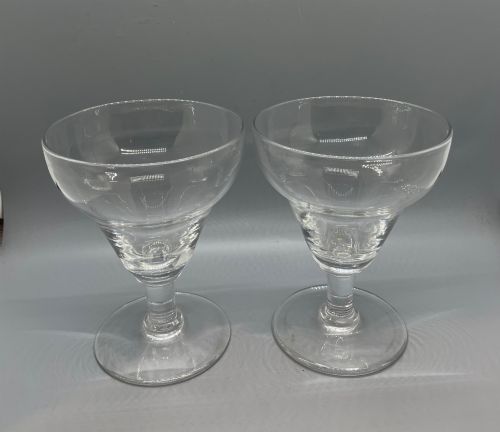
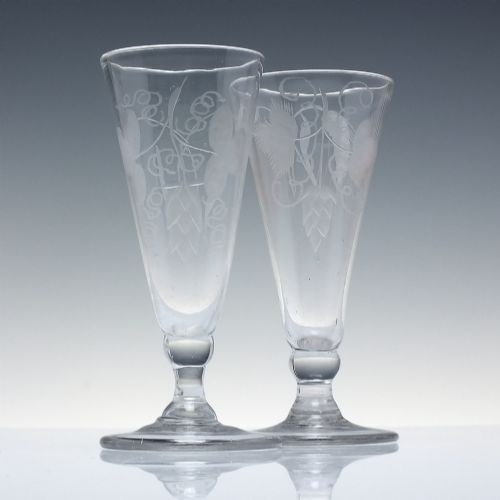
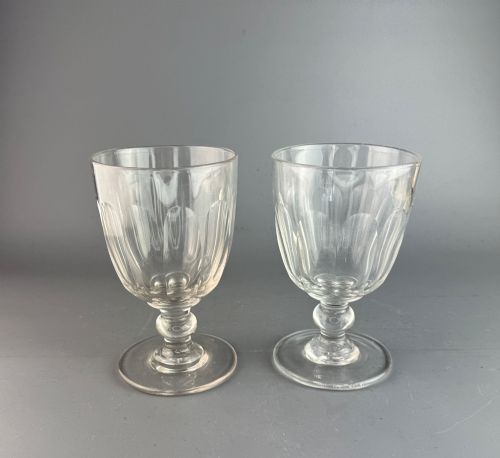
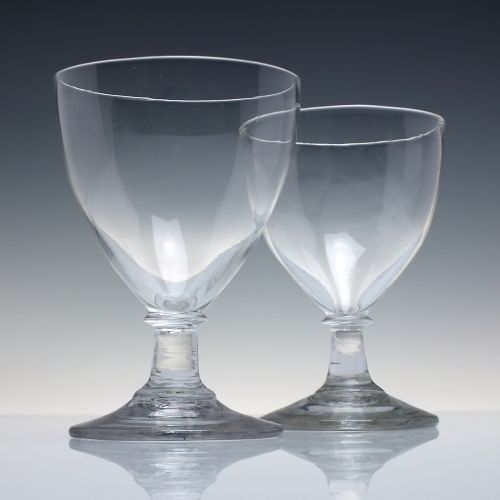
Glass rummers, wine glasses, and ale glasses share space with ecclesiastical church chalices and decorative urns. These matched pairs served practical dining functions or formal display roles in domestic and institutional settings.
How they were made
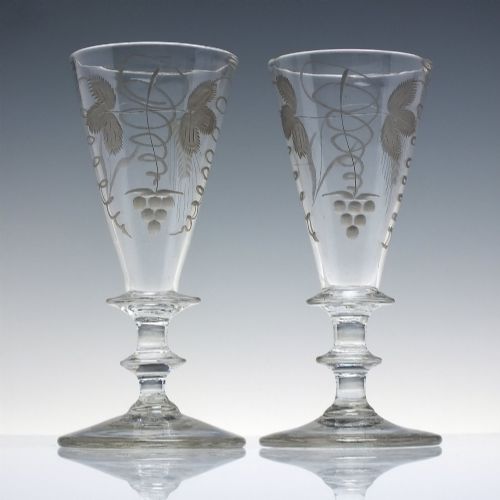
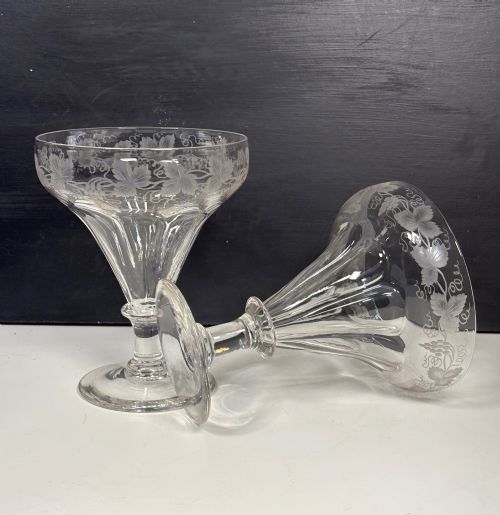
Glass specimens involve lead crystal and blown glass shaped through cutting, engraving, etching, and acid cameo work. Coloured glass techniques incorporate layered overlays and enamel decoration fused to the surface.
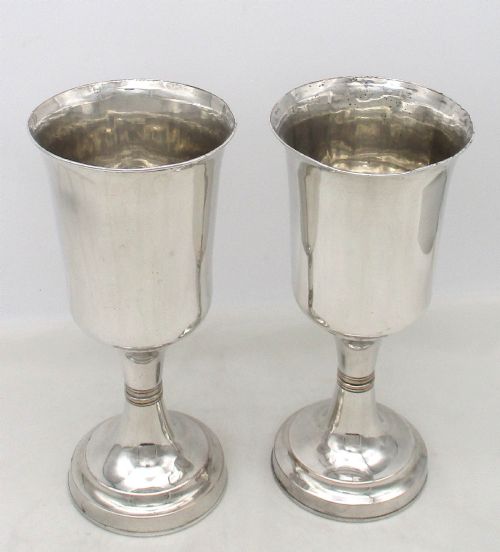
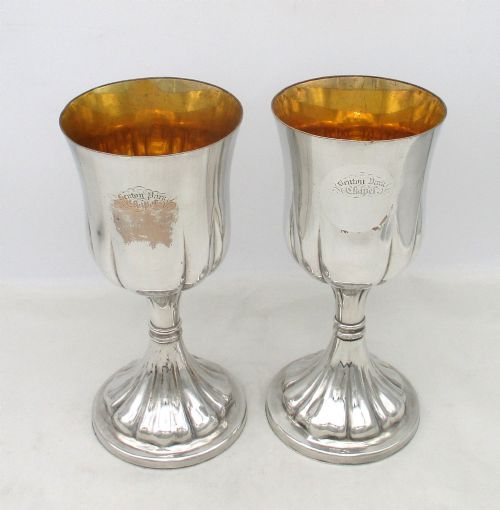
Metal vessels utilise Old Sheffield Plate, copper, bronze, and sterling silver shaped by hammering, casting, and chased floral decoration. Wooden treen items rely on precision turning of dense hardwoods on a lathe.
Surface ornamentation ranges from faceted stems and wheel-engraved barley motifs to gilding with gold leaf. Assemblages occasionally integrate mixed media such as ormolu finials on wooden vessels.
Listings feature glass, silver, copper, pewter, brass, and turned hardwoods spanning the eighteenth and nineteenth centuries.
What varies in quality
The standard of a pair of goblets depends on the crispness of execution in the cut facets or the depth and precision of wheel engraving. Hand-chased metalwork and sharply defined glass cutting distinguish finer studio output from utilitarian production.
Symmetry between the two pieces defines the success of a matched pair, requiring balanced proportions, uniform wall thickness, and matching colour density in glass or wood. Superior weight and harmonious form elevate the visual balance when displayed together.
Baccarat·Stevens & Williams·Theresienthal·Salviati·Tiffany & Co·Royal Crown Derby·Richardson Stourbridge
The Pair of Goblets Glossary
- Rummer
- A heavy, large-bowled drinking glass popular during the eighteenth and nineteenth centuries for ale or wine. These sturdy vessels often feature faceted or cut stems.
- Treen
- Small handmade wooden objects created by turning on a lathe. Common timbers include fruitwood, walnut, and yew.
- Old Sheffield Plate
- A composite material formed by fusing a thin sheet of silver to a thicker copper base. This technique preceded modern electroplating.
- Chalice
- A large ceremonial cup with a stem and foot, frequently used for communion services. Examples appear in silver, plated metals, and pewter.
- Overlay
- A glassmaking technique where a layer of coloured glass covers a clear or contrasting body. Skilled cutting through the outer layer reveals the contrasting colour beneath.
Pair of Goblets: Frequently Asked Questions
What is the difference between a rummer and a wine glass?
Rummers feature larger, heavier bowls designed for ales and heavier wines during the Georgian and Victorian eras. Standard wine glasses generally display more slender proportions and delicate stems.
Both forms appear as matched pairs, though rummers tend to carry more substantial weight in the hand.
How were Old Sheffield Plate goblets manufactured?
Old Sheffield Plate involves fusing a thin layer of silver onto a copper core under high heat before rolling the combined metal into sheets. Craftsmen then shaped these sheets into drinking vessels and chalices.
This method differs from later electroplating by creating a thick, bonded layer of precious metal.
Can antique glass goblets be used for dining?
Many buyers utilise nineteenth-century crystal rummers and wine glasses for formal dining and special occasions. Hand-washing in warm water protects the antique glass and surface engraving from damage.
Checking for stability ensures the heavy vessels remain suitable for contemporary table use.
What distinguishes treen goblets from glass examples?
Treen goblets are turned from dense hardwoods such as walnut, fruitwood, and yew rather than blown from molten materials. These wooden vessels offer an organic texture and warm grain pattern distinct from transparent crystal.
Covers and ormolu mounts occasionally accompany larger treen display pieces.