




Pair of Glass Carafes
A pair of glass carafes brings symmetry to a table, offering matched service in lead crystal, coloured glass or cut crystal.
Pair of Glass Carafes
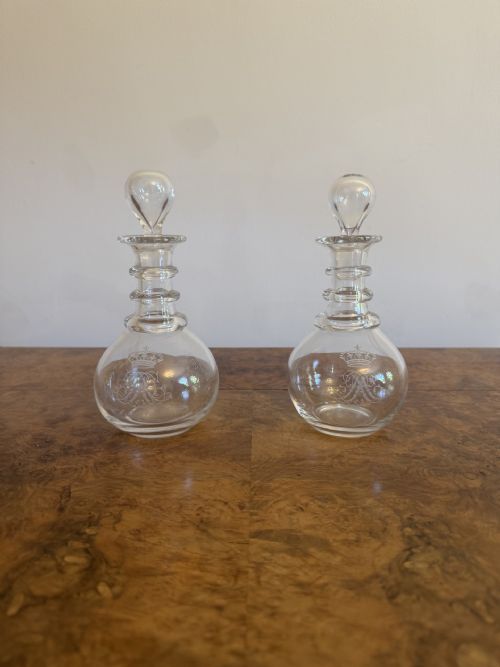
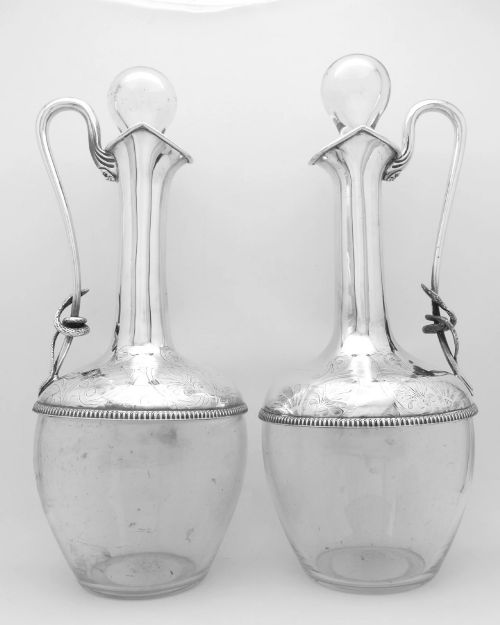
When searching for a pair of glass carafes, collectors encounter matching vessels produced primarily for serving wine, spirits and water across the Georgian, Victorian and Edwardian periods. These matched pairs frequently appear as decanters, claret jugs and spirit bottles, originating from English, Irish and continental workshops.
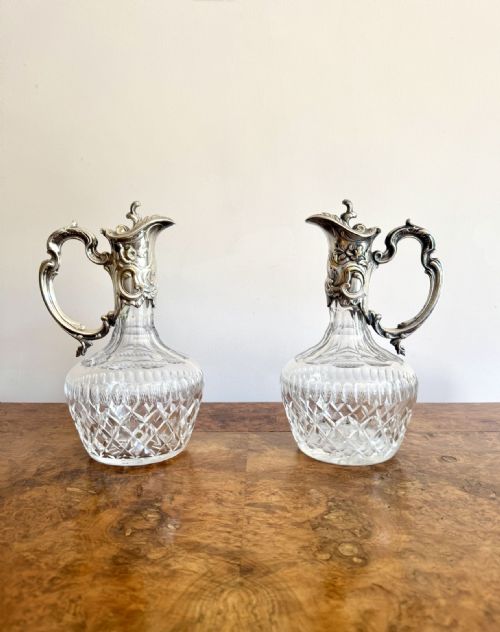
The most common examples on this page date from the nineteenth and early twentieth centuries, spanning styles from Regency cut glass to Edwardian clear and coloured vessels. Many incorporate fitted stoppers, while silver plate or solid silver mounts occasionally accent the glass bodies.
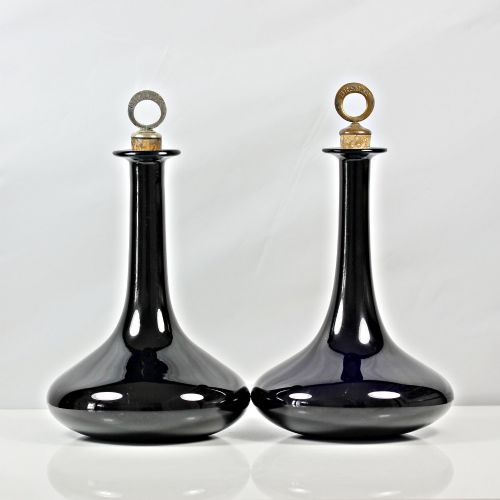
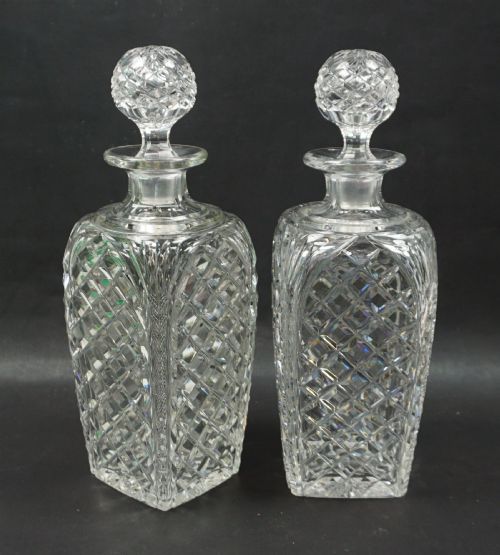
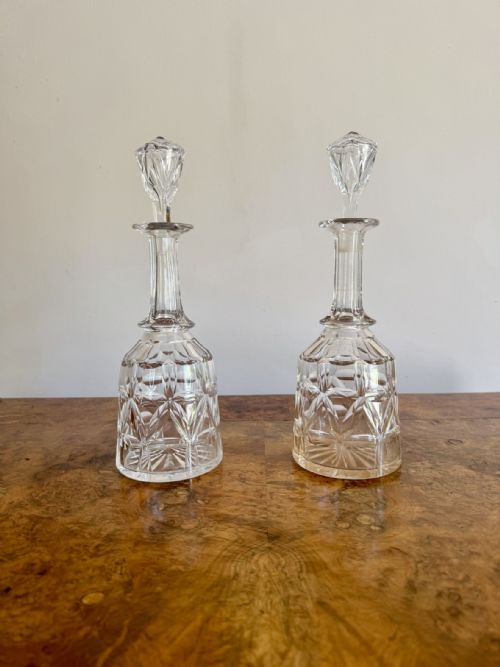
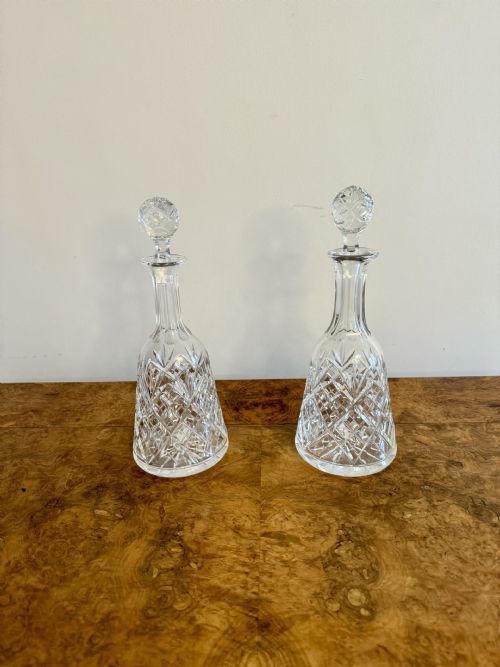
Formations vary from square section tapered profiles and ships decanters to bell shapes and shaft and globe designs. Bristol blue, green, cranberry and amethyst glass provide vibrant alternatives to standard clear lead crystal.
Materials and construction methods
Makers utilised heavy lead crystal and standard glass, shaping them through blowing, optical moulding and freehand techniques before applying decorative cuts or etchings. Pillar cutting, fluting and star motifs appear across many surfaces, catching the light through thick walls.
Mounts and handles required metalwork expertise, employing solid silver, silver plate, pewter and serpentine glass handles fixed securely to the necks or lips of the vessels. Stoppers were individually ground to fit each specific neck, ensuring a close seal.
Some nineteenth-century vessels proudly carry engraved requests for brandy and whisky, ensuring nobody poured the wrong spirit.
Determinants of quality
Quality rests upon the weight and clarity of the glass, the crispness of the facet cutting, and the precise matching of the two vessels in a pair. Heavier lead content yields a clearer resonance and deeper refraction, distinguishing finer crystal from standard utility glass.
The integrity of the original matching stoppers and the finesse of any silver or pewter mounts significantly influence the standing of an example. Hand-engraved heraldry, crests or union floral motifs further elevate the standard of workmanship.
James Powell·Hukin & Heath·Rene Lalique
The Pair of Glass Carafes Glossary
- Lead crystal
- Glass containing a high proportion of lead oxide, which increases weight, brilliance and softness for deep cutting.
- Ships decanters
- Vessels with wide, flat bases designed to prevent tipping on rolling ship tables during the nineteenth century.
- Claret jugs
- Pouring vessels, often mounted in silver or silver plate, specifically designed to serve red wine at the dining table.
- Pillar cut
- A decorative technique featuring wide, vertical flat-polished flutes running down the body of a decanter.
- Bristol blue
- A deep cobalt blue glass produced in large quantities in Bristol during the eighteenth and nineteenth centuries.
Pair of Glass Carafes: Frequently Asked Questions
How do I date a pair of glass carafes?
Dating relies on observing the form, the weight of the metal content, the shape of the pontil mark on the base, and the style of any cut decoration. Georgian and Regency pieces tend to show heavier metal and distinct hand-cut facets.
Later Victorian and Edwardian examples often display machine polishing or lighter pillar cutting, alongside varied coloured glass bodies such as cranberry, green or amethyst.
Were these always sold as pairs?
Many serving vessels were manufactured and retailed as matched pairs for symmetry on large dining tables or sideboard displays. Surviving pairs indicate they were kept together through generations of domestic use.
Individual carafes occasionally became separated, making matched pairs collected later in history or kept intact from the outset particularly desirable.
Can I use antique carafes for serving wine?
Antique carafes and decanters remain fully functional for serving wine and spirits today, provided the interior is clean and free of staining. Lead crystal vessels should be washed by hand with warm water without harsh detergents.
Checking that stoppers remain paired to their specific necks ensures proper closure during serving.
What is the difference between a decanter and a carafe?
Decanters traditionally feature fitted stoppers designed to seal spirits or wine for longer storage, often constructed from heavy cut crystal. Carafes typically denote open-topped serving jugs intended for immediate table use.
In historical listings, these terms frequently overlap depending on the specific form and period of the vessel.