


Wine Carafes Pair
Wine carafes pair options bring matching symmetry to the table, spanning crystal, cut glass and silver mounts from Georgian to Edwardian periods.
Wine Carafes Pair
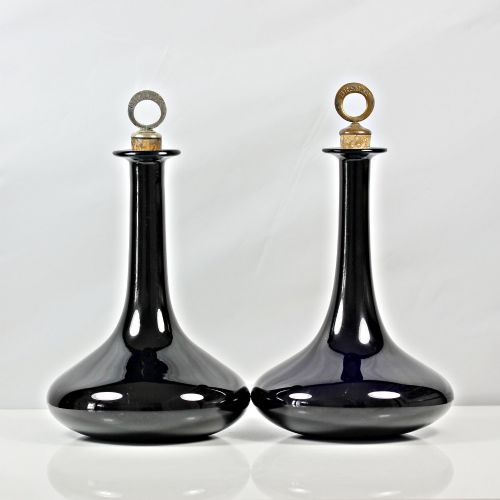
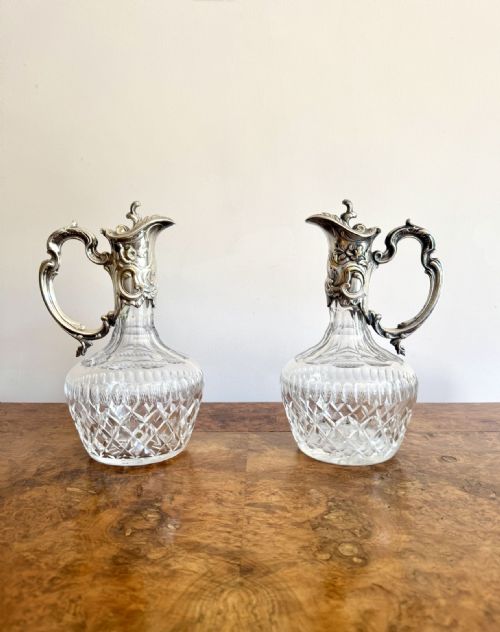
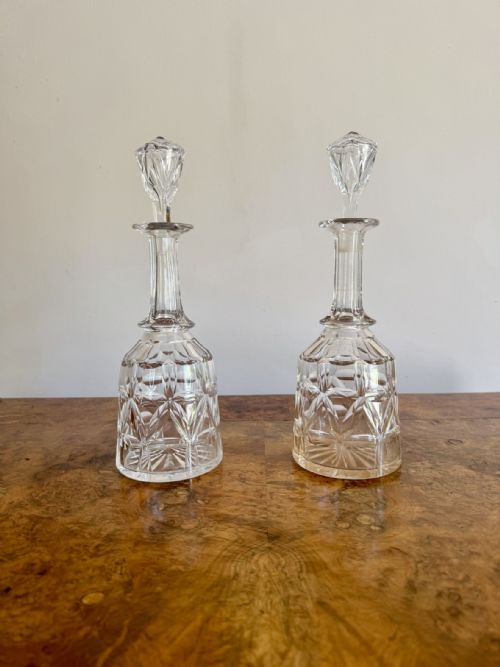
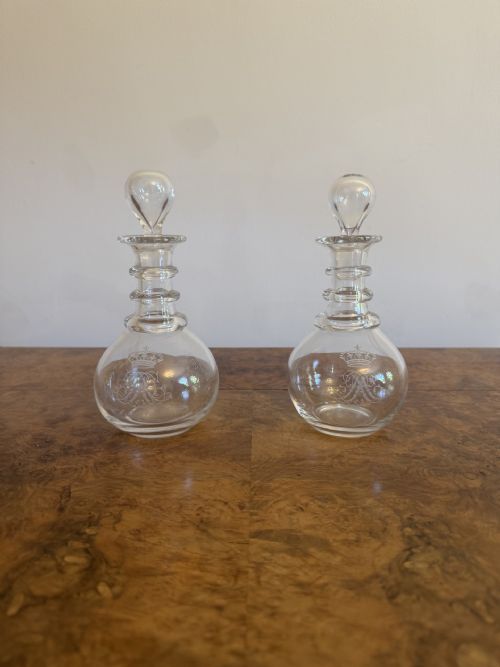
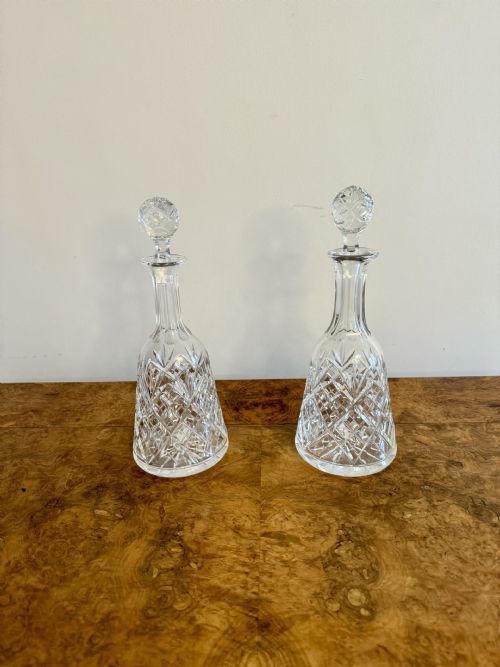
A wine carafes pair comprises matched vessels designed to hold and serve wine at the dining table, appearing frequently across this selection in Victorian and Edwardian iterations. Buyers encounter forms ranging from shaft and globe decanters to bell shaped vessels and claret jugs, alongside specialised carafes.
The periods represented stretch from the 18th century through Georgian, Regency, William IV and Victorian eras up to Edwardian and Art Nouveau designs. Examples include Bristol blue and ruby glass alongside dark green ships decanters and clear crystal variations.
Origins span English, Irish, French and Austrian workshops, demonstrating diverse regional aesthetics in cutting, moulding and mounting. Most surviving pieces retain their matching stoppers or feature plated and solid silver mounts.
Materials and construction methods
Glass is blown, moulded or cast into shape, utilising clear glass, lead crystal, and coloured metals including cranberry, amethyst, blue and green glass. Artisans then apply techniques such as pillar cutting, facet cutting, diamond moulding, etching and enamelling to decorate the surfaces.
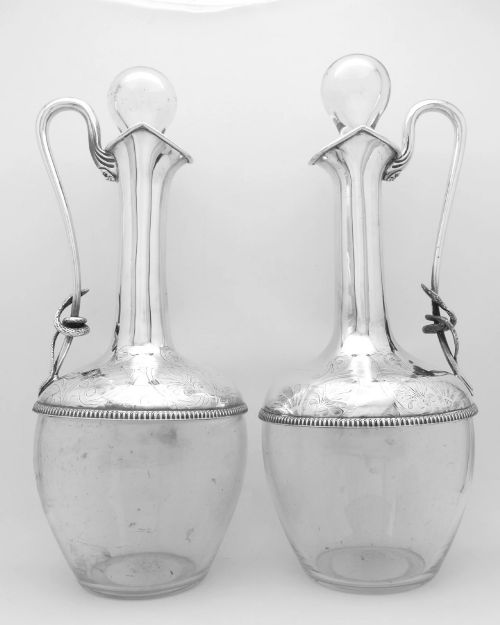
Metal mounts in silver plate, solid silver and pewter are fitted to necks, handles and spouts, occasionally incorporating detailed elements like serpent handles or cast face spouts. Overshot glass and overlay methods provide further textural variation across 19th-century examples.
Some Edwardian claret jugs feature unusual face spouts glaring across the table at guests.
Distinctions in craftsmanship
The clarity and weight of the crystal or glass set the foundation, where deeper, crisper hand-cut facets catch the light more sharply than shallow machine moulding. Superior examples show precise symmetry between the two vessels, ensuring the pair matches exactly in height, wall thickness and tint.
Mount quality separates standard production from finer pieces, evident in the weight of the silver or plated metal and the rigidity of the fit around the glass neck. Original matching stoppers that share the exact cut and age as the body elevate the integrity of the pair.
Rene Lalique
The Wine Carafes Pair Glossary
- Claret jug
- A vessel specifically for serving red wine, usually featuring a handle and a hinged metal spout. These often combine clear glass bodies with silver plated mounts.
- Shaft and globe
- A decanter profile characterised by a long, narrow neck that swells into a spherical body at the base. This shape provides stability on the dining table.
- Overshot glass
- A technique where fine threads of glass are trailed across the surface of the vessel to create a textured, frosted effect. It appears on late 19th-century carafes.
- Pillar cut
- A style of heavy vertical fluting cut into the body of the glass, creating broad, flat facets that reflect light deeply. This cut is common on Georgian and early Victorian crystal.
- Bohemian glass
- Glassware produced in the Bohemia and Silesia regions, known for vibrant colours such as ruby and blue and heavy enamelled or gilt decoration.
Wine Carafes Pair: Frequently Asked Questions
How do I date an older wine carafes pair?
Dating relies on combining the silhouette, the manufacturing technique of the glass, and the style of any metal mounts. Georgian and Regency pieces typically display heavy crystal with deep cutting, while Victorian and Edwardian examples introduce varied coloured glass and silver plated hardware.
Inspect the pontil mark at the base, where a rough circular scar indicates an earlier hand-blown piece before smooth polished bases became standard. Comparing the stoppers and general wear patterns also helps establish the correct period.
Are wine carafes pair distinct from decanters?
Historically, decanters were built heavier with stoppers for storing and serving wine, whereas carafes functioned lighter for immediate table service. Over time, terminology blurred among makers and buyers, leading to overlapping descriptions in marketplace listings.
Both forms appear interchangeably in matched pairs across the 19th century. Selection depends entirely on whether the vessel requires a stopper or an open pourer like a claret jug.
How should I clean antique glass carafes?
Cleaning requires warm water and mild detergent, avoiding sudden temperature shifts that can crack aged glass. Stubborn wine residue inside narrow necks responds to specialist cleaning beads rather than harsh abrasive tools.
Metal mounts require separate care, keeping silver polish away from the glass surface to prevent staining. Storing them unstopped allows air circulation and prevents moisture retention inside the body.
Do mismatched stoppers affect a pair?
Original matched stoppers are significant because they were ground by hand to fit each specific neck during manufacture. Swapped stoppers often sit unevenly or reveal slight variations in tint and cutting under close inspection.
Checking the grind marks inside the neck confirms whether the stopper belongs to that exact vessel. While mismatched components occur frequently due to centuries of use, matching pairs command greater historical integrity.