


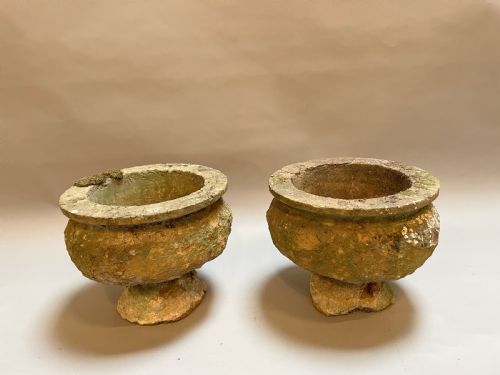
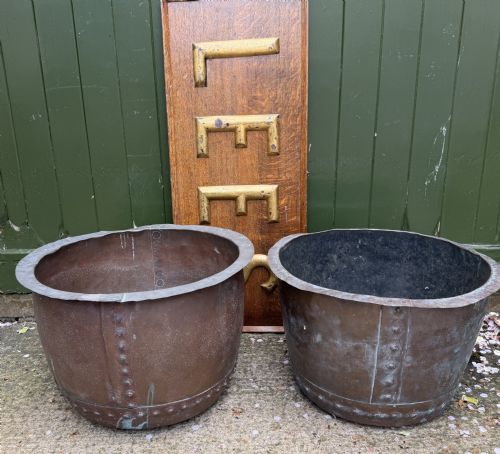
Pair of Garden Planters
When you search for a pair of garden planters, you find matched vessels designed to frame paths, steps and terraces with classical symmetry.
Pair of Garden Planters
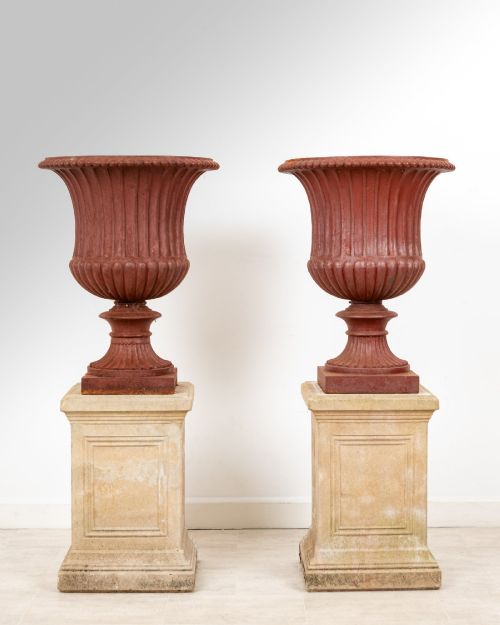
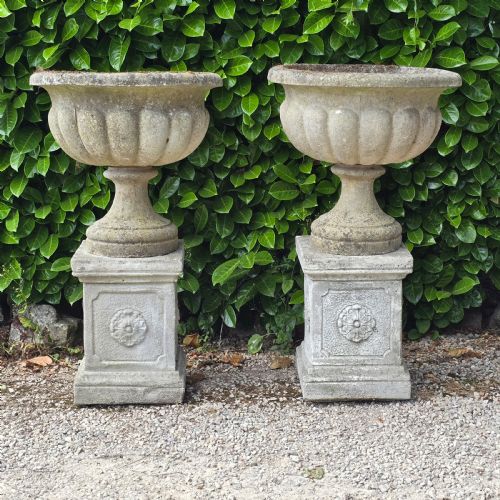
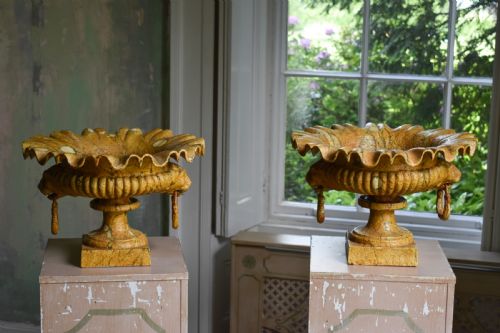
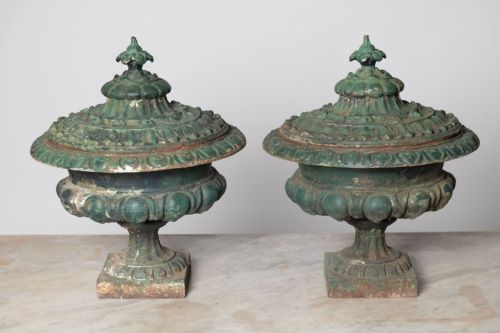
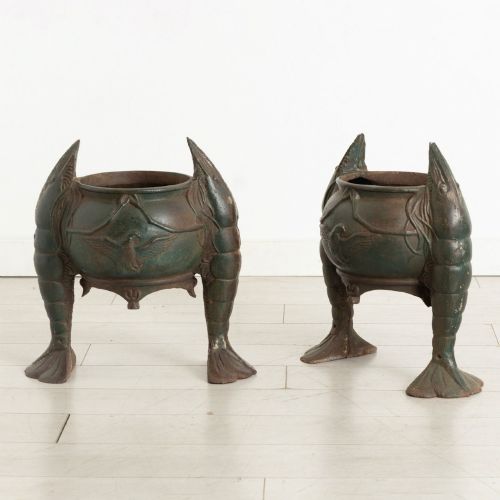
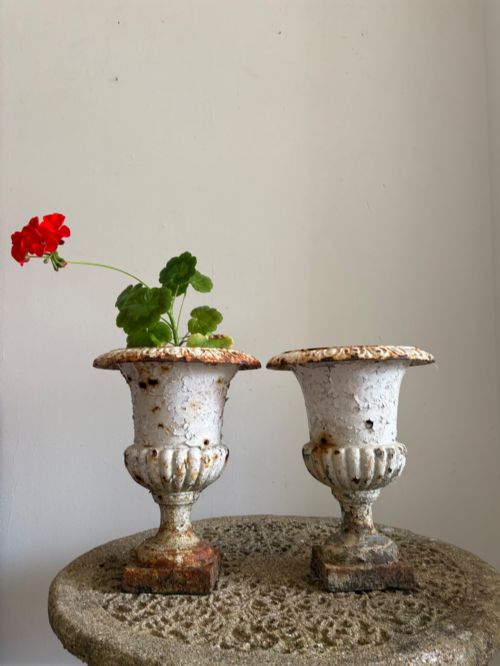
A pair of garden planters serves to anchor exterior layouts, most frequently taking the form of Campana urns, tazza vessels, or rectangular troughs cast in iron, stone, or terracotta. These matched items emerge from nineteenth and twentieth-century traditions, spanning Victorian, Regency, and Edwardian periods.
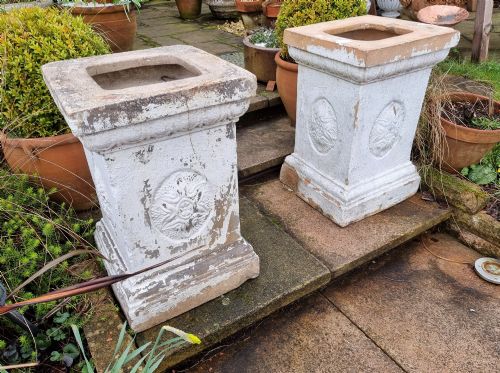
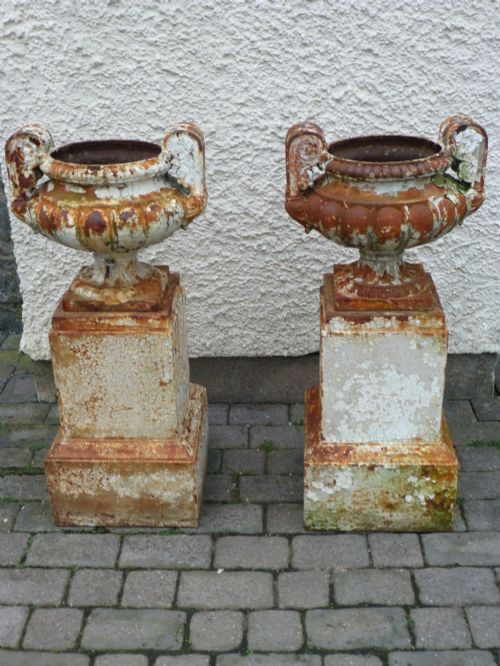
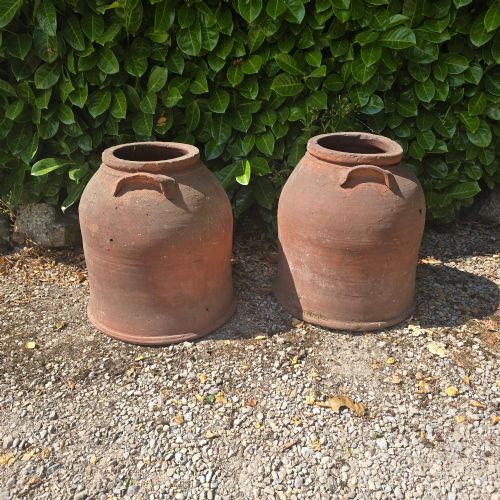
The inventory on this page demonstrates that buyers encounter heavy cast iron examples alongside porous terracotta pots, carved stone baskets, and composite stone plinths. Many pieces arrive paired with original pedestals, providing height and architectural presence to formal garden schemes.
Origins stretch from English foundries and Cotswold studios to French provincial workshops and Italian makers, reflecting diverse regional tastes in outdoor ornamentation. Domestic garden displays rely on these symmetrical pairs to establish visual balance beside doorways and garden gates.
What Varies in Quality
The fidelity of the casting or carving dictates the sharpness of classical motifs like acanthus leaves, egg-and-dart moulding, and fluted bowls. Finer pieces display crisp relief work from superior foundry patterns, whereas lesser examples lose definition through worn or repeated moulding.
Material integrity and surface transition also divide the range, as demonstrated by uniform lead patination, well-weathered stone surfaces, or retained early paint layers. Heavy gauge metal and dense terracotta demonstrate greater resilience against weathering compared to soft stone alternatives.
French and English workshops utilised materials ranging from salt-glazed stoneware to heavy bronze Usubata urns.
Dunfermline Clay Company·Falkirk Carron foundry·Coalbrookdale·LEFCO
The Pair of Garden Planters Glossary
- Campana urn
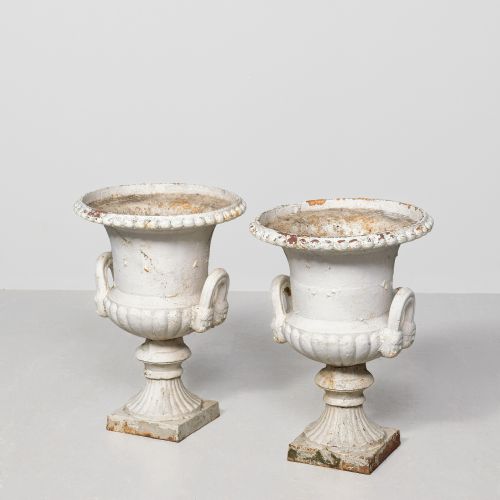
- A bell-shaped garden vessel with an everted rim, tapering body, and circular foot, frequently mounted on a square plinth. This classical form became a staple of Victorian and Regency garden design.
- Tazza
- A shallow cup or bowl mounted on a stem and foot, designed to display plants or architectural foliage. These open vessels often feature fluted decoration and decorative handles.
- Rhubarb forcer
- A tall, domed ceramic vessel with a removable lid, originally used in kitchen gardens to blanch rhubarb shoots in the dark. Gardeners now repurpose these cylindrical pots as decorative planters.
- Verdigris
- A green patina formed naturally on copper, brass, or bronze through atmospheric oxidation over decades. Collectors value this surface for its visual depth and evidence of age.
- Plinth
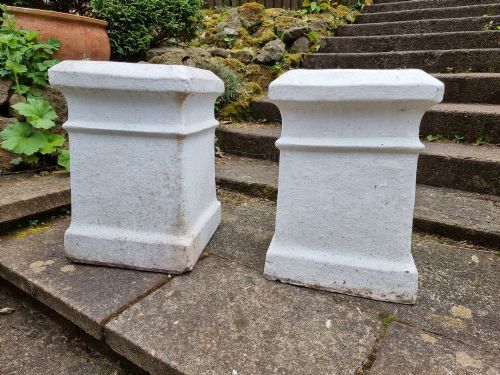
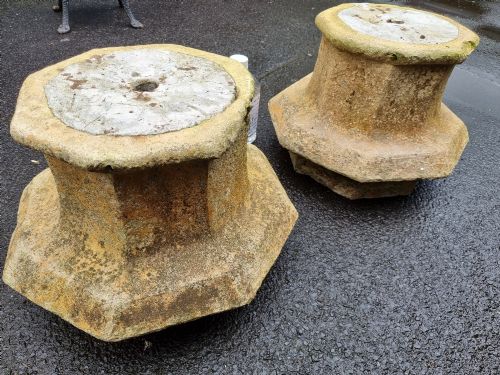
- A heavy base or pedestal that elevates an urn or planter above ground level. These architectural supports add vertical presence and stability to heavy cast iron or stone vessels.
Pair of Garden Planters: Frequently Asked Questions
How do I choose the right size?
Consider the scale of the surrounding architecture, pathways, and planting beds to ensure the vessels do not overwhelm the space. Large cast iron urns require wide footings and solid ground, while smaller table urns suit patios and terraces.
Measure the intended doorway or gate width to confirm that the combined footprint of the pair and any pedestals will fit comfortably without obstructing passage.
Can these stay outside in winter?
Cast iron, lead, and robust stone vessels generally withstand winter weather, though trapped moisture can pose risks during hard freezes. Glazed terracotta and softer stone items benefit from being moved under shelter or raised off the ground on pot feet.
Emptying excess damp compost and lining porous pots with protective material prevents frost expansion from cracking the historic fabric.
How do I date cast iron urns?
Victorian and Regency examples typically exhibit deep, crisp casting marks, thick-walled construction, and multi-part assembly joined by threaded bolts. Surface layers often reveal early lead paint beneath subsequent coats of dark green or black.
Comparing decorative motifs such as neoclassical swags, stiff leaf banding, and paw feet against documented foundry catalogues helps narrow down the production era.
How do I clean weathered surfaces?
Gentle brushing with water and a soft bristle brush removes loose dirt without disturbing historical paint or stable verdigris. Avoid harsh chemical cleaners or power washers that strip away patination and erode soft stone or old iron.
Preserving the accumulated grime and oxidation maintains the authentic appearance valued by collectors of antique garden ornaments.