
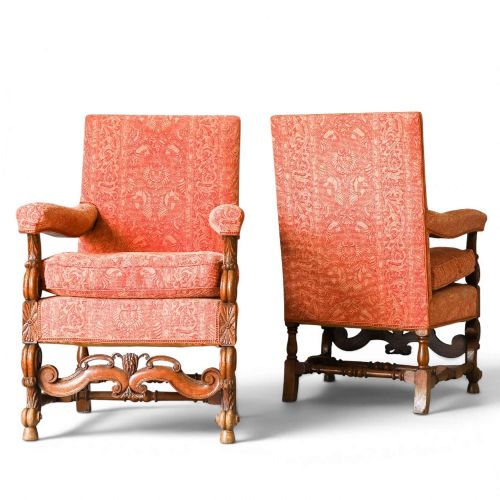
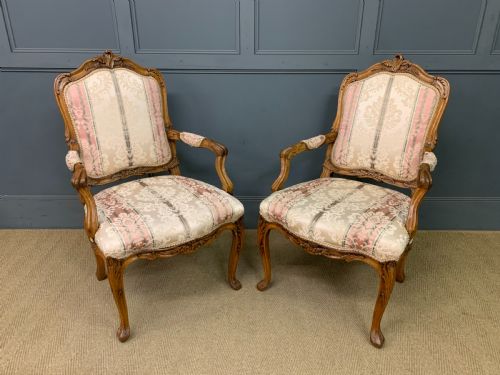
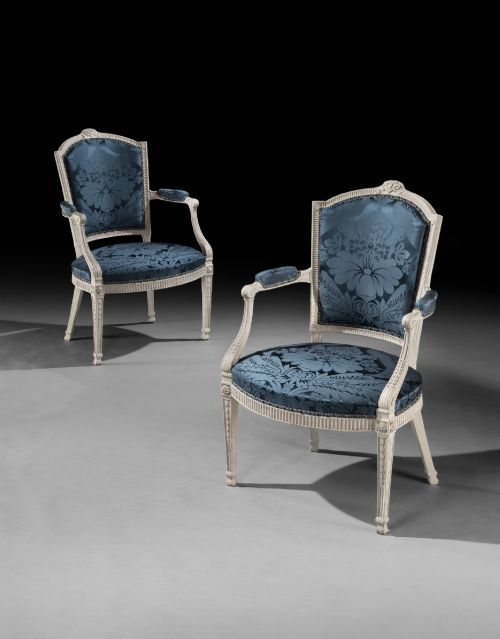
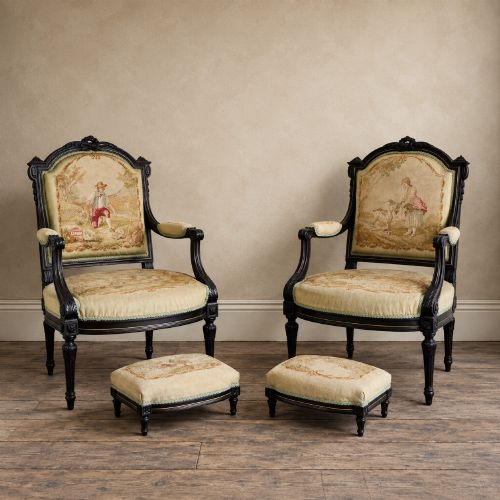
Pair of Fauteuil Chairs
A pair of fauteuil chairs brings open-arm French elegance and carved wooden frames into a room, offering comfortable seating with distinct historical character.
Pair of Fauteuil Chairs
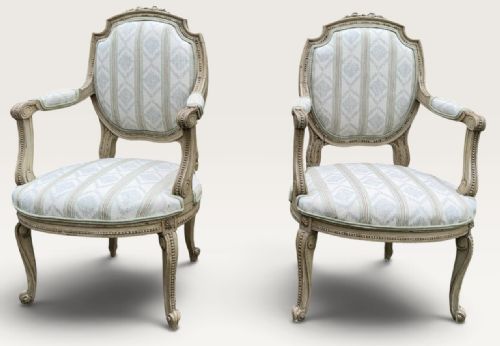
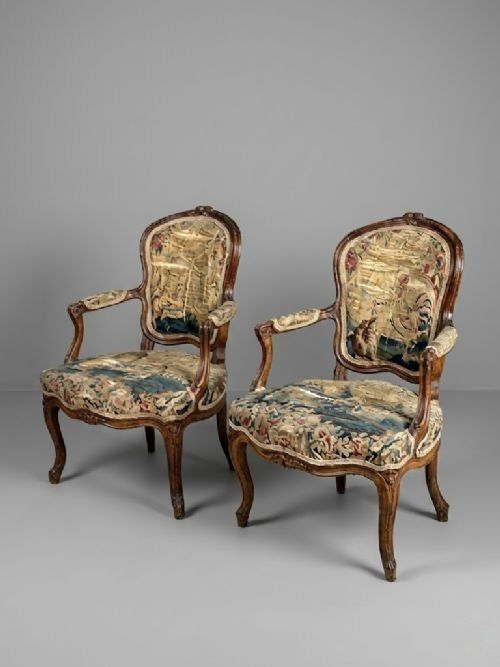
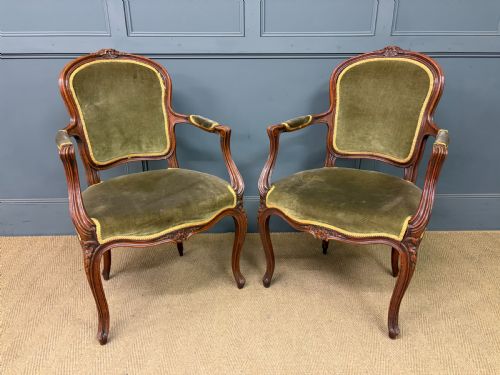
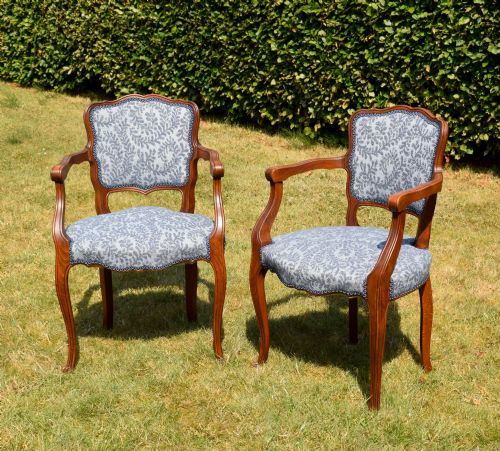
A pair of fauteuil chairs comprises open-armed upholstered seats originating primarily from French and continental traditions spanning the eighteenth, nineteenth, and twentieth centuries. These matching seats follow historical revivals such as Louis XV, Louis XVI, and Empire styles, reflecting the decorative tastes of their respective periods.
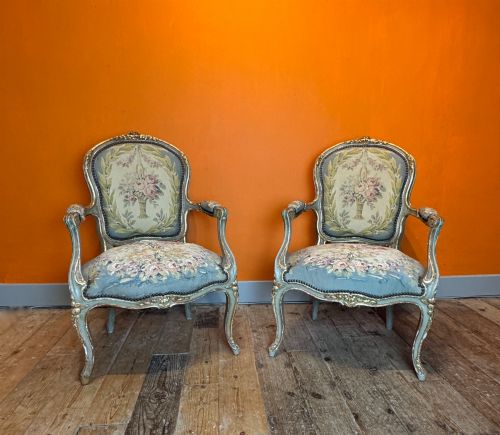
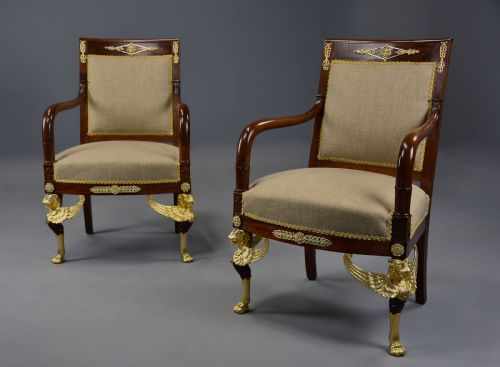
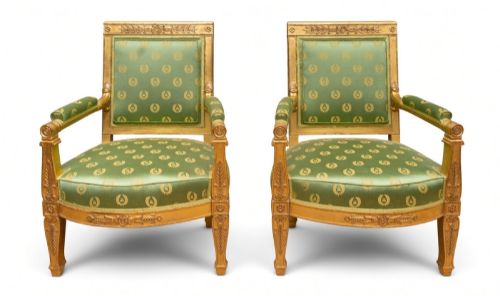
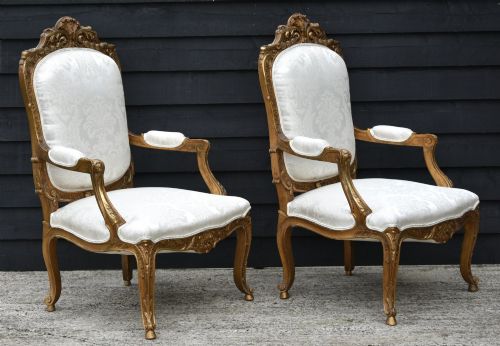
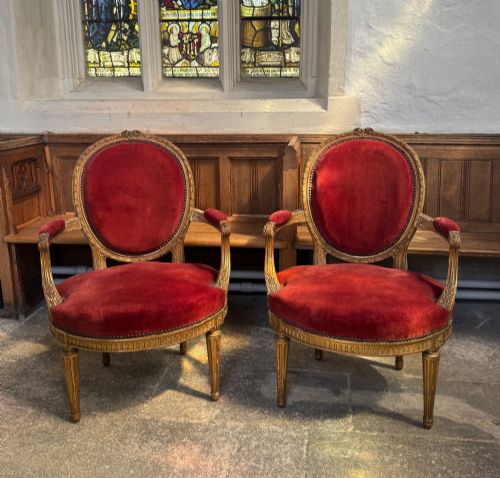
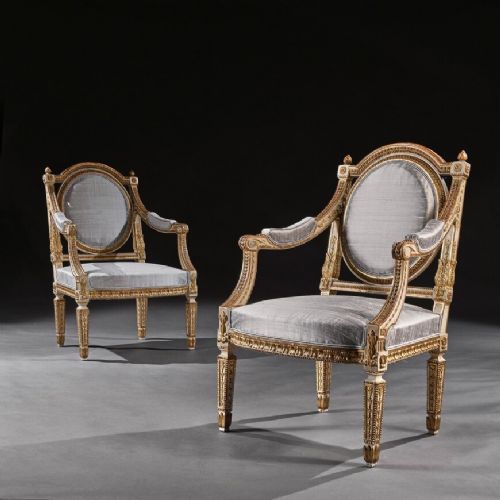
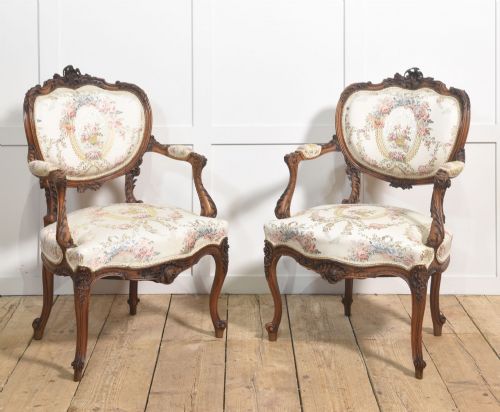
The evidence shows these armchairs appearing in walnut, beech, mahogany, and giltwood, frequently paired with traditional coverings including tapestry, silk, needlework, and velvet. Surviving examples range from early eighteenth-century models to later revival pieces produced across the nineteenth and twentieth centuries.
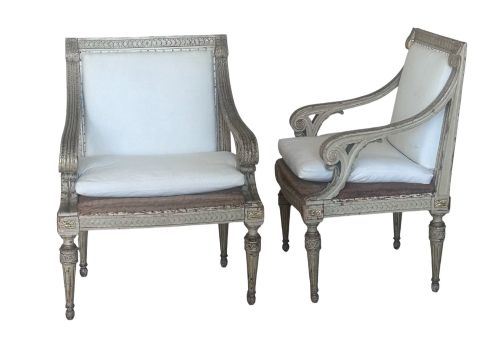
Buyers encounter numerous variations on this page, from painted and parcel-gilt frames to grand gilded salon chairs and carved oak or rosewood constructions. The selection spans straightforward open armchairs to decorative throne chairs and library seating.
Materials and construction
Frames are constructed from hardwoods such as walnut, beech, mahogany, oak, and exotic timbers like goncalo alves, shaped through precise carving and joinery techniques. Gilding, original paint, and parcel-gilt finishes are applied to the timber skeletons to accentuate the decorative moulding and structural lines.
Upholstery methods rely on traditional stuffing and webbing secured beneath textiles like silk, velvet, tapestry, and needlepoint. Many pieces retain or have been restored with period-appropriate fabrics, securing the taut lines and supportive contours expected of open armchairs.
Listings feature eighteenth-century origins alongside nineteenth-century revival styles including Louis XV, Louis XVI, and Empire forms.
Assessing quality in frames and upholstery
Quality reveals itself in the crispness of the wood carving and the integrity of the timber frame, where deeper relief work and tighter joinery distinguish finer examples from standard production. The weight of the timber and the fluency of the cabriole or straight legs indicate the skill of the maker.
Upholstery condition and the survival of original surface finishes, such as early paint or gold leaf, significantly influence the character of each piece. Frames retaining their original patination and textile coverings demonstrate greater historical integrity than heavily altered examples.
Jacob Desmalter·Holland And Sons
The Pair of Fauteuil Chairs Glossary
- Fauteuil
- An open-armed upholstered armchair with a wooden frame, originating in France. These seats feature exposed wooden framing around the back and arms.
- Giltwood
- Timber treated with a thin layer of gold leaf applied over a prepared surface. This finish appears frequently on formal salon and throne chairs.
- Cabriole leg
- A furniture leg that curves outward in a convex arc and then bends inward in a concave arc, ending in a pad or foot. This form is common on Louis XV style seating.
- Parcel gilt
- A decorative technique where only specific portions of a wooden or painted frame are highlighted with gold leaf. It creates contrast against a painted or natural timber background.
- Needlework
- Stitched textile upholstery produced using yarn on a canvas ground, often featuring floral or pastoral motifs found on period seating.
Pair of Fauteuil Chairs: Frequently Asked Questions
What is a pair of fauteuil chairs?
A pair of fauteuil chairs consists of matching open-armed upholstered seats with exposed wooden frames. They originate primarily from French design traditions across multiple centuries.
These chairs combine carved wooden structures with upholstered backs and seats designed for formal or salon use.
How were these armchairs used historically?
These seats served as formal parlor and salon seating within grand residences and drawing rooms. Their open arms accommodated voluminous historical clothing.
Pets and guests utilised them for comfortable sitting in reception rooms, libraries, and sitting chambers.
How do I live with antique fauteuil chairs?
Placing these armchairs in a drawing room or bedroom adds architectural form and texture to a space. They function well as statement seating paired with side tables.
Protecting the delicate fabrics and original gilt or painted surfaces from direct sunlight preserves their condition during daily use.
How can I tell different stylistic periods apart?
Stylistic periods reveal themselves through leg shapes and carving motifs. Louis XV pieces display flowing cabriole legs and asymmetrical floral carvings.
Louis XVI and Empire examples exhibit straight tapered legs, geometric symmetry, and neoclassical ornamentation derived from classical antiquity.