
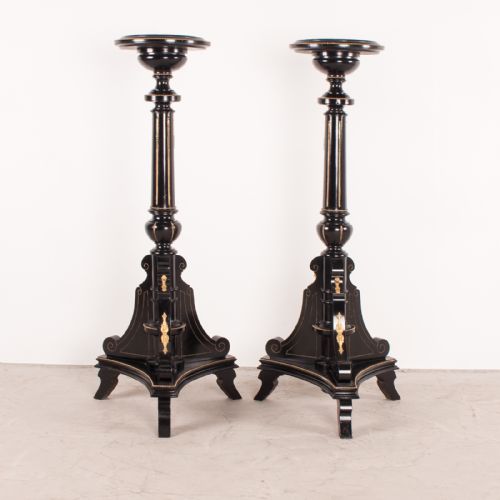
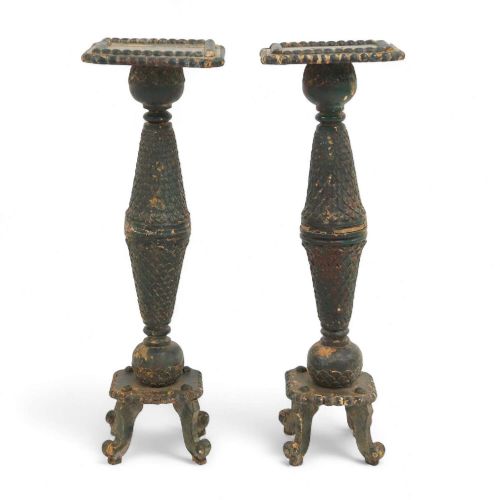


Pair of Decorative Columns
A pair of decorative columns brings architectural weight and classical symmetry to a room, functioning as pedestals, lamps or structural statements.
Pair of Decorative Columns
A pair of decorative columns brings architectural gravitas to an interior, functioning as independent display supports or integrated architectural elements. When you search for a pair of decorative columns, you encounter works originating from the eighteenth century through to the twentieth century, with nineteenth-century examples appearing most frequently.
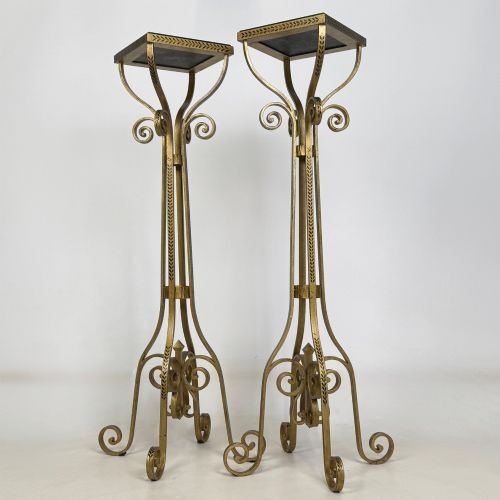
The selection spans several distinct functional forms, including torcheres, plant stands, table lamps, and architectural salvage. These pieces range from grand scale painted timber to intimate bronze and ormolu candle holders, reflecting diverse domestic and theatrical uses.
Origins stretch across English, French, Italian, and Mughal traditions, incorporating styles from Neoclassical and Regency to Edwardian fairground and Arts and Crafts. This variety ensures that matching pairs serve equally well in formal drawing rooms or eclectic modern spaces.
Materials and construction methods
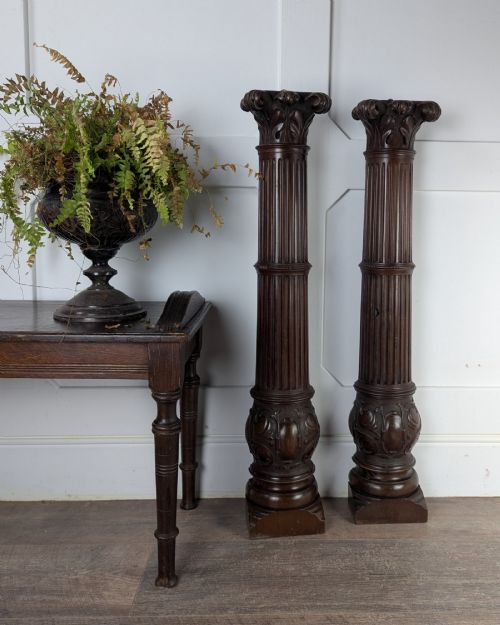
Carved timber forms the foundation of many pieces, utilising hardwoods, walnut, mahogany, and softwood finished with paint, ebonisation, gesso, or gold leaf. Artisans shaped these woods into fluted shafts, reeded columns, and intricate Corinthian or Ionic capitals.
Stone and mineral elements appear frequently, featuring marble, serpentine, and scagliola to create robust shafts and bases. Metalwork components utilise bronze, brass, ormolu, and Old Sheffield Plate, often cast and chased for decorative candelabras and lamp bases.
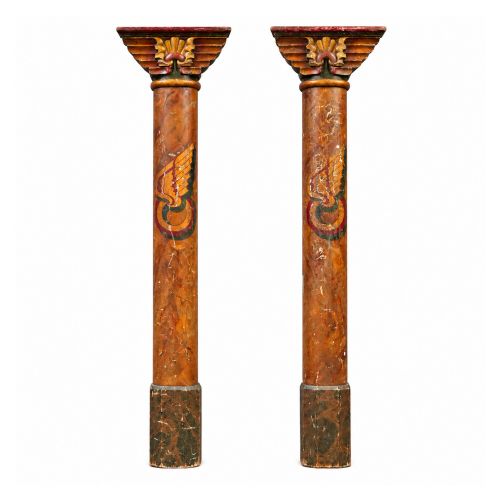
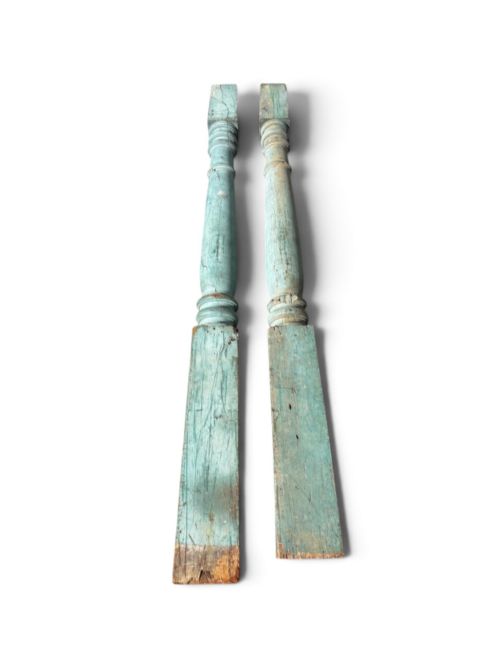
Among the architectural salvage, you can acquire actual fairground carousel columns from the early twentieth century.
Distinguishing quality in decorative columns
The finesse of the carving dictates much of the distinction, separating mechanical reproduction from hand-chiselled acanthus leaves and crisp fluting. Capitals and bases carved directly from solid wood or stone demonstrate a higher level of artisan commitment than applied composition ornaments.
Surface preservation and material integrity define the upper tier of pieces, where original paint, fire-gilt ormolu, or patinated bronze remain undisturbed. The choice of substantial materials, such as heavy rouge marble or dense hardwoods, underpins the physical presence and stability of the pair.
The Pair of Decorative Columns Glossary
- Torchere
- A tall decorative stand designed to support a lamp, urn, or candle. These slender supports elevate display objects above floor level.
- Capital
- The uppermost member of a column, situated above the shaft. Examples in these listings often feature ornate Corinthian or Ionic carving.
- Ormolu
- Finely ground high-carat gold mercury-gilded onto a bronze base. This technique creates a rich metallic lustre common on French decorative mounts.
- Scagliola
- A composite material made from selenite, glue, and pigments, embedded to mimic marble and other fine stones. Craftsmen polish this mixture to achieve a stone-like finish.
- Fluting
- Shallow vertical grooves carved into the shaft of a column. This classical architectural detail creates rhythmic shadow and visual height.
Pair of Decorative Columns: Frequently Asked Questions
How were decorative columns originally used in homes?
These pieces served multiple domestic functions, primarily acting as elevated stands for urns, art pottery, and prized sculptures. Taller torcheres illuminated dim corners when paired with candles or early lighting fixtures.
In grander settings, architectural columns framed doorways or fireplace surrounds to create a sense of classical proportion. Smaller examples functioned directly as table lamps, mantel garnitures, or candlesticks.
Are matching pairs difficult to keep together?
Surviving as a matched pair is unusual for items subjected to centuries of interior redecoration and relocation. Many architectural elements started as part of larger schemes before being adapted into standalone pairs.
Slight variations in height or patina often confirm their long history and genuine domestic use. Collectors value these minor discrepancies as proof of age rather than manufacturing defects.
How do I identify the period of a column?
Dating relies on combining the stylistic vocabulary, such as Neoclassical motifs or Arts and Crafts simplicity, with the underlying material construction. Nineteenth-century pieces frequently employ heavy painted pine, carved mahogany, or fire-gilt bronze mounts.
Early twentieth-century items often introduce brighter polychrome paint schemes, scagliola compositions, or lighter woods. Examining tool marks and fastener types provides further confirmation of the manufacturing era.
Can these columns support heavy items?
Solid hardwood and stone columns possess significant structural integrity suitable for supporting heavy marble urns or large bronze sculptures. Architectural salvage and solid carved wood items are built to bear substantial weight.
Lighter construction styles, such as hollow softwood torcheres or plaster-based compositions, require careful weight distribution. Assessing the base footprint and material density helps determine safe load capacities for display.