
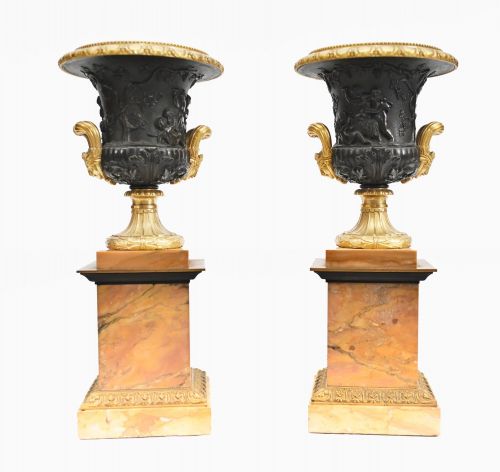


19th Century French Plinths
19th century french plinths provide solid marble and wood foundations that elevate bronze figures, urns, and clocks.
19th Century French Plinths
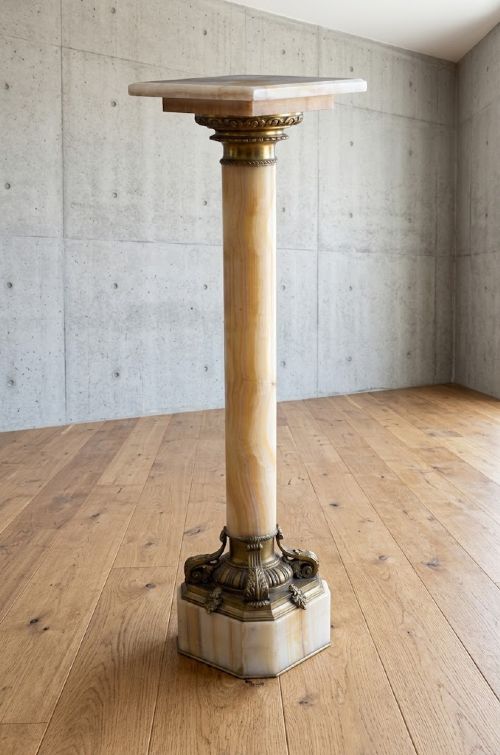
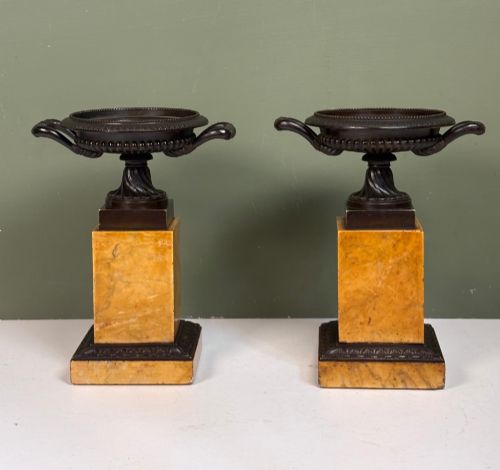
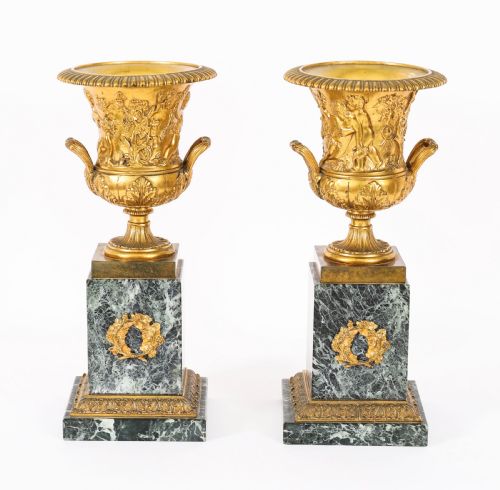
The version most commonly met on this page is the marble or onyx column paired with ormolu collars or mounts. Mahogany pedestals and stepped spelter bases also appear frequently to support classical bronze figures and campana urns.
Materials and construction
The construction relies heavily on the pairing of dense natural stone with cast metal elements. Columns and bases utilise vert de patricia marble, sienna marble, green serpentine marble, and onyx alongside carved wood and ebonised timber.
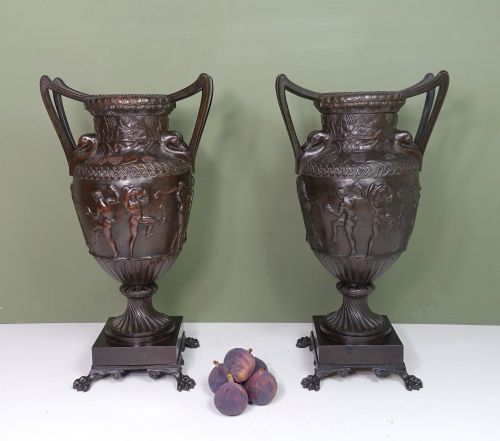
Metal components involve cast bronze, patinated bronze, gilt bronze, ormolu, and spelter. These metals are shaped into collars, mounts, and figures, then secured to stone columns or mahogany pedestals.
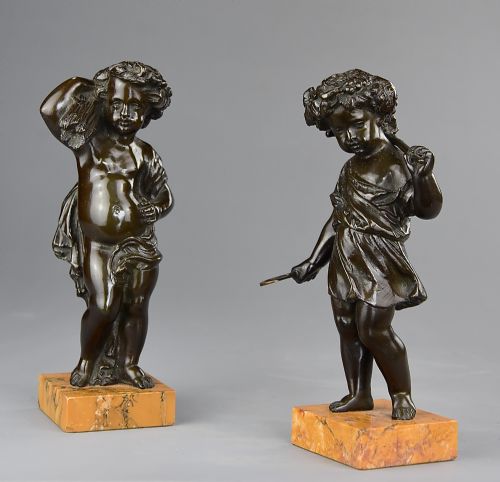
Napoleon Bonaparte shares shelf space with harvest putti, demonstrating that 19th century sculptors balanced grand history with cheerful mythology.
Distinctions in quality
Quality rests in the precision of the stone turning and the crispness of the cast metal mounts. Finely chiseled ormolu collars and smooth, evenly figured marble distinguish superior supports from simpler constructions.
The integration between the stone shaft and the metal mounts indicates the standard of workshop execution. Solid joinery and substantial weight separate high grade architectural pedestals from lighter decorative stands.
Barbedienne·Paul Garnier·Devaulx·Claude Michael Clodion·Marguerite
The 19th Century French Plinths Glossary
- Ormolu
- Gilded bronze applied as mounts and decorative collars on furniture and stone columns. This technique involves mercury gilding on bronze.
- Spelter
- A zinc alloy used as a substitute for bronze in decorative figures and urns. It takes patination well to simulate heavier metal.
- Campana
- A bell shaped vessel form commonly used for classical garden vases and decorative urns. The profile widens toward a flaring rim.
- Torchere
- A tall ornamental stand designed to hold a lamp, light, or sculpture. These columns elevate decorative objects within a room.
- Serpentine marble
- A green mottled stone resembling snake skin, utilised for classical columns and architectural pedestals. It polishes to a smooth finish.
19th Century French Plinths: Frequently Asked Questions
What supported figures on these plinths?
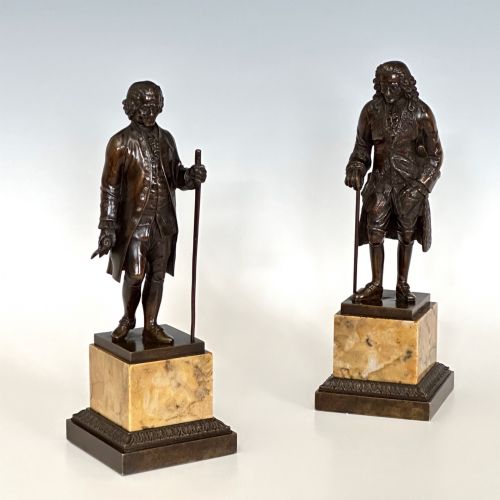
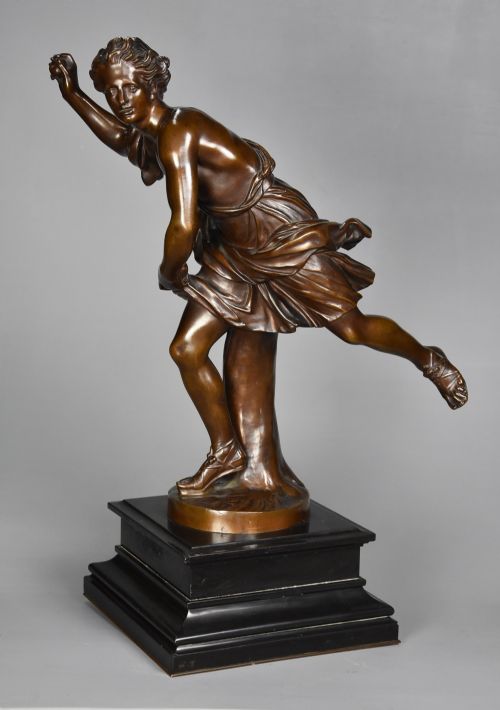
Bronzes, spelter figures, and marble busts frequently rest upon these columns and stepped bases. Classical subjects such as Apollo, Napoleon, and mythological figures dominate the sculptures mounted on these supports.
Makers utilised cast bronze and carved stone to create cohesive display objects designed for grand interiors and libraries.
How do I identify french empire style?
French Empire pieces display strict neoclassical geometry, severe classical proportions, and military or imperial motifs. Ormolu mounts on dark marble columns often reflect this disciplined aesthetic.
Craftsmen drew inspiration from ancient Roman and Greek architecture, favouring symmetry and clean architectural lines.
Where were columns placed in rooms?
Columns and pedestals stood in drawing rooms, hallways, and libraries to display decorative urns, clocks, and bronzes at eye level. They served both an architectural function and a decorative display purpose.
Heavier marble and mahogany structures provided stable foundations for weighty metal sculptures.
What is the difference between bronze and spelter?
Bronze is a durable alloy of copper and tin that accepts fine chiselling and patination. Spelter is a softer zinc alloy used for decorative figures and urns.
Spelter items generally feel lighter and exhibit different surface grain under patination compared to traditional cast bronze.