
Pair of Columns
When you search for a pair of antique columns, you look for balanced architectural supports, candlesticks, and pedestals shaped from timber, stone, and metal across Georgian, Victorian, and later eras.
Pair of Columns
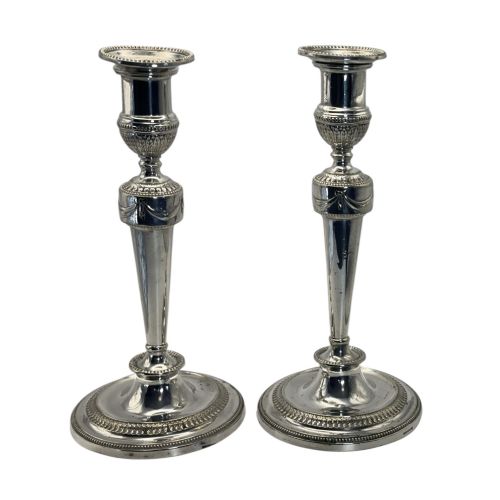
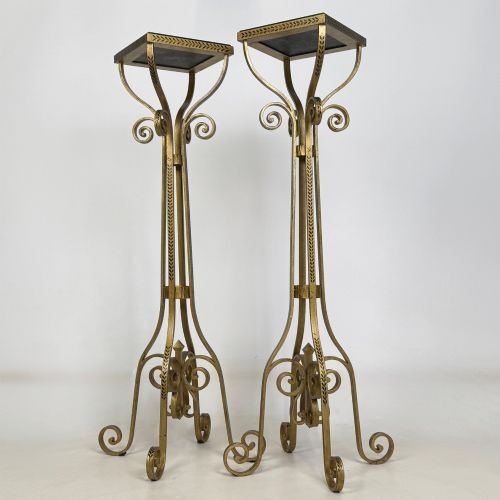
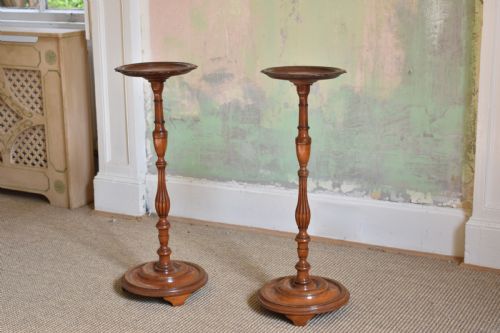
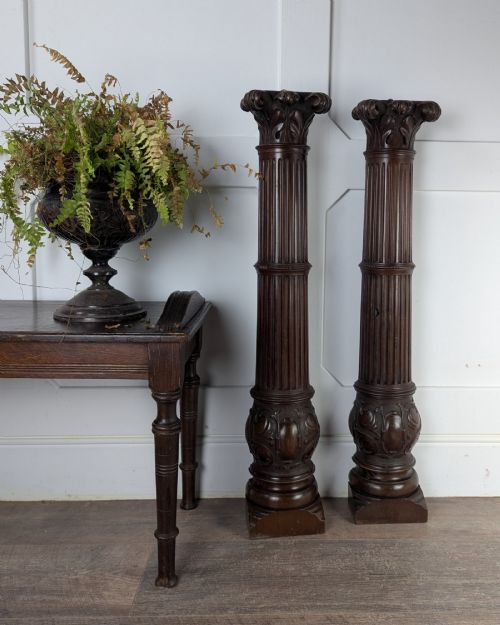
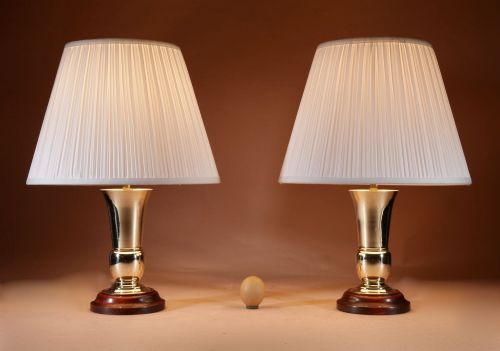
A search for a pair of antique columns brings up a diverse group of objects, spanning structural architectural salvage, carved stone garden plinths, and indoor display pieces such as pedestals and plant stands. You will also encounter domestic lighting and tableware, including tall candlesticks, candelabra, and table lamps formed in the classical orders.
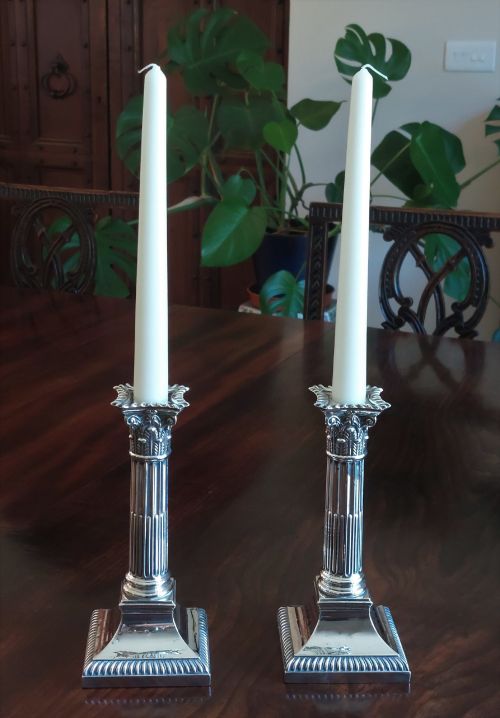
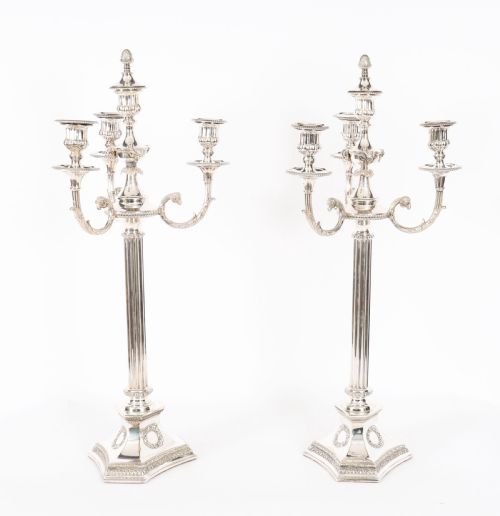
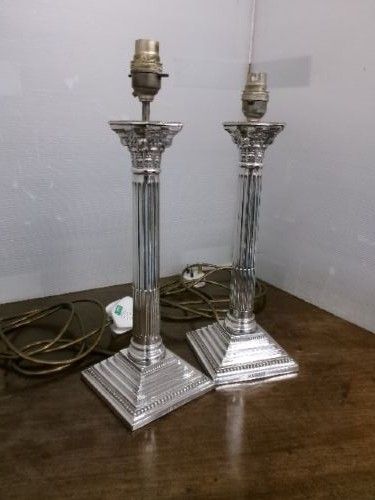
The most frequent examples on this page take the form of metal or silver-plated Corinthian column candlesticks and lamps, alongside timber torcheres and mahogany or marble display columns dating from the nineteenth and early twentieth centuries. These items reflect classical revivals, shifting from Georgian symmetry through Victorian heaviness to Edwardian refinement.
Makers and craftsmen adapted the vocabulary of ancient architecture for domestic interiors, producing half-columns, architectural salvage, and carved timber pillars designed to frame rooms or elevate decorative objects. Whether executed in oak, brass, marble, or painted stone, each surviving pair demonstrates the enduring appeal of classical proportion in home decoration.
Materials and construction methods
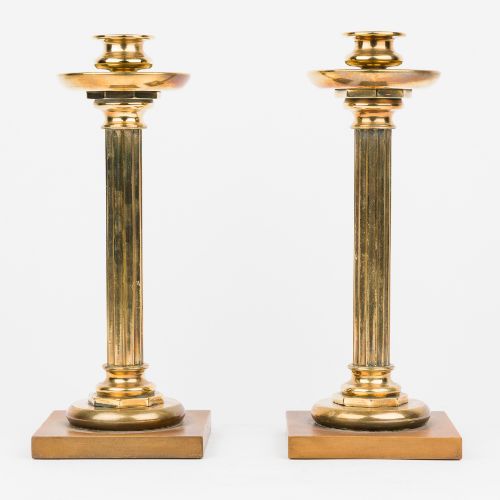
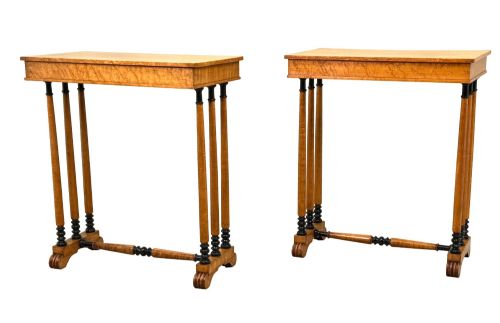
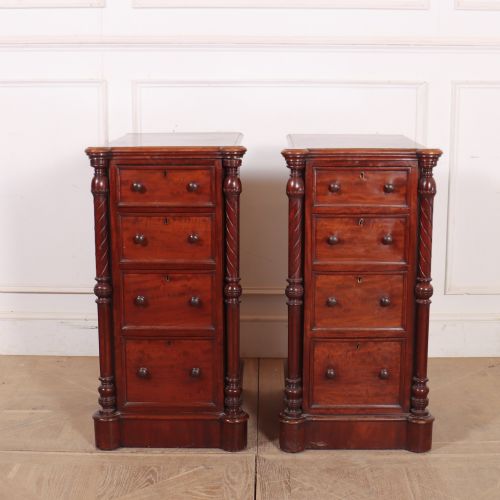
Makers utilised a diverse palette of hard and soft woods, casting brass, bronze, and silver plate into complex capitals and bases, and turning or carving stone, marble, and composite materials. Mahogany, oak, walnut, and satinwood appear alongside exotic hardwoods, bird's-eye maple, and ebonised finishes.
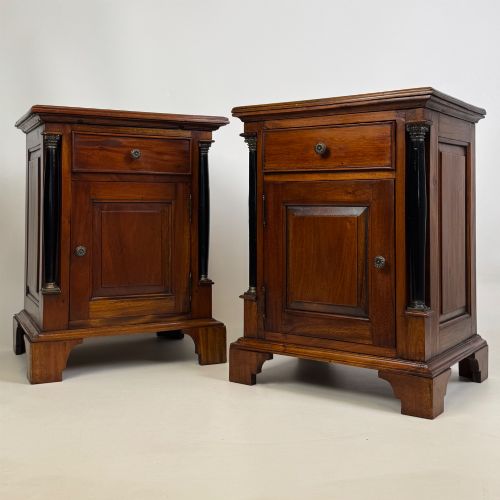
Metal items combine cast components with weighted bases, while stone and marble columns rely on solid masonry, turning, and occasional ormolu collars. Timber pieces involve joinery, reeded turning, and hand-carved capitals, sometimes complemented by painted or gilded surfaces.
Silver items carry hallmarks indicating specific assay offices and dates, while plated and brass examples depend on skilled lathe work and casting precision to render accurate Corinthian or Doric capitals.
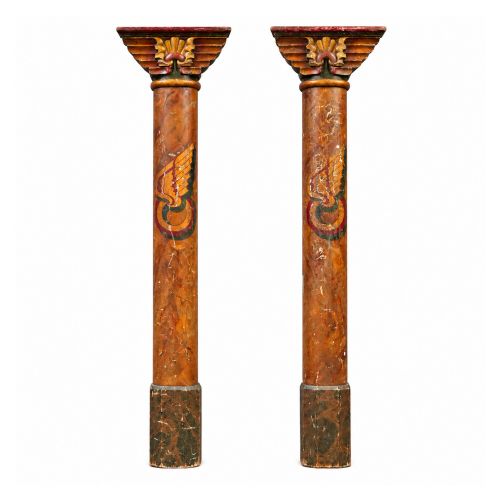
Fairground columns once spun merrily under canvas tops before retiring to quiet domestic corners as decorative supports.
Distinctions in execution and grade
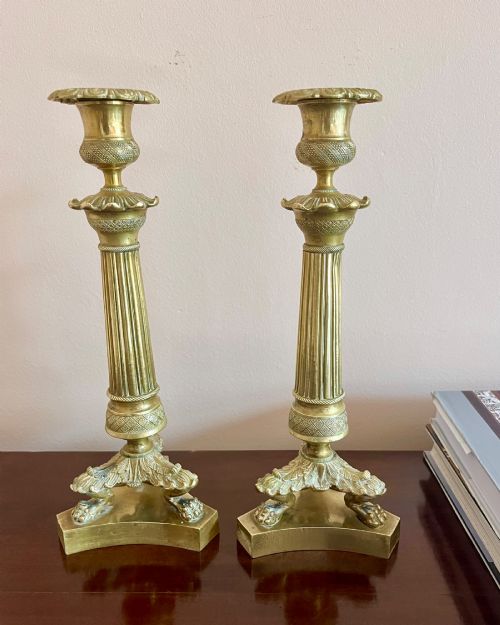
Quality rests upon the crispness of the carving and casting, particularly in the acanthus leaves and volutes of Corinthian capitals, where sharper detail separates finer work from softer, mass-produced examples. The selection of materials also dictates standard, with figured timbers like mahogany and exotic maples or graded marbles such as Carrara and Siena commanding greater attention than plain painted softwood or basic composite stone.
Proportion and structural integrity define the higher tier, ensuring that shafts maintain correct architectural taper and fluting without distortion. The quality of finishing, from the depth of silver plating to the original patination of green paint or polished bronze, determines how well an object retains its historical character.
Mappin & Webb·George Smith·Thomas Hope·Dunfermline Clay Company
The Pair of Columns Glossary
- Corinthian
- A classical order of architecture defined by ornate capitals decorated with rows of carved acanthus leaves and small volutes. This motif appears frequently on nineteenth-century candlesticks and table lamps.
- Torchere
- A tall stand or pedestal designed to support a lamp, vase, or decorative figure. These pieces are often turned from mahogany or ebonised wood.
- Ormolu
- Gilded bronze or brass applied as decorative mounts, collars, or feet on marble pedestals and lamps. The technique creates a bright metallic contrast against dark stone.
- Reeded
- A decorative surface treatment featuring parallel convex mouldings carved into timber columns or table legs. It provides vertical emphasis in Regency and Victorian design.
- Pedestal
- A structural support or plinth used to elevate sculptures, busts, or plant stands. Examples on record are formed from marble, clay, oak, and painted timber.
Pair of Columns: Frequently Asked Questions
What rooms suit a pair of antique columns?
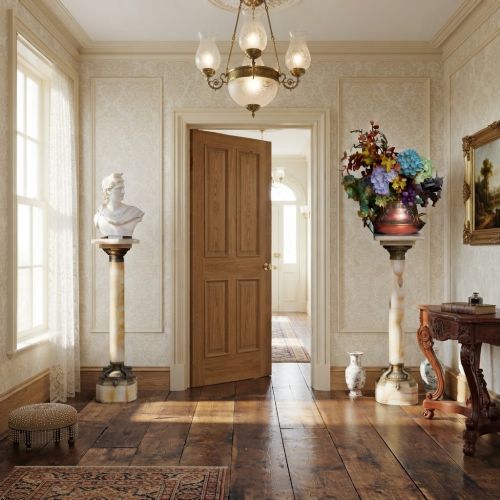
Tall architectural columns and stone garden plinths work best in entrance halls, garden rooms, or large reception spaces where their vertical scale anchors the room.
Smaller items like candlesticks and table lamps fit easily onto side tables, mantelpieces, or dining consoles to introduce classical proportion to domestic interiors.
How were column lamps converted?
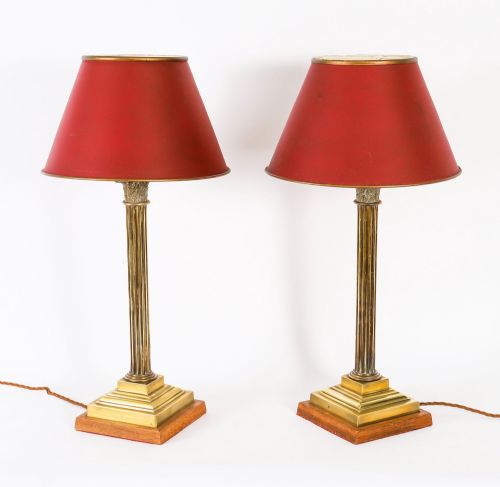
Many nineteenth-century candlesticks and torcheres were adapted for electricity during the twentieth century, often running internal wiring through the hollow shaft.
Original weighted bases and structural columns generally remained unaltered during conversion to preserve the integrity of the piece.
How do I care for marble and stone columns?
Stone and marble surfaces require gentle cleaning with a soft, dry cloth or mild soapy water to avoid damaging the polished finish or porous material.
Avoid abrasive cleaners and harsh chemical polishes that can strip the natural patina accumulated over centuries.
How can I tell the period of a brass column?
Georgian and early nineteenth-century brass columns often feature heavier cast construction with distinct seam lines and hand-finished chasing.
Later Victorian and Edwardian examples tend to display machine-turned consistency, standardised threading, and clearer manufacturer marks or silver plate.