





Decorative Wooden Architectural Pillars
These decorative wooden architectural pillars bring classical scale and robust carpentry into domestic rooms, offering instant vertical presence.
Decorative Wooden Architectural Pillars
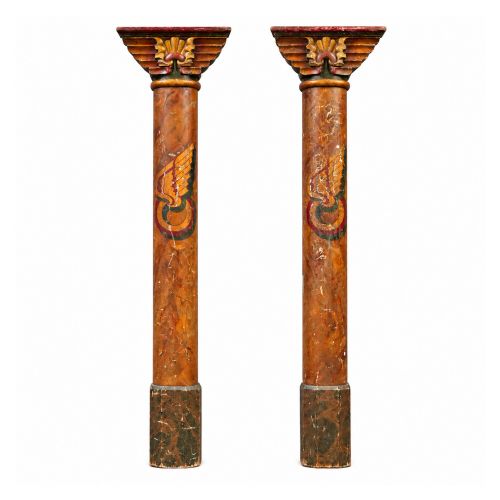
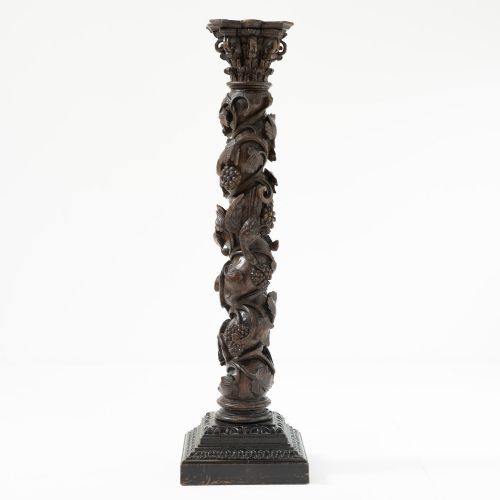
The selection ranges from grand scale painted and parcel gilt designs to intricately carved Indian hardwood pieces and twisted Solomonic forms. These architectural elements serve as striking interior focal points, framing doorways or supporting displays.
Originating across England, France, and India, these items reflect diverse stylistic revivals including neoclassical, baroque, and colonial aesthetics. Each piece carries the distinct patina of its architectural heritage, whether salvaged from a nineteenth-century portico or an early twentieth-century carousel.
How they were made
Carpenters shaped these architectural elements from sturdy timbers such as oak, assorted hardwoods, and softwood using traditional turning and joinery techniques. Capitals and bases often incorporate detailed hand carving, while stone elements occasionally provide sturdy foundational support.
Surface finishes applied to these timbers include layers of historic paint, gesso, and delicate leaf gilding to enhance their decorative impact. Stained finishes highlight the natural grain of the hardwood, whereas painted surfaces often show centuries of weathering and patination.
Decorative Wooden Architectural Pillars Retail Price Guide 2026
Typical asking prices for decorative wooden architectural pillars among the pieces listed under this phrase on Sellingantiques today, from the lower quarter to the upper quarter. They describe what is for sale here now, not the wider market.
What varies in quality
Quality rests upon the crispness of the hand carving within capitals and shafts, alongside the integrity of the underlying timber. Superior examples exhibit harmonious proportions and skilled joinery that withstands the structural demands of architectural salvage.
The depth and preservation of original surface treatments, such as parcel gilding or historic paint, distinguish finer decorative pillars from plainer utility items. Intricate motifs executed with precision elevate certain pieces well beyond standard architectural salvage.
Marguerite
The Decorative Wooden Architectural Pillars Glossary
- Solomonic
- A column shaft characterised by a distinctive helical twist or spiral form. This baroque design creates a dynamic sense of movement along the vertical axis.
- Ionic
- A classical architectural order identified by the distinctive scroll shapes known as volutes on the capital. It brings an air of ancient symmetry to wooden pillars.
- Parcel Gilt
- A surface decoration technique where only specific carved details are highlighted with thin leaf gilding. This contrasts the metallic sheen against exposed wood or painted ground.
- Architectural Salvage
- Building components and structural ornaments rescued from demolition or renovation for reuse. These pieces retain authentic historical character from their original settings.
- Capital
- The uppermost member of a column that serves to crown and decorative support the load above. Carved capitals often display distinct historical revival styles.
Decorative Wooden Architectural Pillars: Frequently Asked Questions
How were architectural pillars used historically?
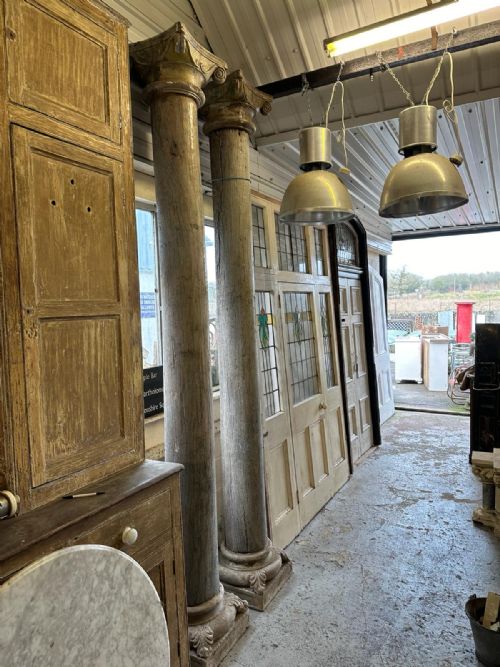
These large wooden supports traditionally framed entryways, supported porticoes, or anchored grand interior spaces in public and domestic buildings. Many also served decorative roles within fairgrounds and colonial architecture.
Over time, their structural purpose evolved, leading to their preservation as standalone decorative objects or framing elements inside modern residential interiors.
Are these pillars sold as matched pairs?
Many of the listed architectural columns and pillars survive and are offered as matched pairs originating from the same structure or setting. This symmetry makes them particularly useful for flanking doorways or defining room boundaries.
Single large pieces also appear, suited for corner placement or as solitary sculptural pedestals within a high-ceilinged room.
How do I live with large wooden pillars?
Integrating architectural pillars into a home usually involves positioning them against walls as focal points or using them to visually divide open-plan spaces. Their substantial height requires careful consideration of ceiling clearance and room scale.
Maintenance involves minimal dusting and keeping the timber away from extreme temperature fluctuations to preserve historic paint and carved details.
How do I tell periods and styles apart?
Stylistic clues such as neoclassical symmetry, baroque twists, or Edwardian fairground paintwork help distinguish the era and origin of each pillar. Examining the tooling marks on the wood provides further insight into the period of manufacture.
European neoclassical revivals often feature precise geometric carving, whereas Indian and colonial examples display dense floral or figural relief work.