
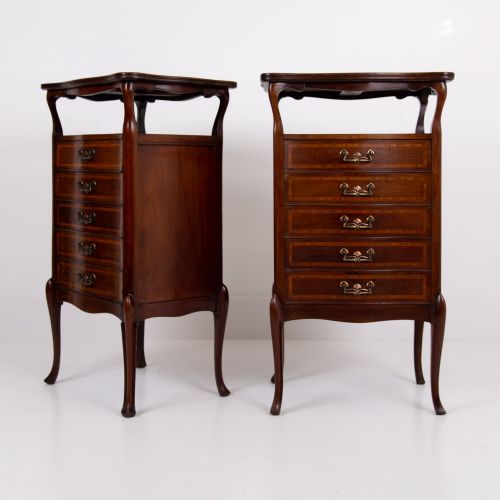

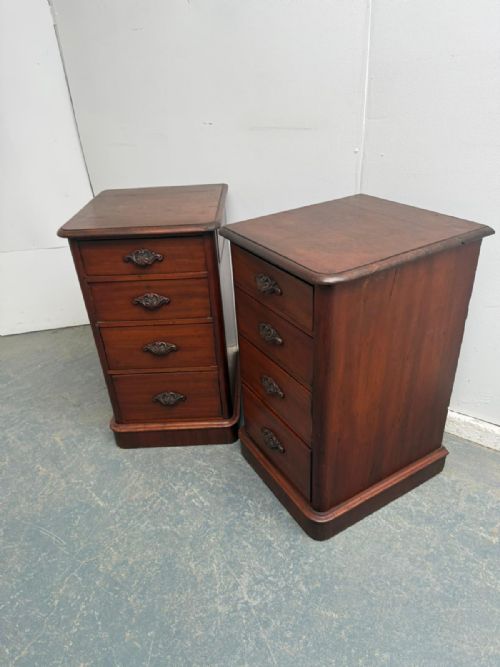
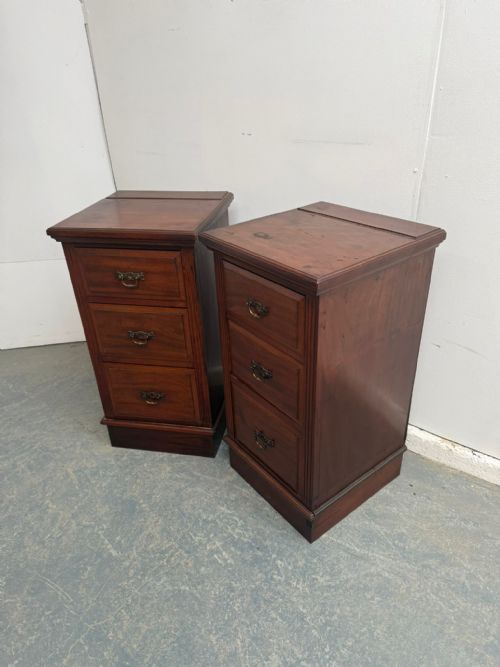
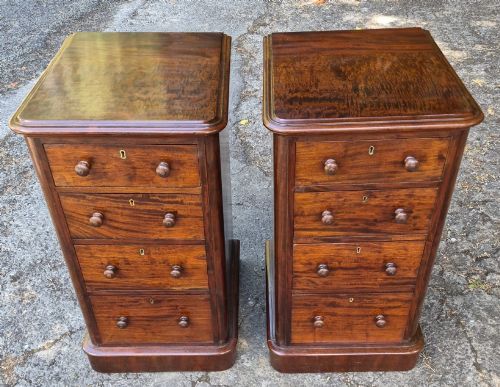
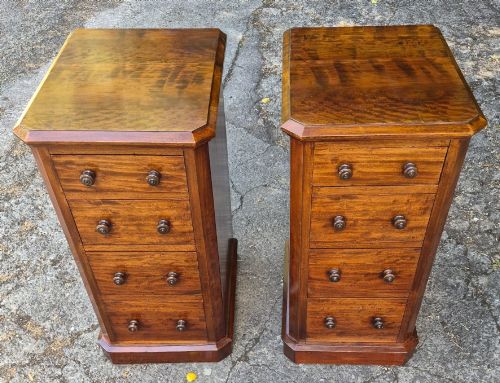
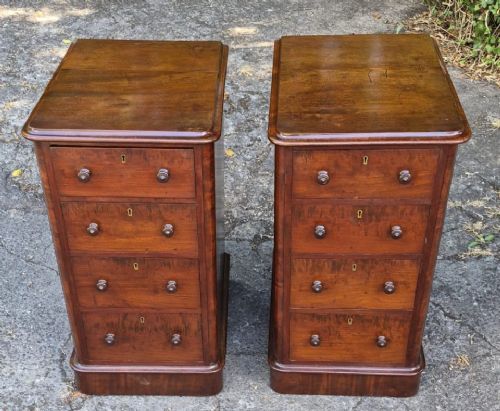
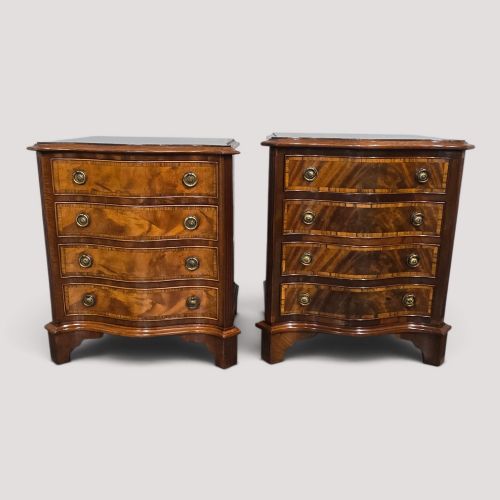
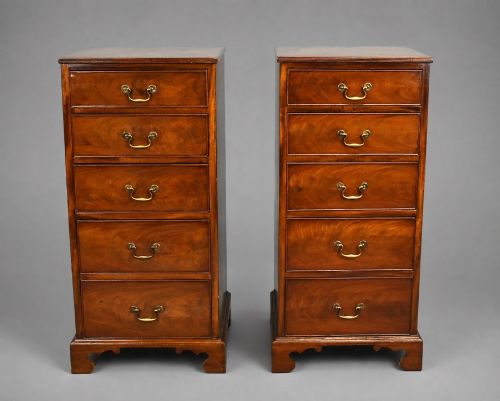
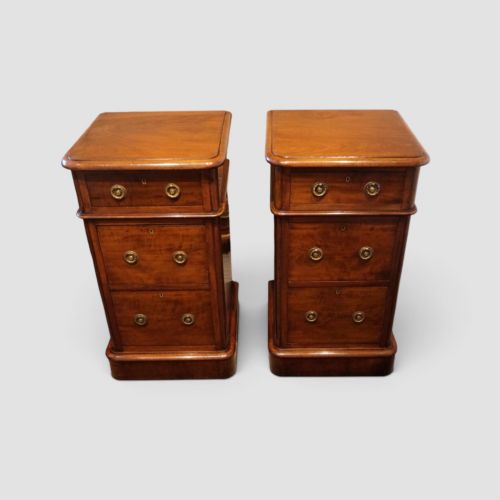
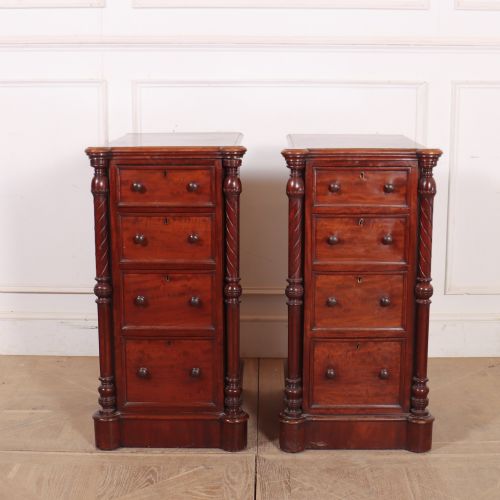
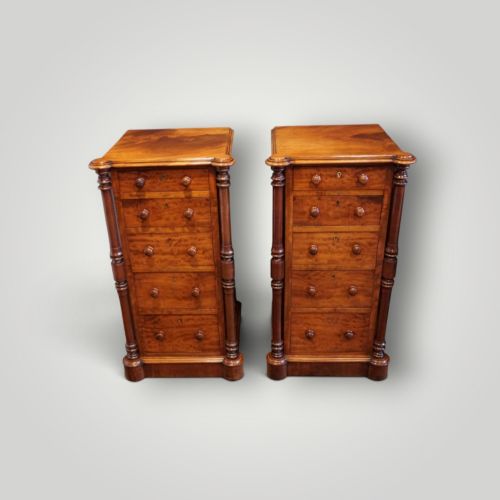
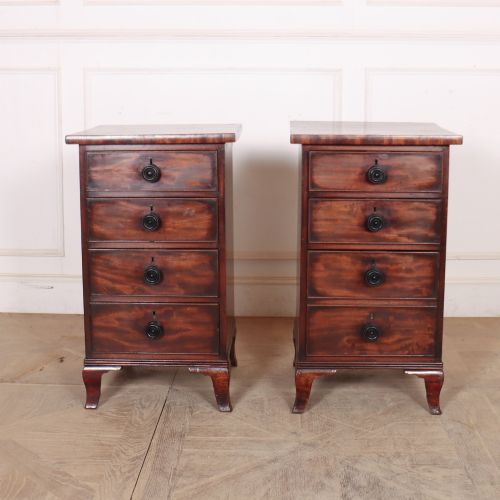
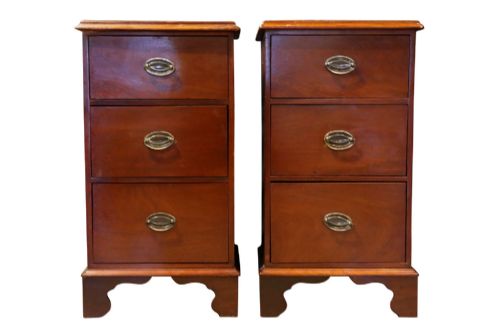
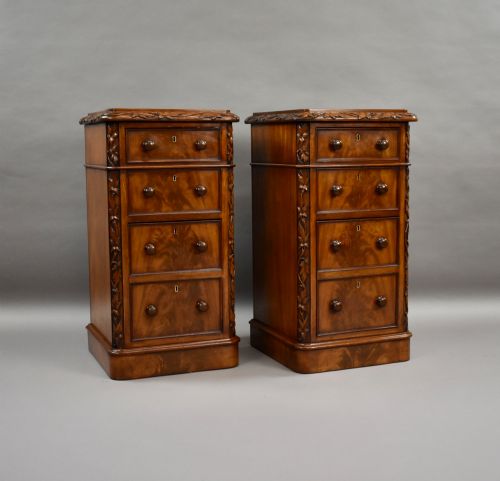
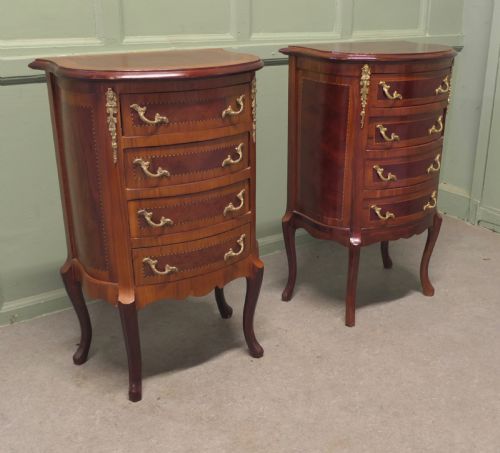
Pair Mahogany Bedside Chests
Pair mahogany bedside chests bring matched symmetry and useful storage to a bedroom, uniting the rich grain of traditional timber with compact proportions.
Pair Mahogany Bedside Chests
Pair mahogany bedside chests serve as matched bedroom storage units, typically taking the form of small drawer chests or bedside cabinets. When searching for pair mahogany bedside chests, buyers encounter predominantly Victorian and early twentieth-century examples alongside Georgian and revival pieces.
The selection ranges from simple three-drawer nightstands to serpentine fronts, tall Wellington chests, and military campaign styles equipped with brass handles. Most pieces adhere to traditional English and continental forms designed to sit beside a bed.
How they were made
Cabinet makers utilised solid mahogany and wood veneers, occasionally selecting flame mahogany to highlight the natural grain patterns. Structural strength relied on traditional joinery, complemented in certain pieces by brass mounts, leather accents, or marble tops.
Surface finishes involved waxing or polishing to protect the timber while accentuating the deep reddish-brown tone characteristic of the material. Specialised variants incorporate recessed brass campaign handles and corner brackets for functional durability.
Some military campaign chests retain tiny ink stains inside the top drawer from officers writing dispatches by candle flicker.
What varies in quality
Proportion and symmetry drive the distinction between standard examples and exceptional items, particularly since these pieces must match as a pair. The depth of the timber figuring, the crispness of any carved detailing, and the integrity of the original hardware set the finer specimens apart.
Construction methods also separate workshop output, with superior chests displaying finely dovetailed drawer boxes and carefully matched veneer grains across both fronts. Adaptation over time alters the original status of certain pieces, distinguishing them from untouched period examples.
Warings Liverpool
The Pair Mahogany Bedside Chests Glossary
- Serpentine
- A curved front shape featuring a convex centre flanked by concave sides. This undulating profile requires advanced woodworking skill.
- Campaign
- Style derived from portable military furniture featuring recessed brass handles and corner braces. These pieces were built for travel by officers on active service.
- Flame mahogany
- Timber cut from the fork of the tree where branches meet the trunk, producing a distinctive fire-like grain pattern. Cabinet makers used veneers of this wood on prominent surfaces.
- Wellington chest
- A tall, narrow chest of drawers secured by a locking hinged vertical side flap. This form typically contains multiple shallow drawers.
- Commode
- A low cabinet or chest, often enclosing shelves or a chamber pot space behind doors. The term spans several decorative periods.
Pair Mahogany Bedside Chests: Frequently Asked Questions
How do I match mismatched bedside chests?
Matching disparate chests requires finding pieces with similar heights, wood tones, and drawer configurations to maintain visual balance across the bed.
Shared design details such as bracket feet or similar brass hardware help unify an assembled pair in a bedroom setting.
Where did bedside chests originate?
Bedside storage evolved from small night tables and commodes used in Georgian bedchambers to conceal chamber pots and hold nighttime necessities.
By the Victorian era, these developed into dedicated drawer chests designed specifically for personal bedroom use.
Can I use these with modern beds?
Modern bed heights vary, so measuring the top surface relative to the mattress is essential before placement.
Tall Victorian and Edwardian variants suit higher mattress frames, while standard low chests fit traditional proportions.
How do I date a mahogany chest?
Dating relies on examining construction techniques, drawer dovetails, handle styles, and the overall aesthetic of the period.
Secondary timbers inside the drawers and the style of the mahogany grain further clarify the manufacturing era.