

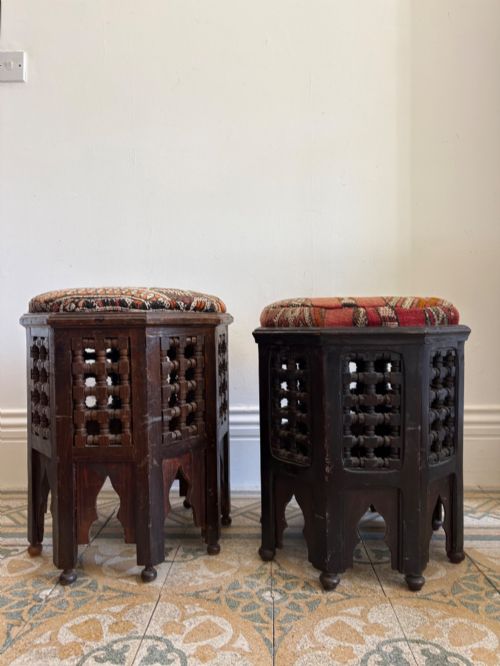
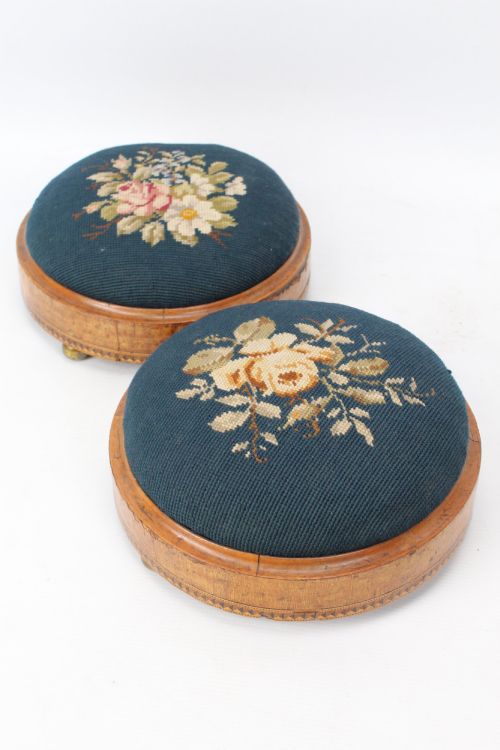
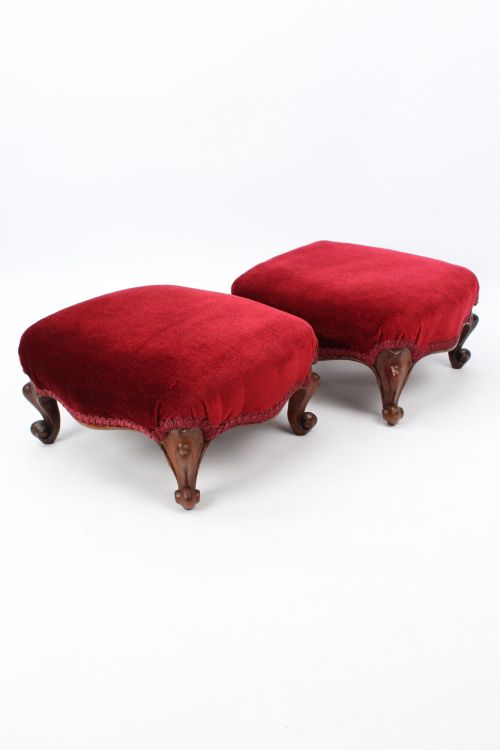
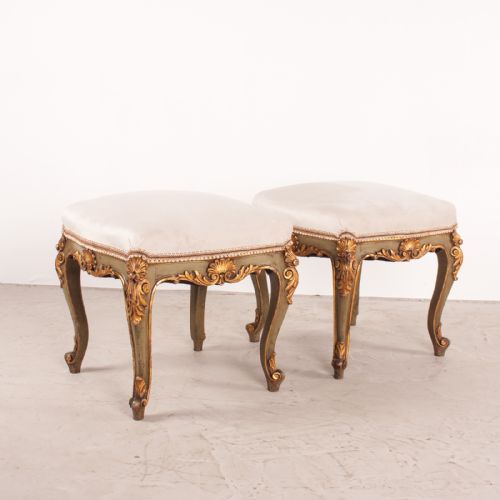
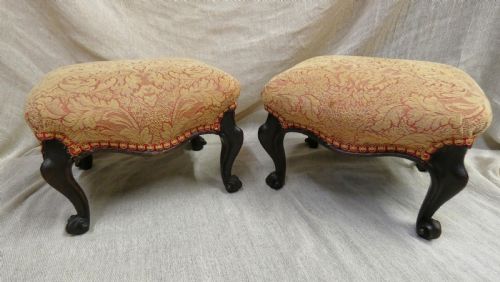
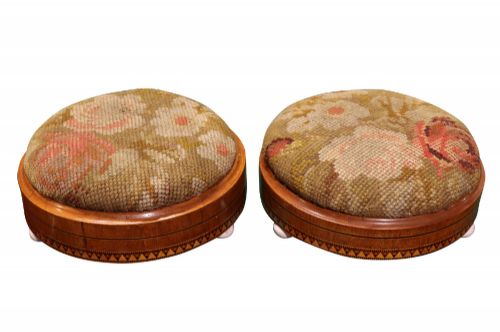


Pair Low Ottomans
Pair low ottomans bring versatile seating and classic proportion to a room, offering low-level elegance that suits fireside placement or bedroom dressing areas.
Pair Low Ottomans
When you search for pair low ottomans, you encounter compact upholstered seats and footstools spanning periods from the Georgian era through the Victorian period and into the twentieth century. These matching pairs serve multiple domestic functions, operating as low seats, footstools or decorative accents in traditional interiors.
How they were made
Cabinet makers constructed the foundational frames using hardwoods such as mahogany, walnut, and rosewood, employing traditional joinery to ensure stability under daily use. Carved wood details, inlaid decoration, and painted or gilded surfaces defined the aesthetic ambition of each piece.
Upholstered elements utilised traditional stuffing and springs secured beneath durable textiles like velvet, silk, and woven fabrics. Brass fittings and castors occasionally completed the construction, particularly on mid-nineteenth-century examples.
Pair Low Ottomans Retail Price Guide 2026
Typical asking prices for pair low ottomans among the pieces listed under this phrase on Sellingantiques today, from the lower quarter to the upper quarter. They describe what is for sale here now, not the wider market.
What varies in quality
The standard of timber selection and the crispness of carved woodwork establish the baseline quality of a pair. Finely figured mahogany or walnut and deeply defined hand-carved ornamentation distinguish superior workshops from more utilitarian production.
Cohesion within the pair matters greatly, as matching items must display uniform proportions, timber ageing, and decorative execution. The integrity of the underlying frame construction and the quality of the textile upholstery further differentiate finer examples from standard commercial output.
The Pair Low Ottomans Glossary
- Ottoman
- A low upholstered seat or footstool without arms or a back, designed for domestic comfort. These pieces often feature sprung tops and wooden frames.
- Rococo Revival
- A nineteenth-century design movement inspired by mid-eighteenth-century French aesthetics, characterised by C-scrolls, asymmetric ornamentation, and naturalistic floral carving.
- Gustavian
- The Swedish interpretation of French neoclassical style, known for pale painted finishes, restrained carving, and functional elegance.
- Inlay
- A decorative technique where contrasting pieces of wood or other materials are inserted into depressions in the base timber to create patterns.
- Upholstery
- The materials, including webbing, stuffing, springs, and fabric, that form the soft padded surface of a seat.
Pair Low Ottomans: Frequently Asked Questions
Where should I place pair low ottomans?
These versatile pieces suit placement at the foot of a bed, flanking a fireplace, or positioned beneath a console table. Their low profile ensures they do not obstruct sightlines in a room.
They also function effectively as impromptu seating when entertaining guests or as comfortable footrests before an armchair.
How do I care for antique wooden frames?
Maintain the timber by dusting regularly with a soft, dry cloth and applying occasional quality beeswax to nourish polished surfaces. Avoid placing wooden furniture in direct sunlight or near heat sources to prevent timber splitting.
Keep painted and gilded finishes away from moisture and harsh cleaning agents to preserve the original surface decoration.
Can I reupholster antique footstools?
Upholstery can be updated to suit modern interiors while respecting the traditional construction methods of the frame. Skilled upholsterers preserve internal webbing and stuffing where possible to maintain historical integrity.
Choosing appropriate textiles ensures the fabric weight complements the scale and period of the wooden base.
How do I distinguish Victorian from earlier styles?
Victorian pieces often display heavier proportions, darker rosewood or walnut timbers, and robust revival ornamentation such as heavy Rococo scrollwork. Earlier Georgian and Regency examples typically exhibit leaner frames and refined linear carving.
Examining the underside construction, timber patination, and tool marks helps clarify the manufacturing period.