



Embroidered Tapestry Stool
An embroidered tapestry stool brings tactile warmth and period character to a room, offering both practical seating and traditional craft.
Embroidered Tapestry Stool
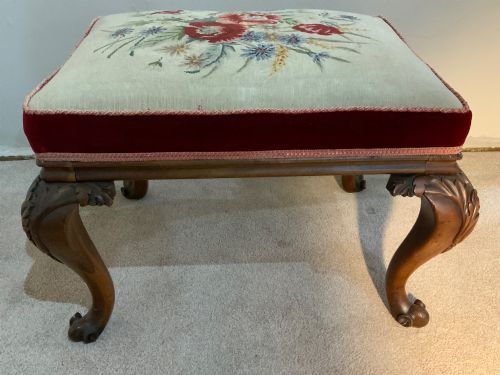
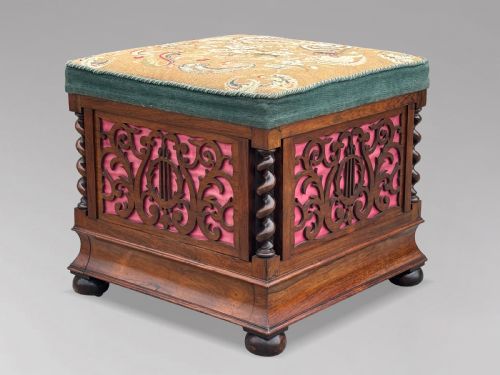
An embroidered tapestry stool is a low seat defined by its textile top, appearing on this page in forms ranging from compact footstools to dressing stools and ottomans. These pieces trace their origins across the nineteenth century and into the early twentieth century, alongside earlier revivals.
The most common versions encountered here are Victorian pieces featuring needlepoint or tapestry upholstery set upon mahogany or walnut frames. Stools span multiple revival styles, including Queen Anne, Louis XV, and Chippendale, reflecting historical design influences.
Makers utilised various timber frames to support the textile seats, producing rectangular, oval, and long forms designed for dressing tables, pianos, and parlours. The combination of structural woodwork and detailed needlework defines the category across all listed periods.
How they were made
The construction relies on traditional timber framing, utilising mahogany, walnut, oak, and rosewood shaped into cabriole legs or turned supports. Joinery techniques secure the structural integrity of the base before textile application.
Seats are upholstered with wool, velvet, and fabric, often featuring hand-worked needlepoint and tapestry panels. Additional detailing includes brass elements incorporated into the hardware and frames of specific forms.
Embroidered Tapestry Stool Retail Price Guide 2026
Typical asking prices for embroidered tapestry stool among the pieces listed under this phrase on Sellingantiques today, from the lower quarter to the upper quarter. They describe what is for sale here now, not the wider market.
Periods represented span from the mid-eighteenth century through the Victorian era and into the early twentieth century.
What varies in quality
Quality in an embroidered tapestry stool rests upon the density and precision of the needlework itself, distinguishing finely executed hand-stitched panels from simpler textiles. The complexity of the frame carving, from plain timber to elaborate revival motifs, also shapes the standard of the piece.
The choice and condition of the underlying timber frame, whether solid mahogany, walnut, or oak, determine the durability and architectural merit of the stool. Furthermore, the harmony between the period of the frame and the execution of the upholstery defines the overall integrity.
The Embroidered Tapestry Stool Glossary
- Needlepoint
- A type of embroidery stitched on canvas mesh, commonly found covering the seats of these stools.
- Cabriole leg
- A furniture leg that curves outward and then tapers inward, frequently seen on Queen Anne and Louis XV revival pieces.
- Ottoman
- A low upholstered seat or footstool without arms or a back, utilised for resting feet or as additional seating.
- Tapestry
- A form of textile art, traditionally woven on a loom but often used here to describe hand-worked needlework seat covers.
- Revival style
- A design movement that adapts historical aesthetics from earlier centuries, such as Georgian or Queen Anne periods, into later nineteenth-century manufacturing.
Embroidered Tapestry Stool: Frequently Asked Questions
What is an embroidered tapestry stool used for?
These stools serve primarily as footstools, dressing table seats, or piano stools within traditional interiors. They provide low seating options that combine textile artistry with functional domestic utility.
Historically placed in parlours and bedrooms, their compact forms allowed for easy movement around living spaces according to daily requirements.
How do I date an embroidered tapestry stool?
Dating relies on examining the timber frame construction, the primary wood species used, and the style of the legs, such as cabriole or turned supports. Stylistic indicators point toward specific eras like the Victorian period or earlier Georgian revivals.
The materials in the upholstery and the technique of the needlepoint further help align the piece with nineteenth or early twentieth-century manufacturing methods.
Are these stools sturdy enough for daily seating?
Most pieces are built from hardwoods like mahogany, walnut, or oak, providing solid structural foundations for regular use. Their original purpose as dressing or piano stools required them to support an occupant reliably.
However, the age of the timber frame and the condition of the internal webbing or stuffing should be considered when planning for everyday sitting.
What woods were used for the frames?
Frames are constructed from traditional cabinet timbers, most notably mahogany and walnut, alongside oak and rosewood. These woods were chosen for their strength and suitability for decorative carving.
Darker polished finishes predominate across the nineteenth-century examples, while earlier revival pieces adopt the specific grain patterns characteristic of their targeted era.
What is the difference between a footstool and an ottoman?
Footstools are generally smaller, designed specifically to support feet while sitting in a chair, whereas ottomans tend to be larger upholstered seats without backs. Both share similar textile upholstery and timber frame construction within this category.
Distinctions often depend on the height and surface area of the piece, with ottomans functioning more readily as standalone low seats.