

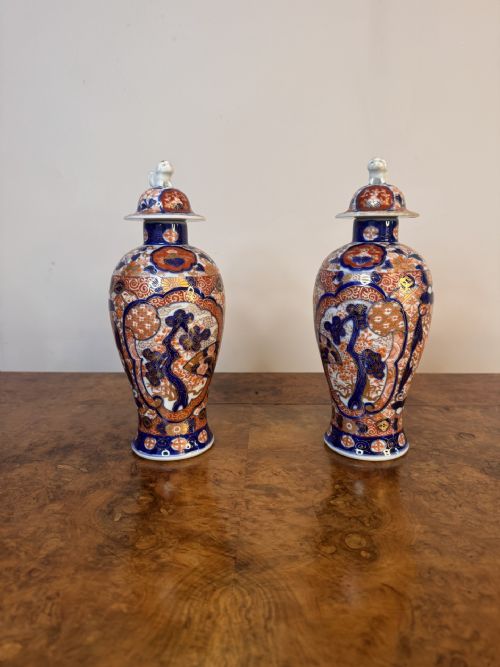
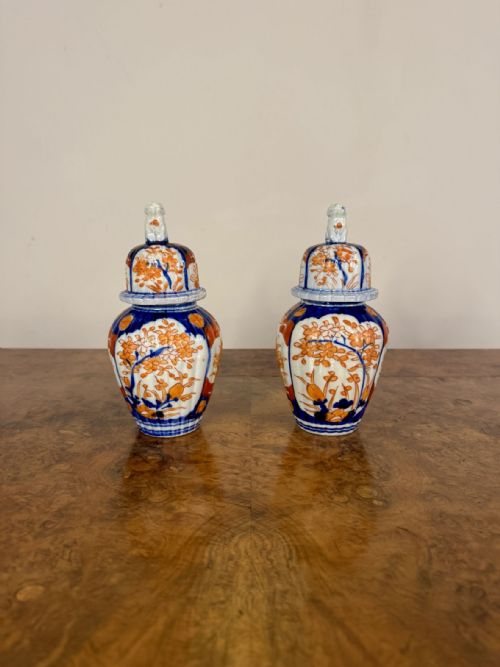

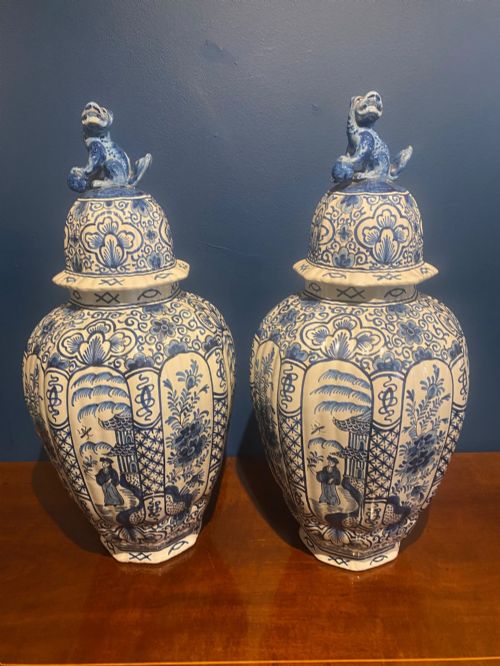

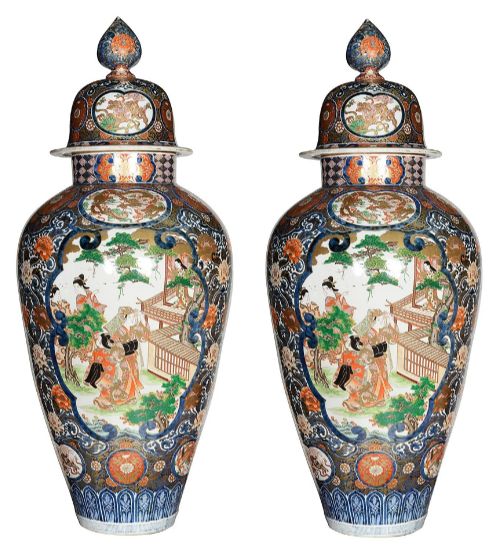
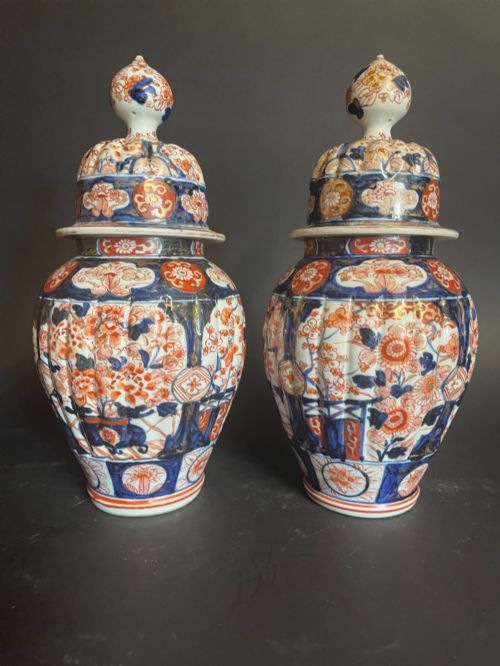


Pair Lidded Temple Jars
Pair lidded temple jars are matching ceramic vessels with fitted covers, valued for symmetry and decoration.
Pair Lidded Temple Jars
When you search for pair lidded temple jars, you encounter matching ceramic vessels adorned with hand painted designs and secure covers. These pieces originate predominantly from Japanese and Chinese traditions, spanning periods from the seventeenth century through to the twentieth century.
The most common examples on this page are Japanese Imari and Chinese export porcelain vases fitted with matching lids. Forms vary from ginger jars to larger decorative urns, often displayed together as a balanced pair on tables or cabinets.
What varies in quality
Quality in these vessels rests upon the crispness of the hand painted detail and the balance of the matching pair. Finer examples display precise brushwork, well preserved gilding, and tightly fitted lids that align correctly with the body.
The weight of the porcelain and the complexity of the decorative palette, such as rich Imari palettes or detailed cloisonne enamel work, distinguish standard production pieces from more ambitious workshops.
Pair Lidded Temple Jars Retail Price Guide 2026
Typical asking prices for pair lidded temple jars among the pieces listed under this phrase on Sellingantiques today, from the lower quarter to the upper quarter. They describe what is for sale here now, not the wider market.
The listings on this page include porcelain and cloisonne materials across nineteenth century, Edwardian, and seventeenth century periods.
Samson
The Pair Lidded Temple Jars Glossary
- Imari
- A traditional style of Japanese porcelain featuring a distinct palette of underglaze blue, iron red, and gold. This style originated in Arita and became popular for export during the Edo period.
- Cloisonne
- A metalwork technique where compartments are created on a vase surface using soldered wire and filled with coloured enamel paste. The piece is then fired and polished to a smooth finish.
- Ginger jar
- A ceramic vessel characterised by a wide body, rounded shoulders, and a flat fitting lid. Originally designed for storing spices, these jars evolved into purely decorative display pieces.
- Arita
- A Japanese town known as the birthplace of Japanese porcelain production. Kilns in this area produced blue and white wares and polychrome designs for domestic use and export.
Pair Lidded Temple Jars: Frequently Asked Questions
How do I display them at home?
Place the matched pair together on a sturdy surface such as a wooden table, sideboard, or cabinet top to maintain their visual symmetry.
Ensure they sit away from heavy foot traffic areas to protect the lids and the delicate porcelain or cloisonne surfaces from accidental knocks.
How can I tell Japanese Imari from Chinese export pieces?
Japanese Imari typically employs a specific palette of deep underglaze blue, iron red, and supplementary gold leaf on a bright white porcelain body. Chinese export porcelain often uses different enamel combinations and distinct potting characteristics associated with specific dynastic periods.
What is the difference between a ginger jar and a temple jar?
Ginger jars generally feature a broad shoulder and a short, straight neck designed to accommodate a flat fitting lid.
Temple jars often display a more tapering profile or specific lid configurations, though the terms are frequently used interchangeably in antique descriptions.