





Pair Leather Carvers
Pair leather carvers bring paired seating with supportive elbow rests and durable hides into studies, libraries and dining rooms.
Pair Leather Carvers
Pair leather carvers comprise matching armed seating upholstered in hide, encountered across nineteenth century and early twentieth century periods. These examples span formal dining styles alongside sturdy desk and library forms.
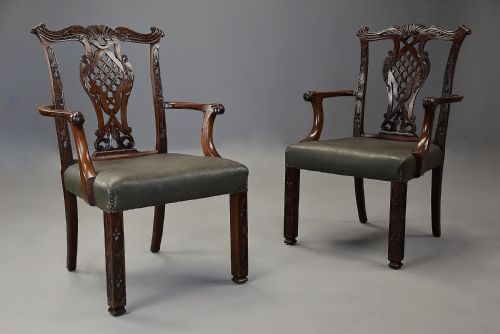
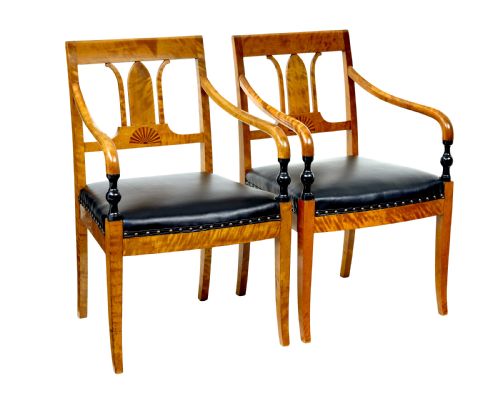
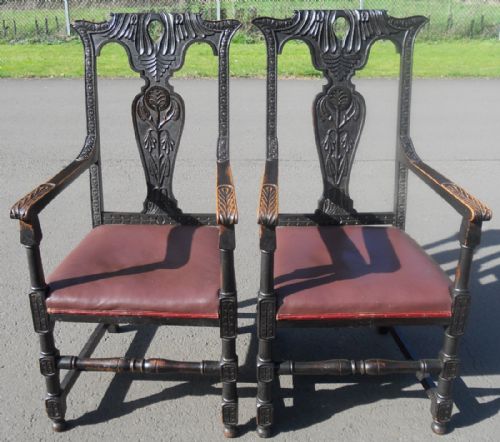
The selection ranges from mahogany Chippendale designs and Regency framework to oak Gothic revival and Art Deco birch pieces. Buyers find matching sets intended for heads of tables or executive desks.
Makers utilised woods such as walnut, ash, and flame birch alongside oak and mahogany to build these substantial frames. The combination of structural timber and supple leather provides both daily utility and formal presence.
How they were made
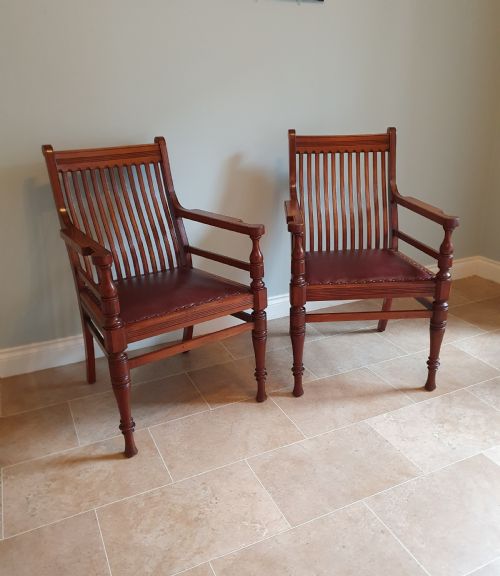
Craftsmen shaped solid timbers like mahogany, oak and walnut into sturdy frames using traditional joinery and carved detailing. Structural elements incorporate turned legs, barley twists, or carved back splats depending on the period.
Hides were secured to seats and backs using brass studs or woven techniques to create resilient support. Ebonised finishes and birch veneers appear alongside standard timber grains to achieve specific decorative effects.
Pair Leather Carvers Retail Price Guide 2026
Typical asking prices for pair leather carvers among the pieces listed under this phrase on Sellingantiques today, from the lower quarter to the upper quarter. They describe what is for sale here now, not the wider market.
Some chairs sport barley twists so enthusiastic they look ready to unscrew themselves straight through the floorboards.
What varies in quality
The distinction between standard examples and top tier seating rests upon timber selection and the crispness of carved woodwork. Superior pieces display carefully matched wood grains, deep relief carving, and well proportioned arm rests.
Upholstery execution separates ordinary production from exceptional items. Hand applied leather secured with precise studwork or intricate weaving indicates careful workshop production.
Henry Maxwell
The Pair Leather Carvers Glossary
- Carver chair
- An armchair designed with elbow rests, traditionally placed at the ends of a dining table. These pieces offer wider seating dimensions than standard side chairs.
- Elbow chair
- An alternative term for an armchair, providing side supports for the arms. They frequently match a larger set of dining or desk chairs.
- Woven leather
- Hide strips interlaced to form a supportive seat or back grid. This technique appears on specific nineteenth century frames.
- Lambrequin
- A decorative motif resembling fabric drapery, carved into chair back splats during the Regency period. It adds ornamental detail to the upper frame.
- Barley twist
- A woodworking technique turning timber into a spiral column shape. This detail appears on oak frames from the later periods.
Pair Leather Carvers: Frequently Asked Questions
Where do pair leather carvers fit best?
These armed chairs suit the heads of large dining tables or serve as matching seating beside executive desks.
Their robust timber frames and supportive arm rests also allow them to function comfortably as fireside or library chairs.
How do I identify a Regency pair?
Regency examples often feature carved mahogany frames with specific design elements like lambrequin back splats.
Looking at the overall silhouette helps distinguish these early nineteenth century pieces from later revival styles.
Are these chairs suitable for daily use?
Solid timber construction and durable leather surfaces make these chairs practical for regular seating.
Their sturdy armrests and supportive backs were originally built for functional daily tasks in studies and dining rooms.
What woods were commonly used?
Mahogany and oak appear most frequently across the available inventory, providing strong structural frames.
Walnut, birch, and ash are also used to create different aesthetic finishes depending on the period and style.