
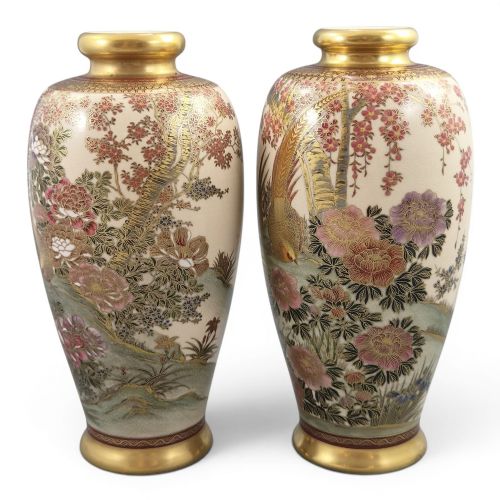


Pair Japanese Decorative Vases
These pair japanese decorative vases bring together centuries of craftsmanship, offering balanced symmetry and intricate artistry for interior spaces.
Pair Japanese Decorative Vases
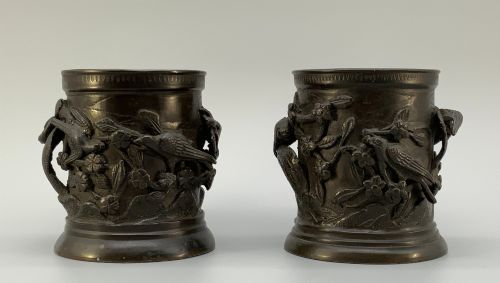
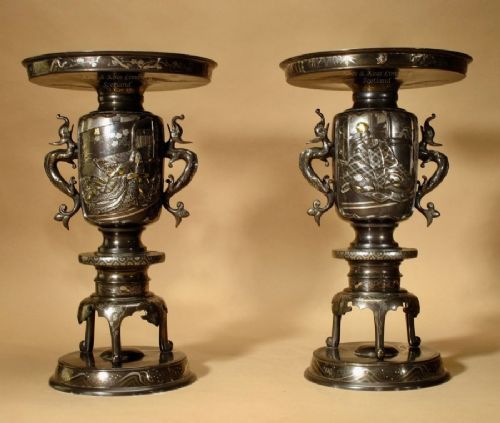
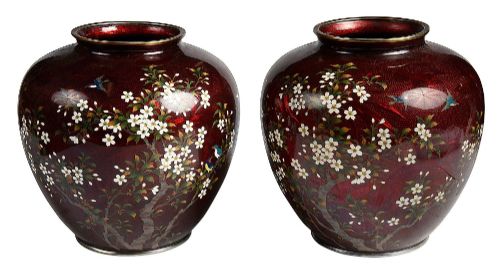
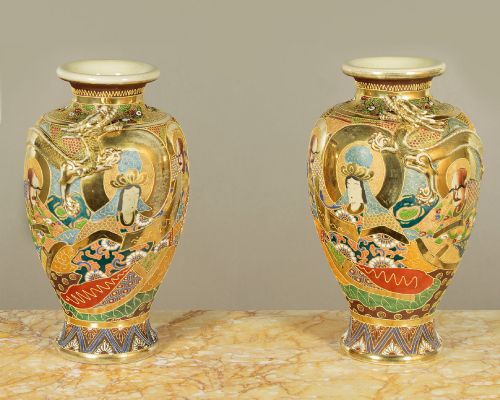
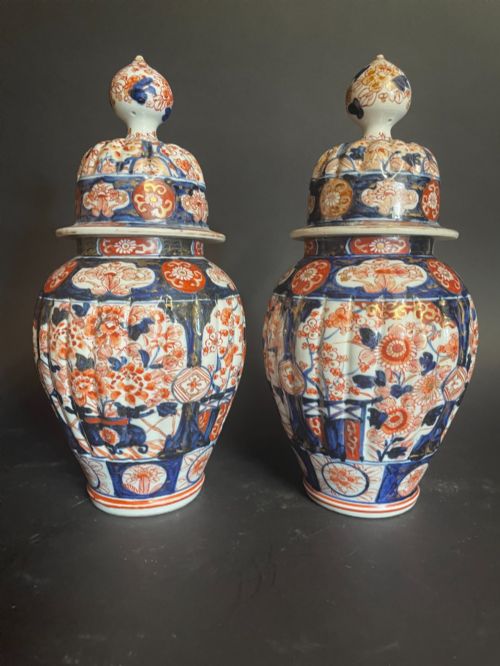
A pair japanese decorative vases search reveals matched twin vessels created for display, most frequently encountered from the Meiji period through the early twentieth century. These matching pairs include earthenware Satsuma ceramics, porcelain Kutani and Imari pieces, and cast bronze or cloisonné enamel works.
Makers designed these matched sets for formal display on mantlepieces, tables, or pedestals within domestic and grand interiors. The selection spans from diminutive cabinet items to monumental palace vases standing over ninety centimetres tall.
The aesthetic bridges traditional Japanese iconography, such as birds, blossoms, and landscapes, with forms tailored for Western export markets. Collectors find both baluster silhouettes and twin-handled urns among the preserved inventory.
How they were made
Potters shaped ceramic bodies from earthenware and porcelain, applying detailed overglaze enamels alongside raised moriage decoration and heavy gold leaf. Cloisonné pieces utilise thin metal wires soldered to a metal base to form cells filled with coloured enamel pastes before firing.
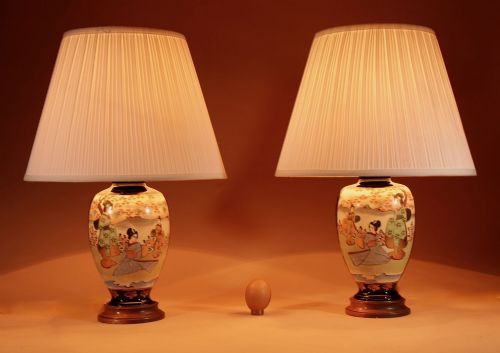
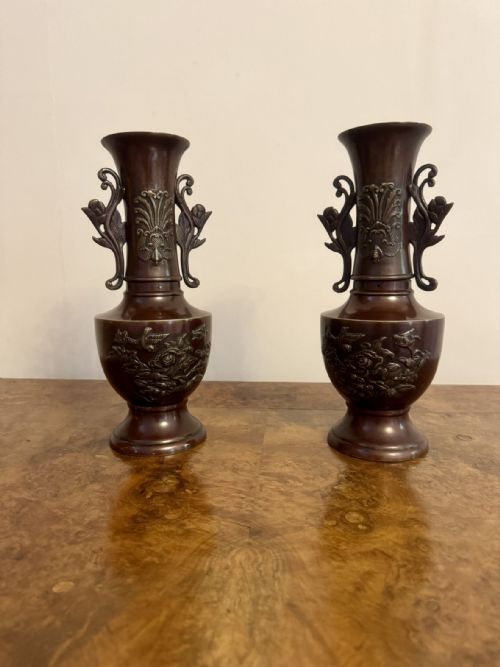
Foundries cast bronze, brass, and copper vessels, frequently enriching the metallic surfaces with inlaid mixed metals or patinated finishes. Artisans occasionally integrated carved lacquer panels or mounted porcelain bodies with bespoke metal fittings to create table lamps and lidded jars.
Listings feature items from the Edo period through the Showa period, encompassing porcelain, earthenware, bronze, and cloisonné.
What varies in quality
The standard of painting and metalwork dictates where a piece sits within the hierarchy of production, separating standard export wares from exhibition-grade creations. Master studios employed finer brushwork, denser gilding, and more complex compositional panels that required superior technical skill.
The weight and precision of the bronze casting or the exactness of the wirework in cloisonné enamel signal the investment of time by the workshop. Signed pieces from celebrated makers or those bearing specific mon symbols demonstrate a documented provenance that elevates the work.
Manpei Kobe·Hakusan·Kinkozan·Noritake·Nogawa Company
The Pair Japanese Decorative Vases Glossary
- Satsuma
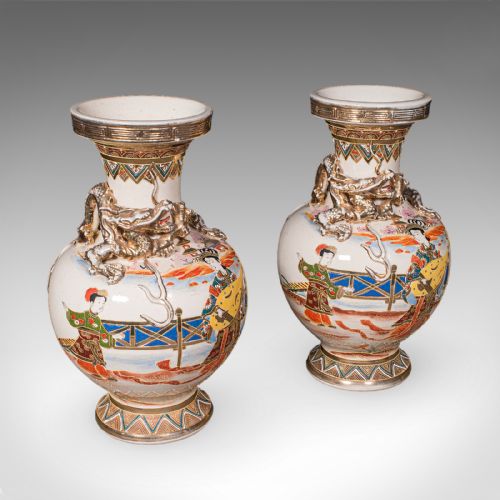
- An earthenware ceramic type featuring a crackle-glaze finish, typically decorated with polychrome enamels and extensive gilding. These wares originated in Kagoshima province and became immensely popular for export.
- Cloisonné
- A metalwork technique where thin wires are applied to form compartments that are subsequently filled with enamel and fired. This method creates intricate patterns across vases and lidded jars.
- Imari
- A style of Japanese porcelain characterised by a palette of underglaze blue, iron red, gold, and supplementary colours. These export pieces display dense decorative schemes.
- Moriage
- A decorative technique in ceramics where slip is piped onto the surface to create raised, three-dimensional patterns. It often frames intricate painted scenes.
- Meiji Period
- The historical era spanning from 1868 to 1912, marking a major period of artistic production for international export. Works from this time display exceptional technical precision.
Pair Japanese Decorative Vases: Frequently Asked Questions
What is Satsuma ware?
Satsuma ware consists of earthenware ceramics distinguished by an ivory-coloured crackle glaze and detailed overglaze painting. Artisans frequently enhanced these pieces with rich gilding and raised enamel motifs.
These ceramics formed a major portion of Japanese decorative exports during the late nineteenth and early twentieth centuries. They appear in forms ranging from cabinet vases to large table lamps.
How do I date these vases?
Dating relies on stylistic markers, material composition, and any recorded signatures or imperial mon symbols present on the base. Pieces associated with the Meiji period often exhibit distinct pictorial density and refined metalwork techniques.
Later items from the Taisho and Showa periods show shifts in palette and decorative restraint. Comparing the form against documented exhibition pieces helps narrow the production window.
Were these made for export?
The vast majority of matched pairs found today were produced specifically for Western export markets following the opening of Japanese trade ports. Makers adapted traditional motifs to appeal to European and American interior design tastes.
Grand international expositions during the late nineteenth century drove demand for monumental palace vases and intricate cloisonné enamel works. These pieces combined domestic craftsmanship with forms suited for Western drawing rooms.
How should I display them?
Matched pairs look best positioned symmetrically on sturdy sideboards, mantels, or dedicated pedestals to preserve their visual balance. Ensuring adequate clearance lets the detailed painting and metallic patination catch ambient light.
Avoid placing delicate earthenware or enamel pieces in direct, harsh sunlight to protect the integrity of the overglaze pigments. Stable, vibration-free surfaces safeguard taller baluster forms and heavy bronze vessels.