

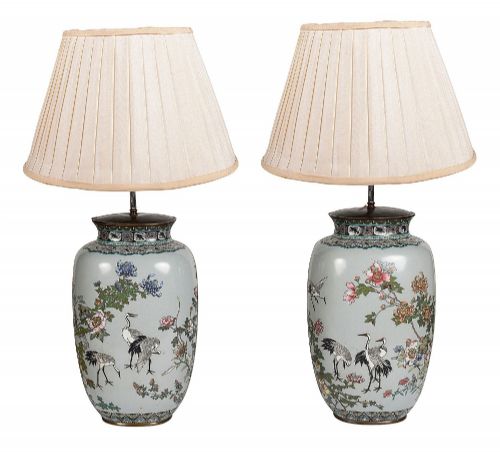
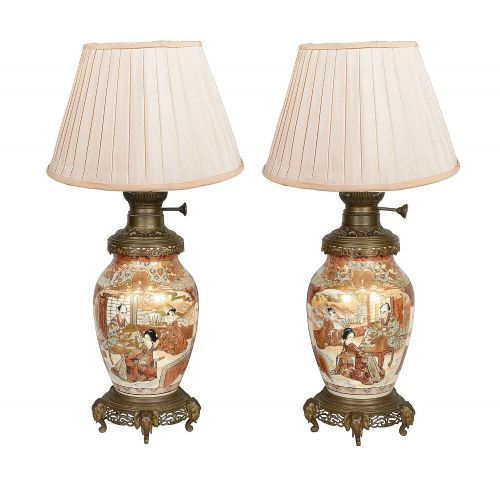


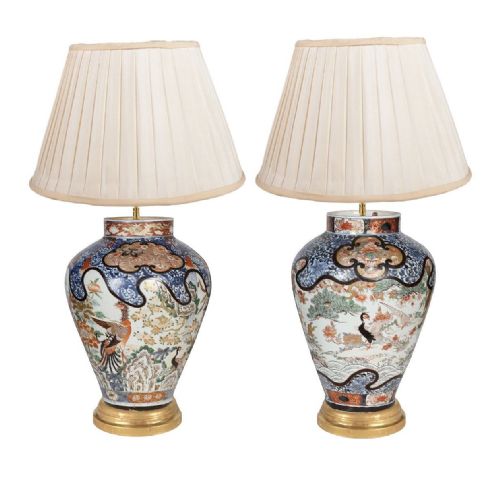


Pair Japanese Ceramic Lamps
These pair japanese ceramic lamps bring together centuries of skilled pottery traditions and later conversion into striking interior lighting.
Pair Japanese Ceramic Lamps
When searching for pair japanese ceramic lamps, buyers encounter table lamps created from antique vases originating in Japan across the Edo and Meiji periods.
Most examples found here date from the nineteenth century, utilising porcelain and earthenware bodies originally shaped for other purposes before later adaptation into lamps.
The forms encompass Satsuma, Kutani, Imari, and blue and white wares, alongside cloisonné enamel and earthenware vessels mounted with brass and wood fittings.
How they were made
The makers utilised traditional ceramic techniques such as throwing porcelain and earthenware, followed by hand-painting in intricate blue and white, multi-coloured enamel, or gilt designs.
Cloisonné pieces involved soldering delicate metal wires onto a metal or ceramic base to form cells, which were then filled with coloured enamel paste and fired.
Later metalwork fittings in brass and wooden bases were added during the conversion process to secure electrical wiring and support fabric or silk shades.
Listings include porcelain, earthenware, and cloisonné enamel materials spanning the seventeenth through the early twentieth centuries.
What varies in quality
Quality rests in the crispness of the hand-painted decoration and the balance of the ceramic forms when viewed as a matched pair.
Finer vessels display superior potting with steady glazes, precise enamel work, and well-preserved gilt detailing that has resisted rubbing over time.
The integration of the conversion work, including how cleanly the lamp mounts fit the original vase necks, distinguishes standard adaptations from finer examples.
The Pair Japanese Ceramic Lamps Glossary
- Satsuma
- A type of Japanese earthenware featuring a crackled creamy glaze decorated with enamel and gilt. It originated in Kagoshima province and became popular for export during the Meiji period.
- Kutani
- Japanese porcelain recognised by bold colour palettes, frequently incorporating iron red and gold. These wares often depict nature scenes and figurative motifs.
- Imari
- A style of Japanese porcelain featuring underglaze blue and overglaze iron red, green, and gold. Production centred around Arita during the Edo period.
- Cloisonné
- A decorative metalwork technique where enamel is applied within wire compartments on a vase surface. Examples from the Meiji period demonstrate exceptional control of this medium.
- Edo Period
- The period in Japanese history spanning from sixteen hundred and three to eighteen hundred and sixty-eight. Works from this era show traditional aesthetic principles before heavy export production.
Pair Japanese Ceramic Lamps: Frequently Asked Questions
Are these original lamps?
The ceramic bodies and vases forming these pieces originated as decorative vessels during earlier Japanese periods, such as the Meiji or Edo eras.
They were subsequently converted into table lamps by adding electrical fittings, wooden bases, and brass hardware to suit modern interiors.
How do I identify Satsuma ware?
Satsuma ceramics are characterised by a distinctive ivory-coloured earthenware body covered in a fine network of crackled glaze.
Overglaze enamel paintings and raised gold details are typically applied across the surface, depicting figures, landscapes, or floral patterns.
What is the difference between Kutani and Imari?
Kutani porcelain relies on rich, painterly scenes dominated by iron red and gold overglaze decoration on white porcelain bodies.
Imari pieces combine deep underglaze blue with contrasting iron red, green, and gilt elements in denser, more symmetrical geometric and floral arrangements.
How should I care for ceramic lamps?
Dust the ceramic body gently with a dry, soft cloth to prevent accumulation without disturbing the painted surface.
Avoid liquid cleaners or abrasive materials that might damage historical glazes, enamel work, or gilt highlights.