






Pair Imari Display Plates
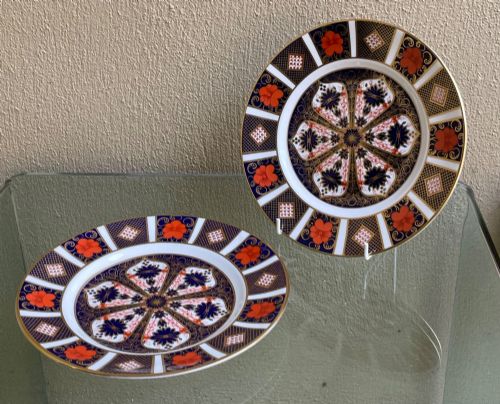
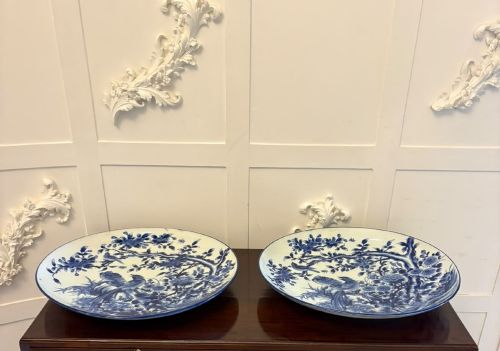
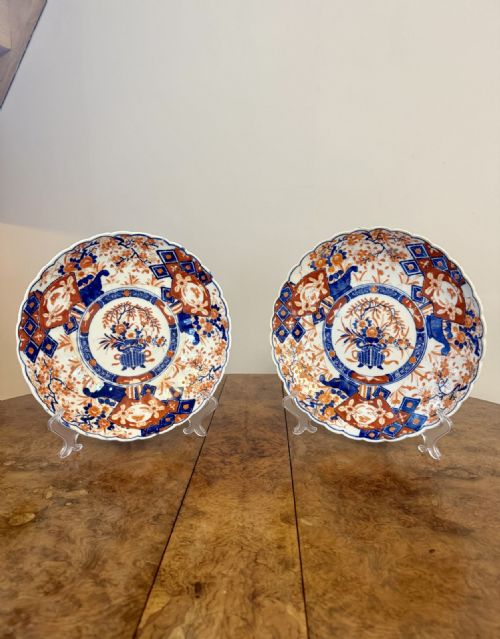
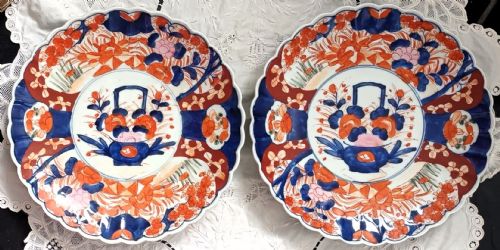
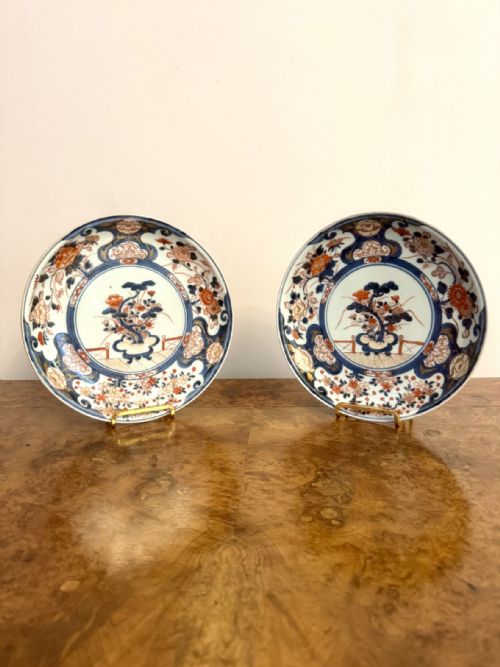
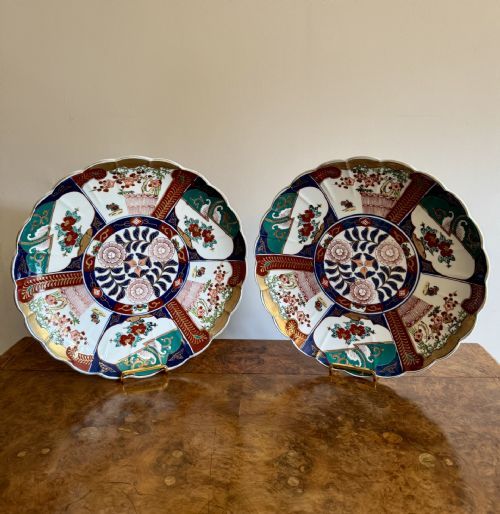
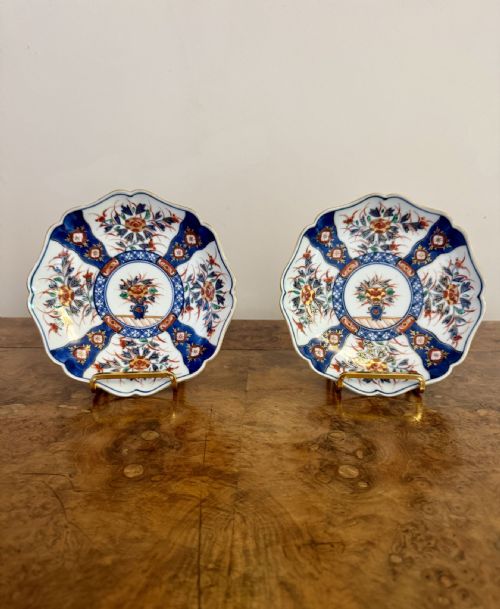
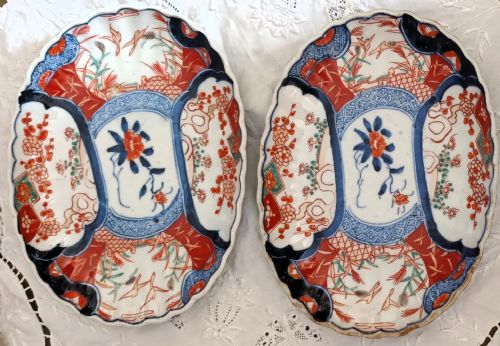
These pair imari display plates bring rich palettes and intricate motifs into a room, offering traditional ceramic artistry for display.
Pair Imari Display Plates
When you search for pair imari display plates, you encounter matching sets of decorative ceramic dishes created for visual impact. Most examples originate from Japanese workshops during the Meiji period or nineteenth century, alongside European interpretations from English factories.
The inventory includes chargers, wall chargers, and scalloped dishes designed primarily for exhibition rather than dining. Forms range from large round platters to fan-shaped dishes and deep bowls.
Origins span Japanese Meiji and Edo periods, Chinese export wares, and nineteenth-century English porcelain houses. Buyers select these matching pairs to anchor a wall arrangement or dress a sideboard.
How they were made
Potters shaped these vessels from porcelain, bone china, or ceramic bodies before applying underglaze blue pigments. Artisans then layered overglaze enamels in distinct rust-red and blue tones, frequently enriched with gold leaf and gilt details.
Firing fixed the mineral colours into a hard glaze, creating the characteristic glossy finish seen on chargers and plates. Hand-painted motifs often incorporated cobalt blue alongside iron red and enamel glaze highlights.
Pair Imari Display Plates Retail Price Guide 2026
Typical asking prices for pair imari display plates among the pieces listed under this phrase on Sellingantiques today, from the lower quarter to the upper quarter. They describe what is for sale here now, not the wider market.
Listings feature porcelain bodies decorated with enamel glaze, gold leaf, and cobalt blue pigments across the nineteenth and eighteenth centuries.
What varies in quality
The refinement of the hand-painted brushwork dictates the distinction between standard production and exceptional examples. Depictions of complex subjects like exotic birds or figures require precise control over enamel and gold leaf application.
The crispness of the moulded porcelain form and the stability of the glaze influence visual success. Uniformity in a matching pair depends on the original firing consistency and the preservation of the overglaze details.
Royal Crown Derby·Mintons
The Pair Imari Display Plates Glossary
- Imari style
- A decorative scheme originating in Japan utilising a distinctive palette of underglaze blue, iron red, and gilt. It inspired imitative porcelain production across Europe.
- Charger
- A large decorative plate intended for display on a wall or sideboard rather than for serving food. These pieces often feature the most ambitious painted scenes.
- Meiji period
- The era in Japanese history spanning from eighteen sixty-eight to nineteen twelve, noted for prolific porcelain output exported globally. Pieces from this time frequently display detailed enamel work.
- Overglaze enamel
- Pigments applied to the fired and glazed ceramic surface, requiring a subsequent lower-temperature firing to fuse the colours. This technique permits intricate polychrome designs.
- Bone china
- A type of soft-paste porcelain incorporating animal bone ash, developed by English manufacturers. It offers a bright white body that contrasts with rich enamel decoration.
Pair Imari Display Plates: Frequently Asked Questions
How were pair imari display plates used?
These pieces served primarily as decorative objects rather than functional tableware. Households placed them on sideboards or mounted them on walls to showcase their vibrant colours and patterns.
Matching pairs allowed for symmetrical arrangements in formal reception rooms. Their sturdy porcelain bodies ensured they survived centuries of vertical display.
How do I identify Japanese versus English pieces?
Japanese examples usually feature Meiji or Edo period characteristics with hand-painted cobalt blue and iron red motifs. The paste and potting style often reveal the Asian origin.
English interpretations, such as those from nineteenth-century potteries, utilise bone china or refined earthenware. Maker marks on the reverse often clarify the British factory source.
What is the difference between a plate and a charger?
Chargers are substantially larger in diameter, designed specifically to dominate a wall display or a central sideboard position. Standard plates are smaller and scaled for individual viewing or paired bracket hanging.
Both forms share the characteristic Imari palette but serve different spatial functions in a room.
How should I care for antique display plates?
Dust these ceramic items gently with a dry, soft cloth to protect the delicate overglaze enamels and gold leaf. Avoid using water or chemical cleaners, which can degrade the historic surface.
Ensure secure wall mountings or stable plate stands to prevent accidental slips.