
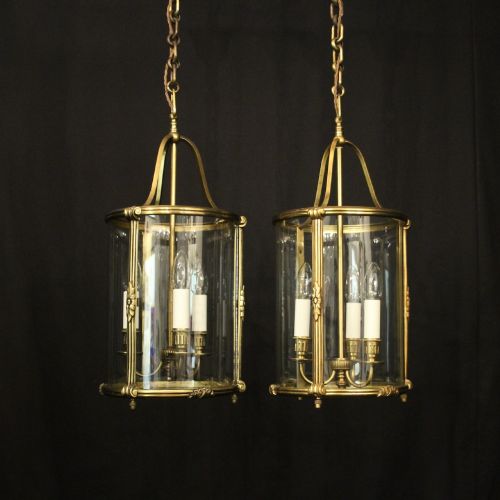
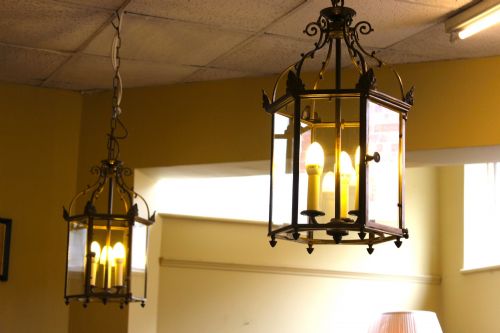


Pair Glass Lanterns
Pair glass lanterns bring symmetry and focused illumination to hallways and entrances, bridging functional security with decorative presence.
Pair Glass Lanterns
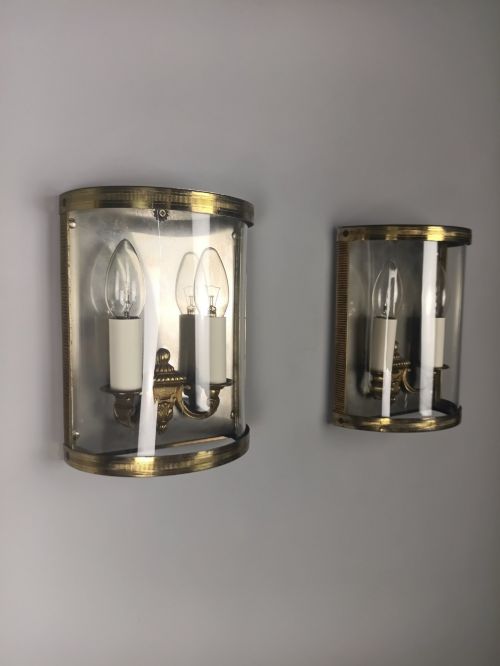
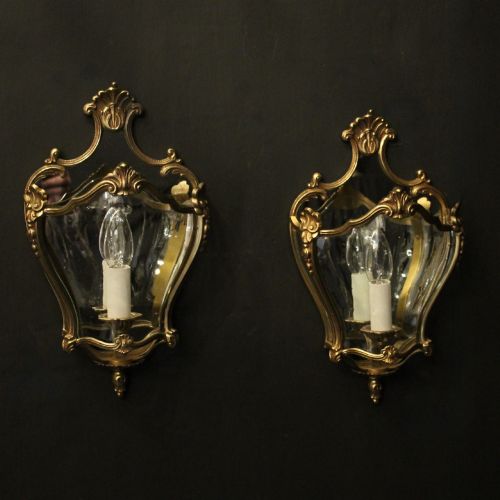
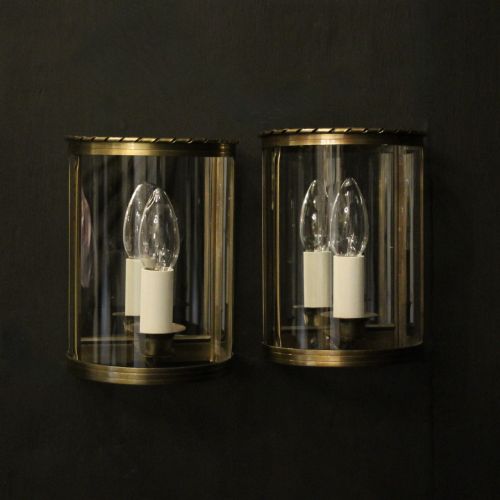
The selections span distinct periods, heavily featuring French examples from the 1920s and 1930s alongside Victorian, Edwardian, and nineteenth-century designs. You will frequently discover configurations utilising convex glass panels, brass frames, and specialised mounting styles suited for both interior spaces and exterior walls.
Distinctions in craftsmanship
Quality reveals itself in the weight and solidity of the metal casting, alongside the precision of the frame joints and the clarity of the glass panels. Heavier mountings and intricate chased or gilded bronze details indicate superior workshop execution compared to simpler folded sheet metal.
The refinement of the glass components also dictates the tier of the piece, with hand-cut crystals, detailed etching, and tightly fitted leaded segments demonstrating a higher level of artisan skill than standard pressed glass.
The inventory records pieces spanning from the 1870s through the 1930s, constructed in brass, copper, bronze, and iron.
F and C Osler
The Pair Glass Lanterns Glossary
- Half Lantern
- A light fixture flat on one side for mounting directly against a wall or flat surface. They project outward to cast illumination across a hallway or entrance.
- Convex Glass
- Curved glass panels used within the lantern frame to diffuse light outward in a soft arc. This shape frequently characterises French decorative lighting from the early twentieth century.
- Toleware
- Painted or lacquered sheet metal items often styled to mimic antique finishes. In lighting, this material brings specific colour depth and matte texture to the frame.
- Gilded Bronze
- Bronze metal treated with a thin layer of gold or gold-coloured leaf. This technique provides a lasting metallic sheen that resists tarnishing over decades of exposure.
Pair Glass Lanterns: Frequently Asked Questions
Where should I hang pair glass lanterns?
These matching fixtures find natural placement flanking a main entrance, lining a long hallway, or framing a central architectural feature to create visual symmetry.
Their balanced design ensures that light distributes evenly while adding a formal decorative accent to transitional spaces in the home.
Are these lanterns suitable for outdoor use?
Many surviving examples, particularly coach lamps and wall-mounted variations, were originally constructed for exterior carriage houses or entranceways.
When evaluating a set for outdoor installation, verify the original intended environment and current weatherproofing standards with the individual dealer.
How do I identify the period of a lantern?
Dating relies on observing the combination of primary metals, glass cutting techniques, and prevailing stylistic influences such as Art Deco geometry or Victorian ornamentation.
Examining the construction methods used for the frame joints and wiring apertures also helps narrow down the decade of production.
What is the difference between a hall lantern and a sconce?
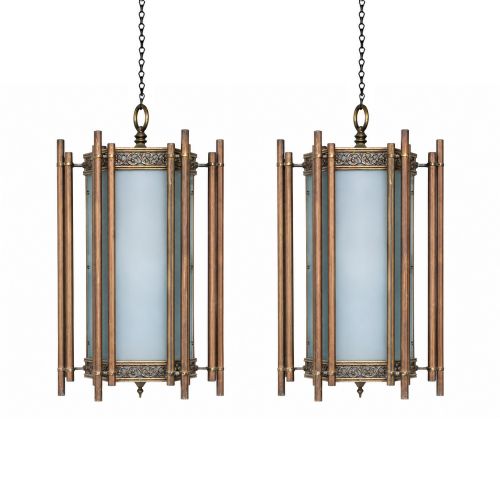
Hall lanterns are typically suspended from ceilings by chains or rods to illuminate vertical circulation spaces from above. Wall sconces and half lanterns mount directly onto vertical surfaces to project light outward at eye level.